Copyright © 2026 Yorke Antique Textiles
.avif)

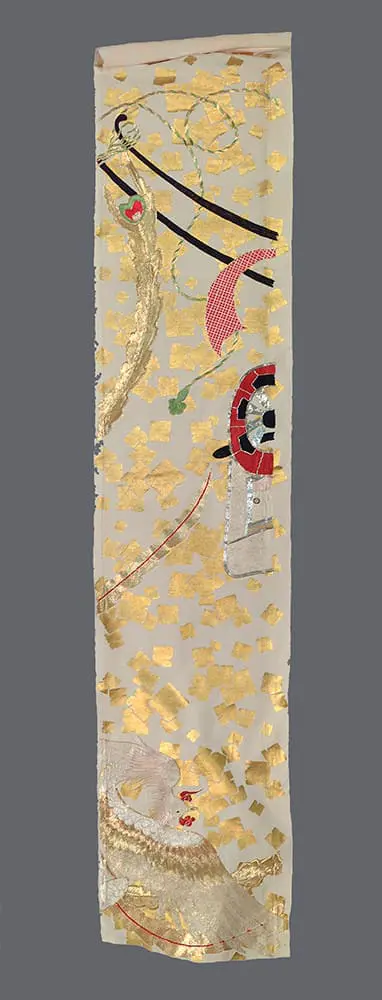
This opulent textile originates from the last quarter of the 20th century (1975–2000) and was originally a primary decorative component of an uchikake (formal wedding kimono). Measuring 15 inches by 75 inches (38 cm x 191 cm), the panel is in excellent condition and represents the pinnacle of late-Showa to early-Heisei luxury textile production. The design is set against a pristine cream silk ground, which serves as a luminous canvas for the heavy application of gold plating (kinkaku) and intricate needlework.
The visual narrative is a scholarly assembly of auspicious symbols traditionally associated with marriage and longevity. At the base, a magnificent tsuru (crane) is rendered with dense white and silver embroidery, its wings accented with metallic couching to create a three-dimensional, textured effect. Moving upward, the panel features a stylized goshoguruma (imperial carriage), a classic motif of Heian-period nobility, decorated with vibrant red and black embroidery. The entire composition is unified by a rhythmic shower of gold leaf squares and trailing gold cords, creating a radiant, celestial atmosphere. This combination of heavy embroidery and expansive gold foil exemplifies the high-prestige aesthetic required for traditional Japanese wedding ceremonies.

Payment Options: We primarily accept PayPal for all transactions. Credit and debit cards are not accepted. If you prefer to pay by personal check instead of PayPal, please note this preference in the "Additional comments" field when placing your order.Ordering Process
To receive your PayPal invoice, simply fill out the form.
Shipping Details: We ship all orders to the address associated with your PayPal payment. Please ensure your PayPal shipping address is current and accurate.A phone number is required during checkout, as our shipping carrier may need to contact you regarding delivery questions.Shipping RatesUnited States and Canada: $20International destinations (air mail): $40
