Copyright © 2026 Yorke Antique Textiles
.avif)

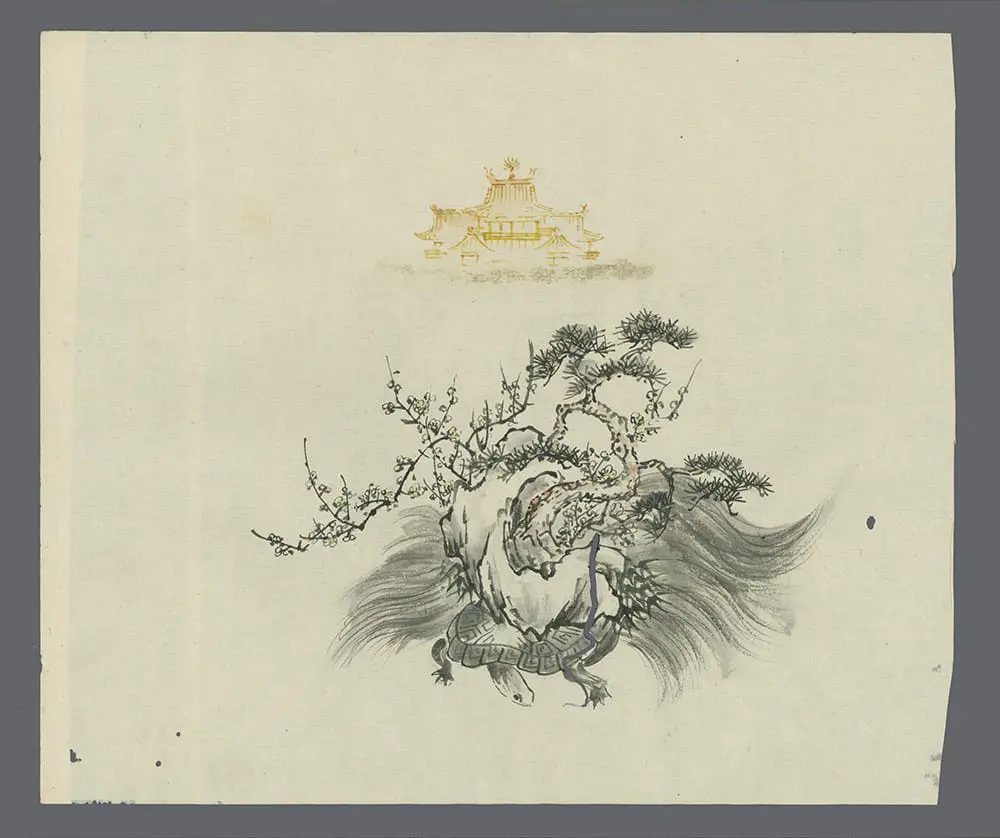
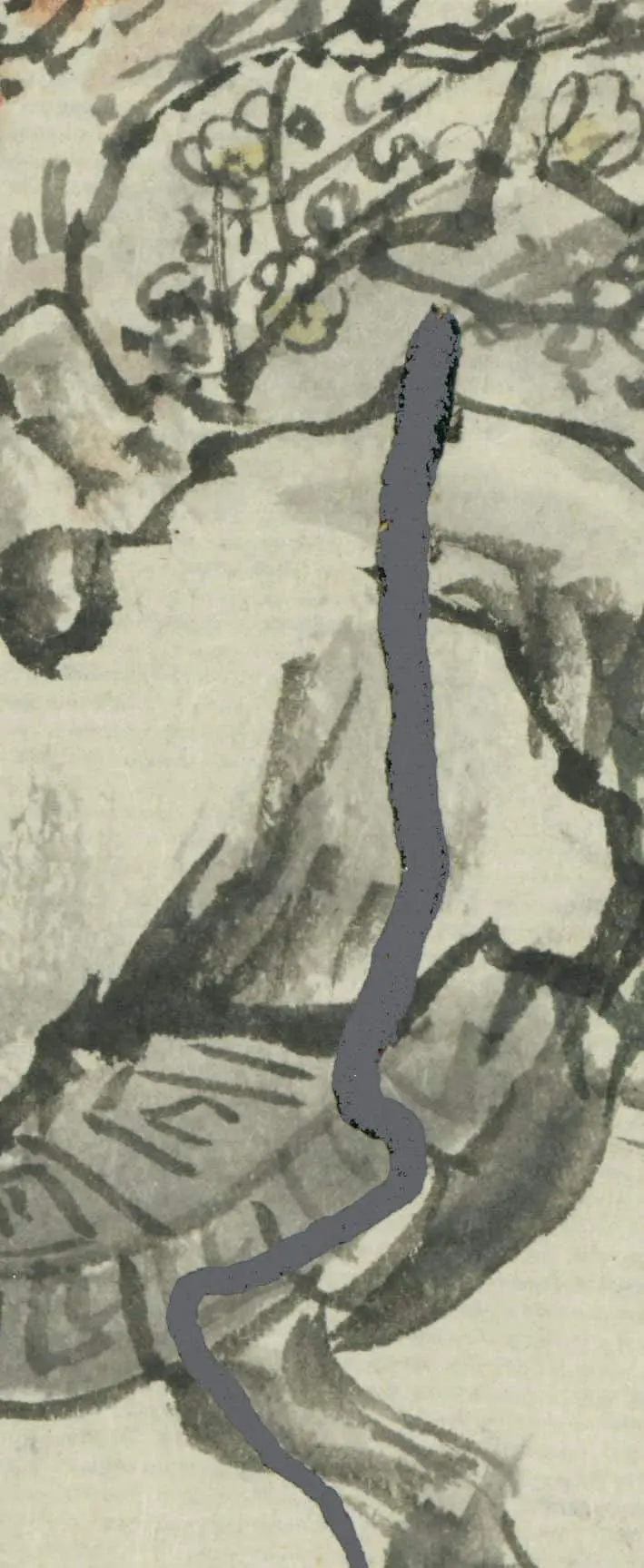
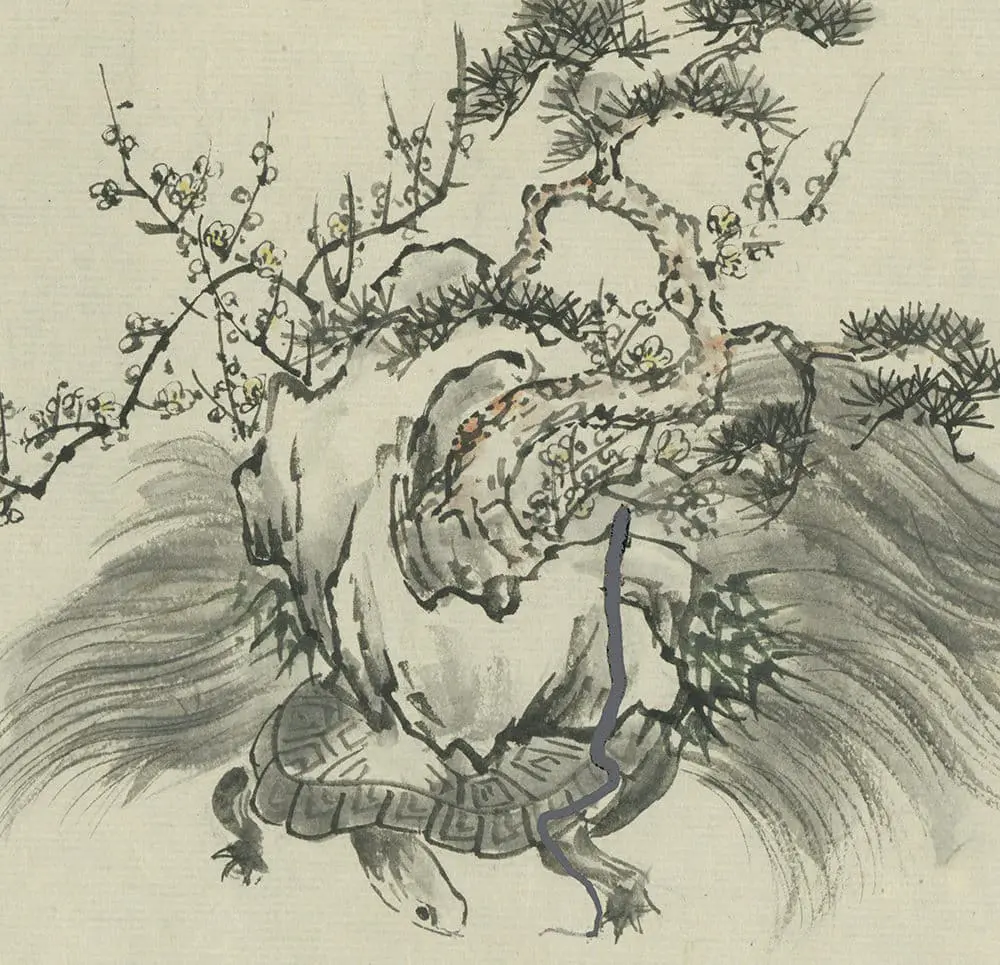

This evocative hand-painted artwork is an original creation from Japan, dating to the second half of the 19th century. Measuring 11 inches by 12 inches (27.94 cm x 30.48 cm), this piece is rendered in delicate watercolor and ink on paper. The artwork reflects the transitional aesthetic of the Meiji period, characterized by a refined balance of classical symbolism and naturalistic ink wash techniques. While the paper shows its significant age through a visible bookworm long hole, it remains a rare and authentic survivor of 19th-century studio practice.
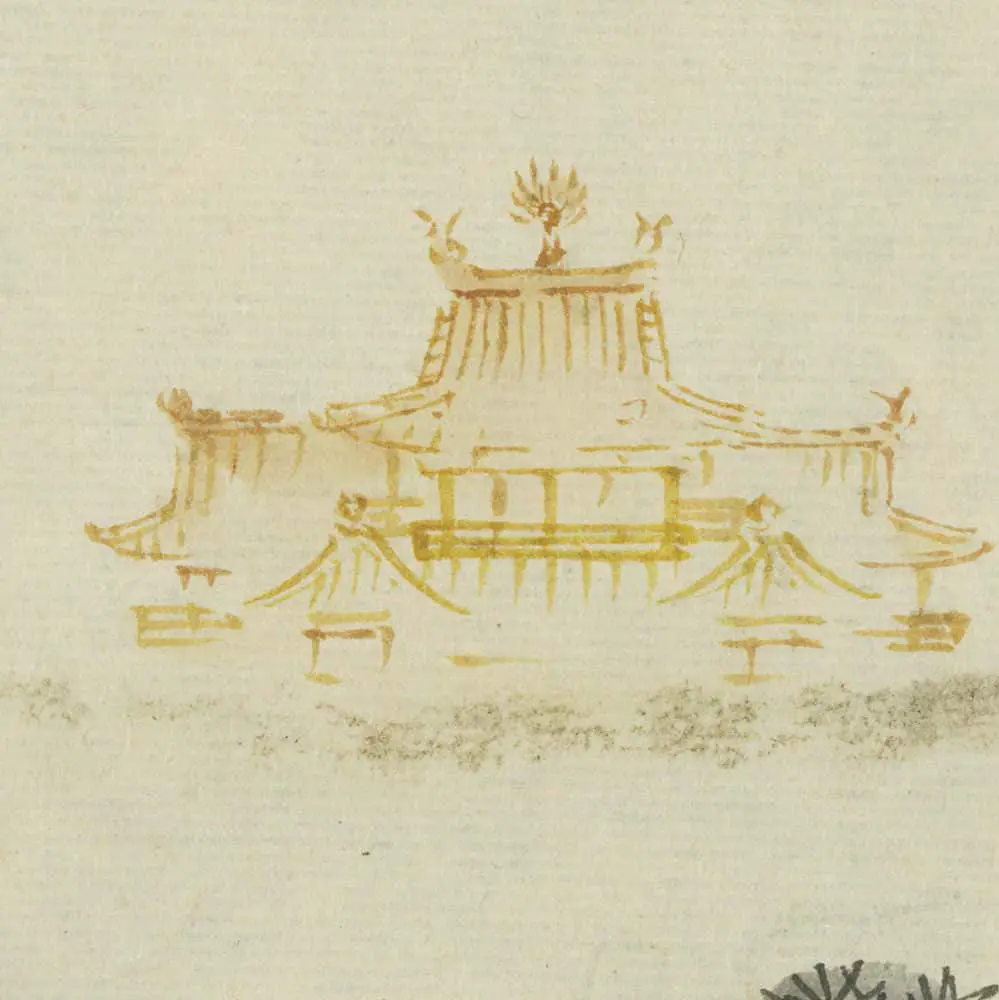
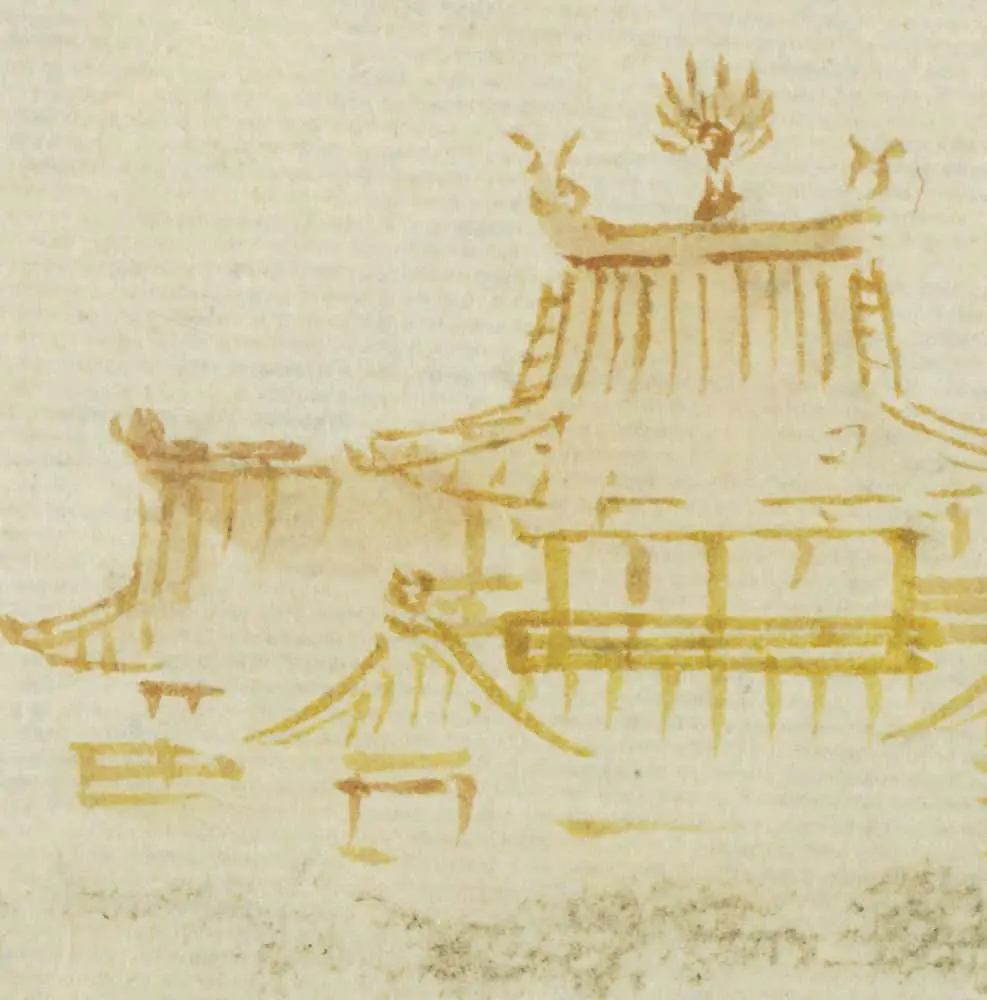
The central composition features a minogame, a mythological long-lived turtle, carrying a rocky outcrop upon its back. From this rock grows a gnarled, ancient pine tree (matsu) and a blossoming plum branch (ume), together forming a powerful triad of longevity and resilience. The turtle is depicted with a long, flowing tail of seaweed, trailing behind it like a heavy brushstroke. Hovering above this terrestrial scene is a spectral, golden-toned architectural structure resembling a shrine or palace (Ryūgū-jō), rendered in a light, ethereal wash. The sparse use of color—limited to subtle green needles, white plum blossoms, and the golden shimmer of the palace—draws focus to the masterful ink linework and the narrative of an immortal realm.

Payment Options: We primarily accept PayPal for all transactions. Credit and debit cards are not accepted. If you prefer to pay by personal check instead of PayPal, please note this preference in the "Additional comments" field when placing your order.Ordering Process
To receive your PayPal invoice, simply fill out the form.
Shipping Details: We ship all orders to the address associated with your PayPal payment. Please ensure your PayPal shipping address is current and accurate.A phone number is required during checkout, as our shipping carrier may need to contact you regarding delivery questions.Shipping RatesUnited States and Canada: $20International destinations (air mail): $40
