Copyright © 2026 Yorke Antique Textiles
.avif)


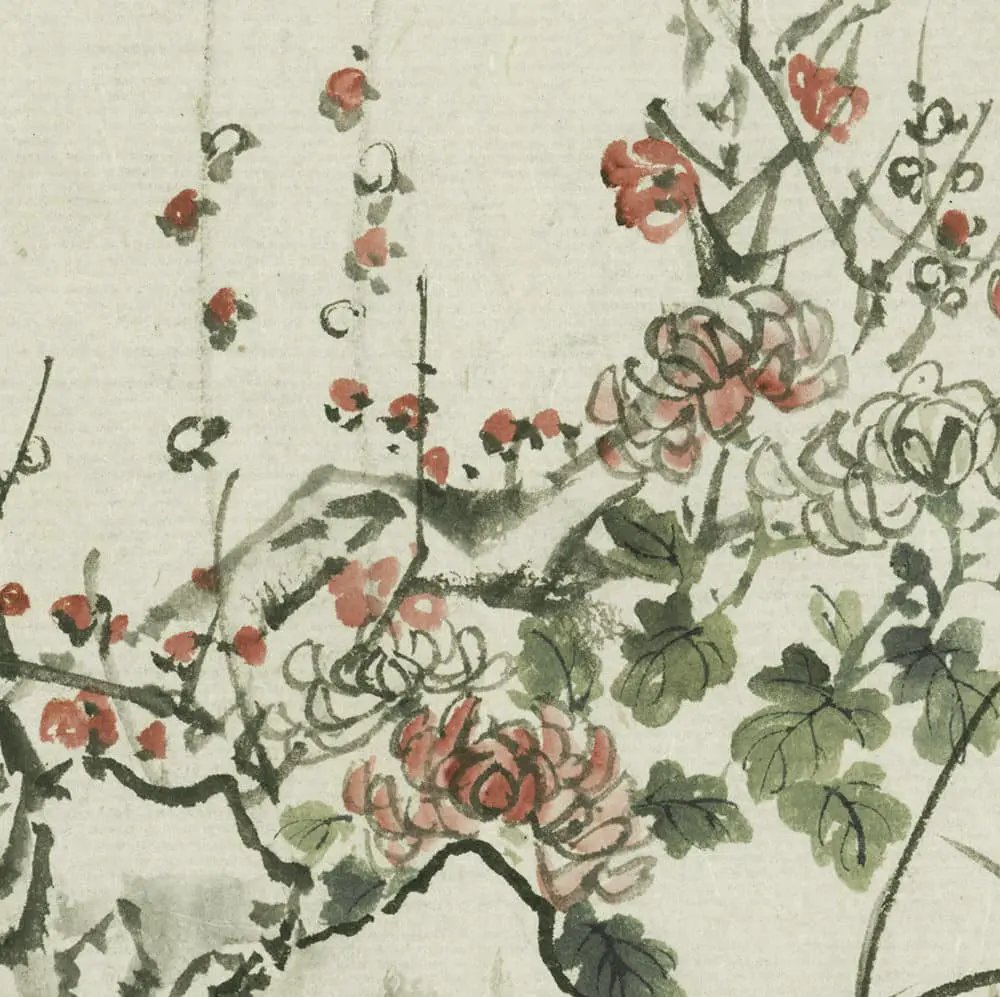
This delicate hand-painted artwork is an original creation from Japan, dating to the second half of the 19th century. Measuring 11 inches by 12 inches (27.94 cm x 30.48 cm), this piece is rendered in watercolor and ink on paper. The artwork is an authentic example of a Meiji-period botanical study, likely created within a Kyoto or Edo painting studio to document classical floral arrangements. Although the paper bears a visible bookworm long hole—a characteristic mark of genuine 19th-century Japanese paper archives—the integrity of the painting remains intact.
The composition centers on a weathered, moss-covered garden rock (suiseki) from which a vibrant variety of flora emerges. Intertwined with the rock are small, red-tipped chrysanthemums (kiku) and clusters of pale pink blossoms, while a tuft of wild orchids (ran) with long, graceful blades of grass grows from the base. The artist utilized a sophisticated "boneless" (mokkotsu) technique, applying washes of color without heavy outlines to achieve a soft, naturalistic effect. The color palette is understated, focusing on earthy greens, muted reds, and the warm, aged tone of the paper, reflecting the scholarly "literati" (nanga) style that remained popular throughout the late 19th century.

Payment Options: We primarily accept PayPal for all transactions. Credit and debit cards are not accepted. If you prefer to pay by personal check instead of PayPal, please note this preference in the "Additional comments" field when placing your order.Ordering Process
To receive your PayPal invoice, simply fill out the form.
Shipping Details: We ship all orders to the address associated with your PayPal payment. Please ensure your PayPal shipping address is current and accurate.A phone number is required during checkout, as our shipping carrier may need to contact you regarding delivery questions.Shipping RatesUnited States and Canada: $20International destinations (air mail): $40
