Copyright © 2026 Yorke Antique Textiles
.avif)


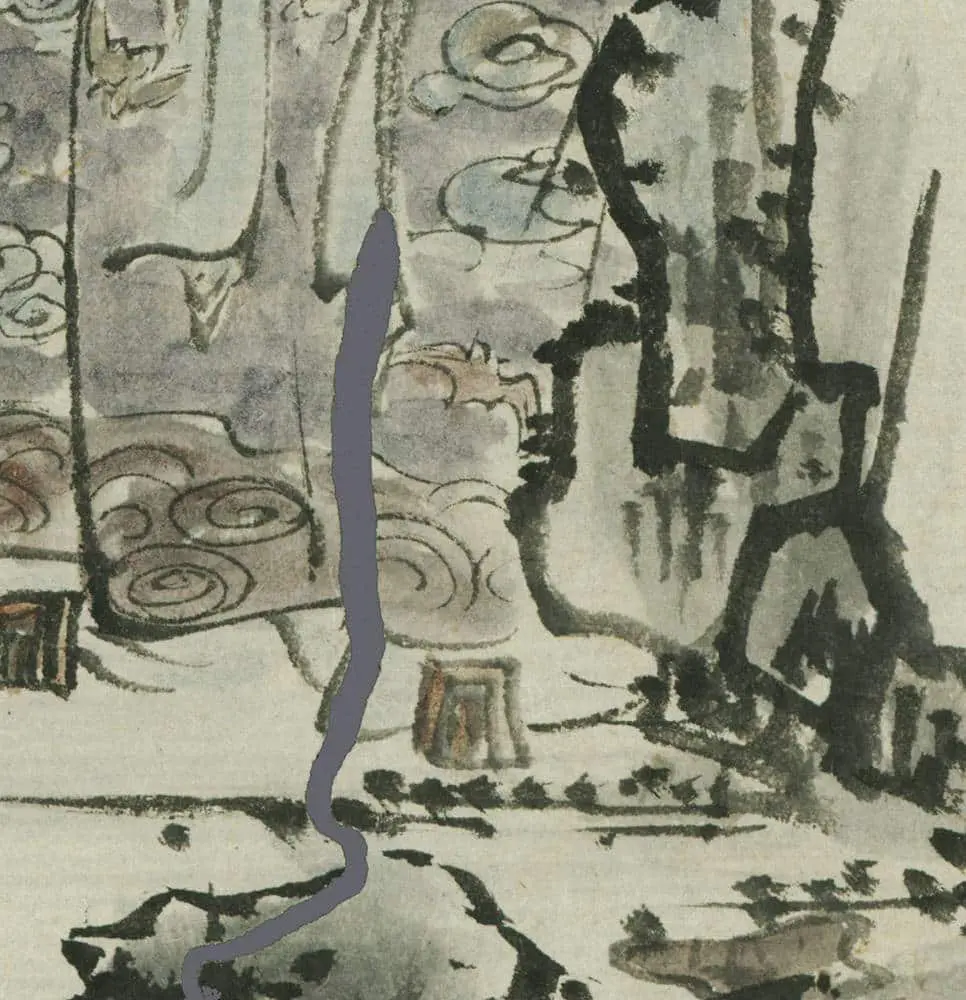
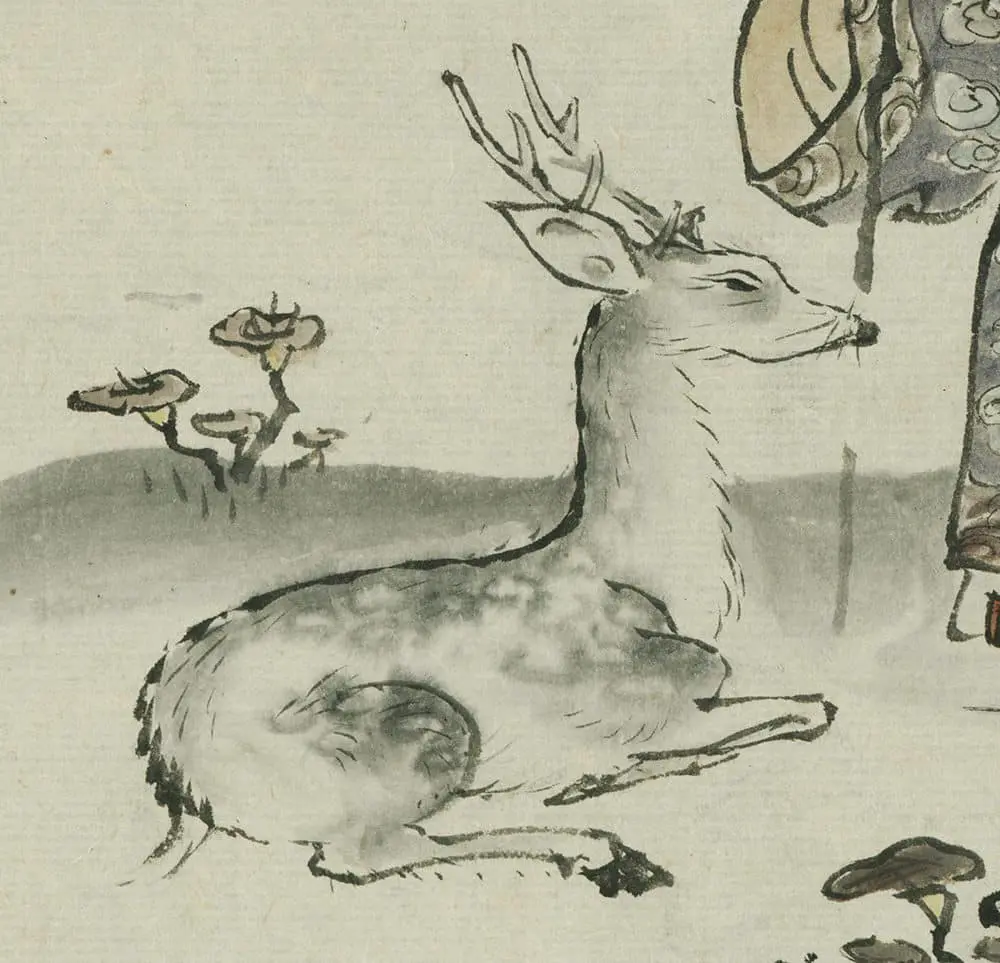
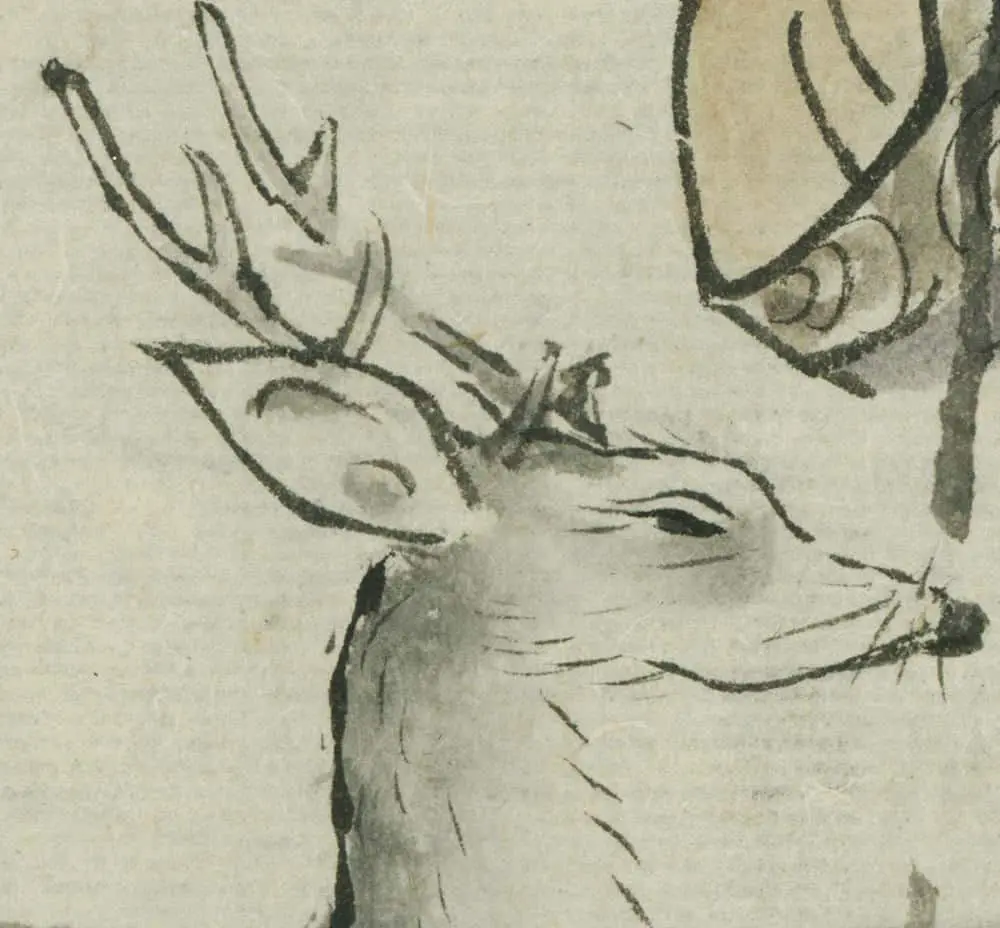

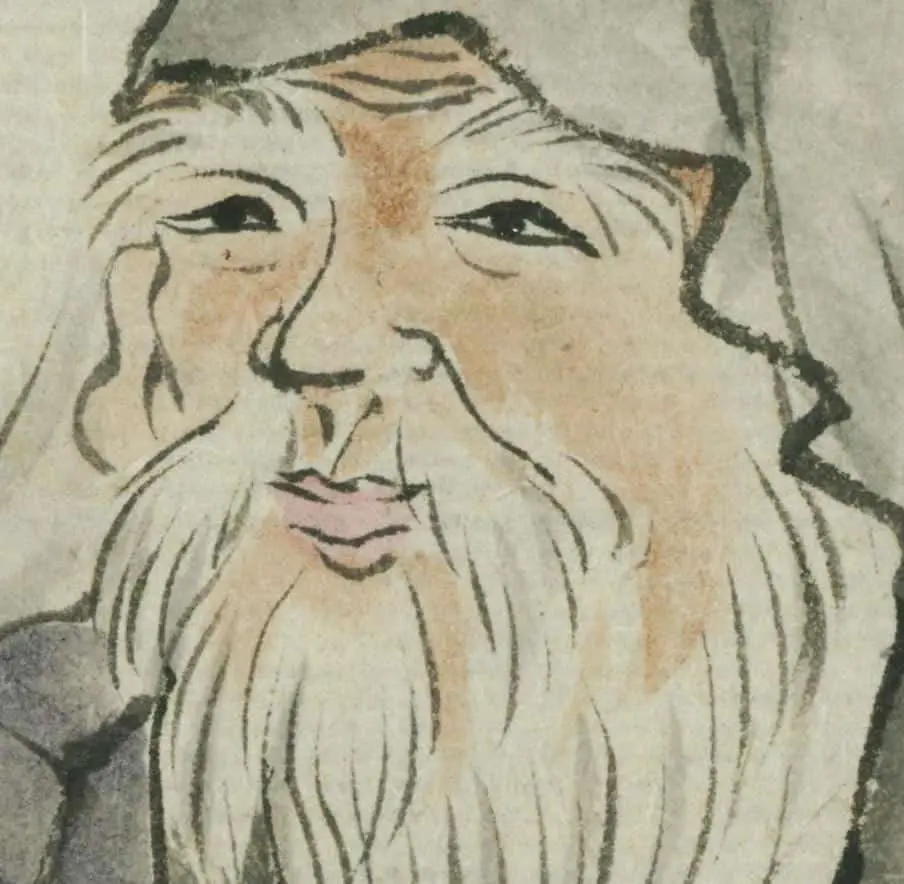
This serene hand-painted artwork is an original creation from Japan, dating to the second half of the 19th century. Measuring 11 inches by 12 inches (27.94 cm x 30.48 cm), the piece is rendered in delicate watercolor and ink on paper. This artwork is a quintessential example of Meiji-period religious and mythological portraiture, focusing on one of the Seven Lucky Gods. While the paper bears a visible bookworm long hole—an authentic sign of its long history within a Japanese archive—the figure and motifs remain beautifully preserved.
The composition centers on Jurōjin, the deity of longevity, characterized by his high, elongated cranium and flowing white beard. He is dressed in a lavishly patterned robe and holds a gnarled staff, standing beside a weathered garden rock. Seated peacefully at his feet is a spotted deer, his traditional messenger and a symbol of immortality, while several lingzhi (reishi) mushrooms—the "fungus of immortality"—sprout from the ground nearby. The artist utilized a combination of fine, calligraphic ink lines for the deity’s features and soft, atmospheric washes for the deer and landscape, creating a sense of calm, timeless wisdom.

Payment Options: We primarily accept PayPal for all transactions. Credit and debit cards are not accepted. If you prefer to pay by personal check instead of PayPal, please note this preference in the "Additional comments" field when placing your order.Ordering Process
To receive your PayPal invoice, simply fill out the form.
Shipping Details: We ship all orders to the address associated with your PayPal payment. Please ensure your PayPal shipping address is current and accurate.A phone number is required during checkout, as our shipping carrier may need to contact you regarding delivery questions.Shipping RatesUnited States and Canada: $20International destinations (air mail): $40
