Copyright © 2026 Yorke Antique Textiles
.avif)

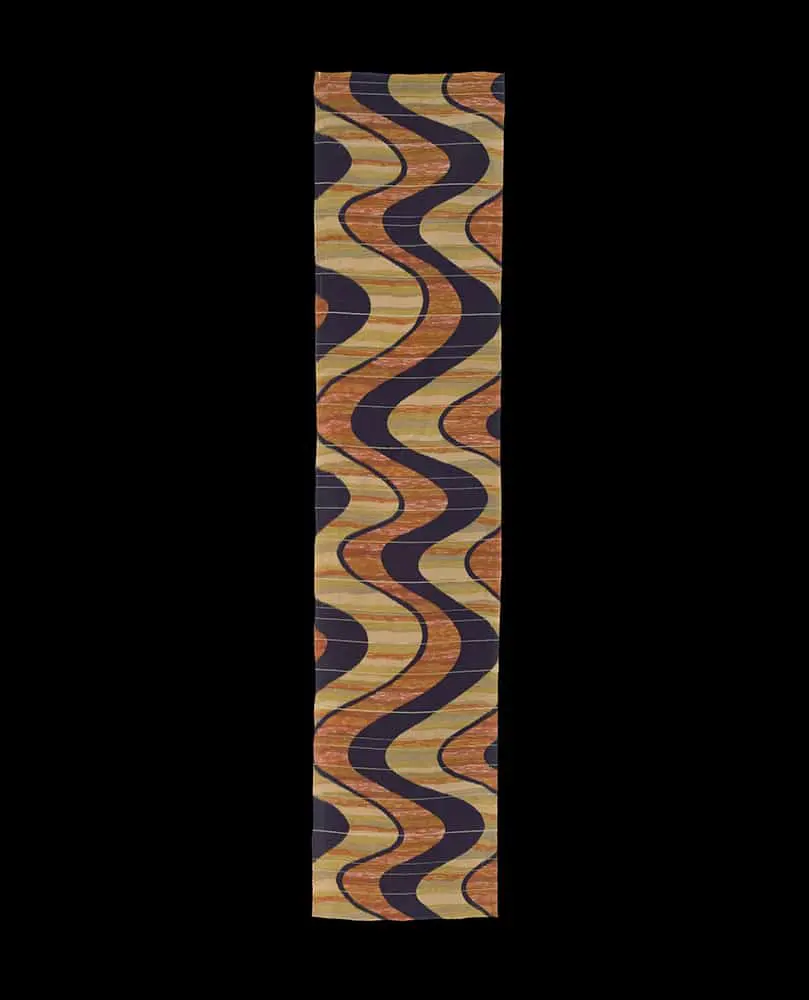

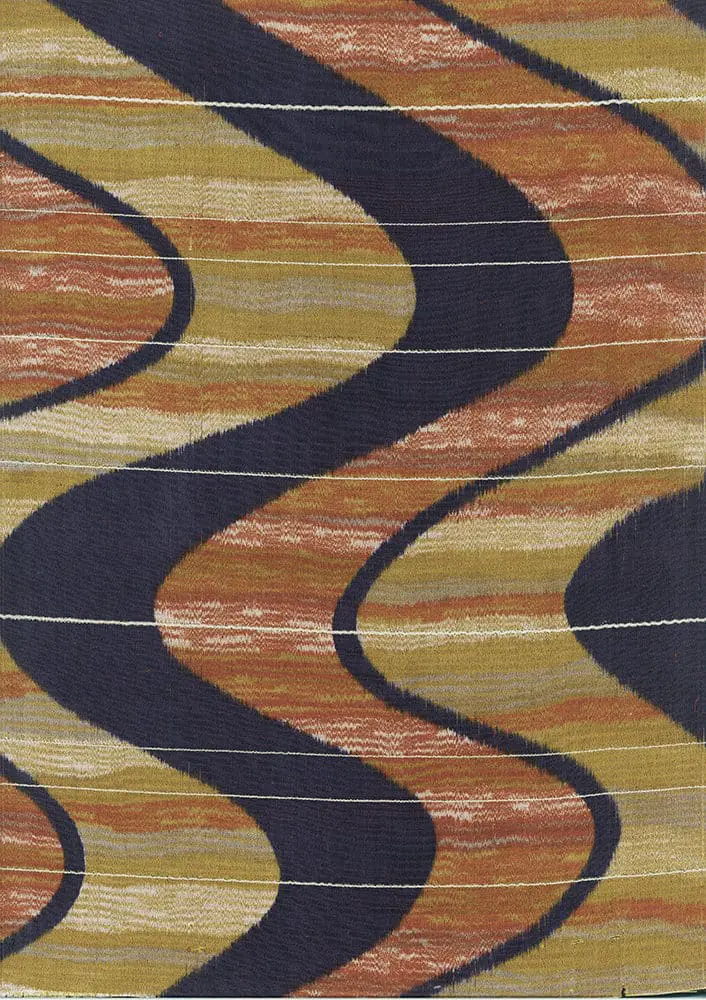
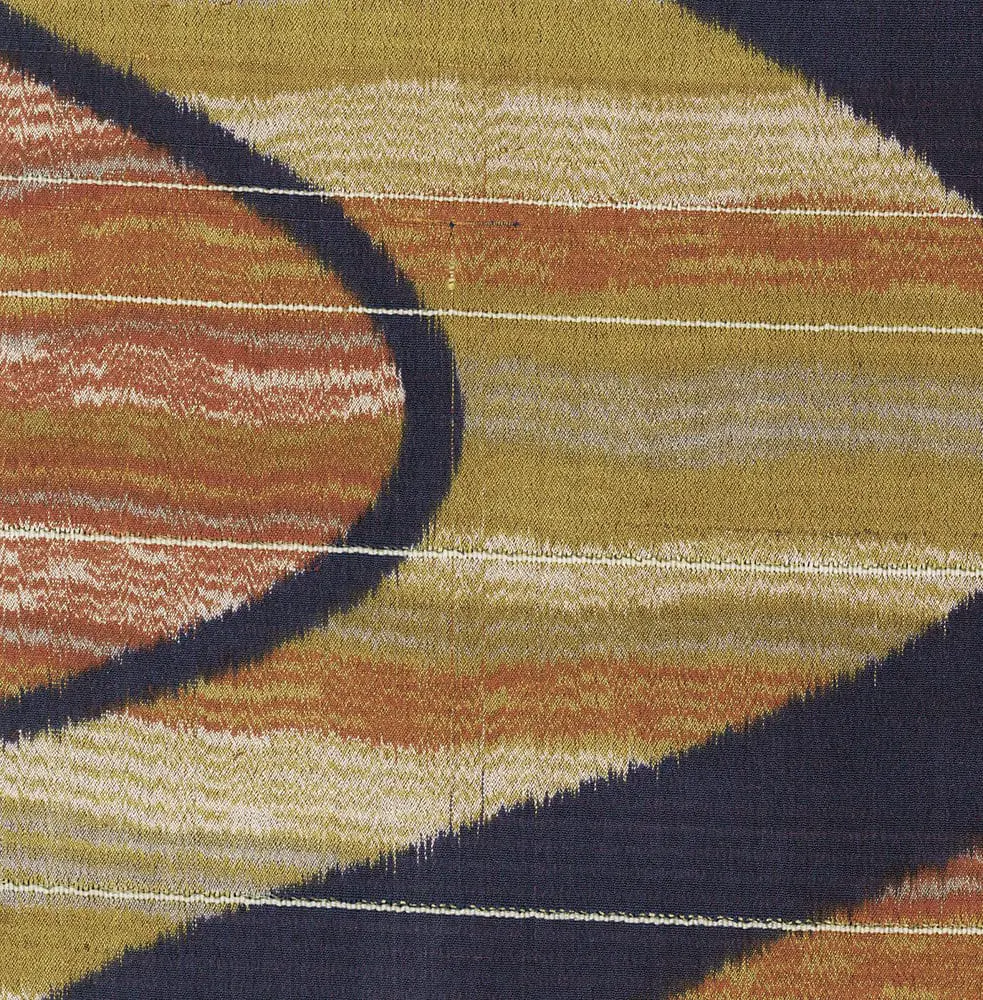
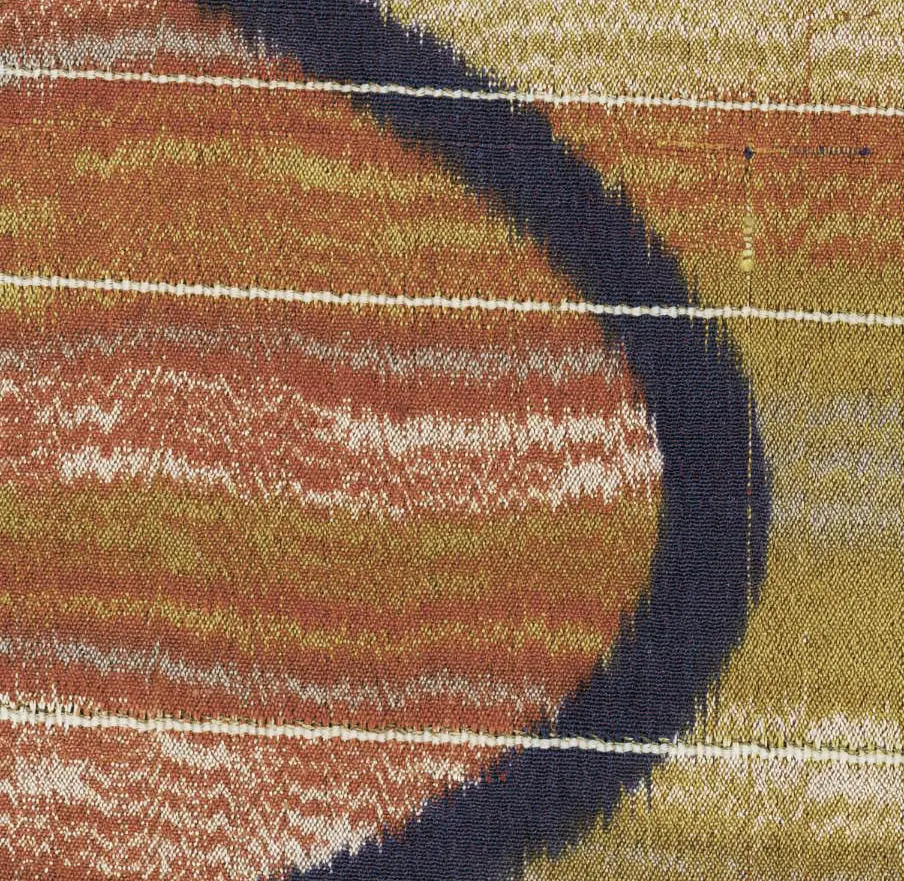
This dynamic textile originates from Japan’s mid-Showa period (1940–1960) and is a scholarly example of the bold, experimental aesthetics that defined post-war urban fashion. Measuring 14 inches by 55 inches (36 cm x 140 cm), the piece represents a complete panel from a disassembled kimono, preserved in very good condition. It is crafted from meisen silk, a material celebrated for its crisp handle and the distinctive "blurred" edges of its patterns, achieved through the innovative kasuri (ikat) pre-dyeing technique.
The visual narrative is dominated by a rhythmic, undulating "psychedelic" wave pattern that travels vertically across the entire panel. The composition uses a high-contrast palette of deep eggplant purple, vibrant pumpkin orange, and golden ochre, separated by thin, horizontal accent lines. This optical, wavy motif reflects the era's movement away from traditional botanical realism toward bold, mid-century modern geometric designs. The slightly feathered edges of the color transitions—a hallmark of the meisen weaving process—add a sense of vibration and fluid energy to the architectural structure of the pattern.

Payment Options: We primarily accept PayPal for all transactions. Credit and debit cards are not accepted. If you prefer to pay by personal check instead of PayPal, please note this preference in the "Additional comments" field when placing your order.Ordering Process
To receive your PayPal invoice, simply fill out the form.
Shipping Details: We ship all orders to the address associated with your PayPal payment. Please ensure your PayPal shipping address is current and accurate.A phone number is required during checkout, as our shipping carrier may need to contact you regarding delivery questions.Shipping RatesUnited States and Canada: $20International destinations (air mail): $40
