Copyright © 2026 Yorke Antique Textiles
.avif)

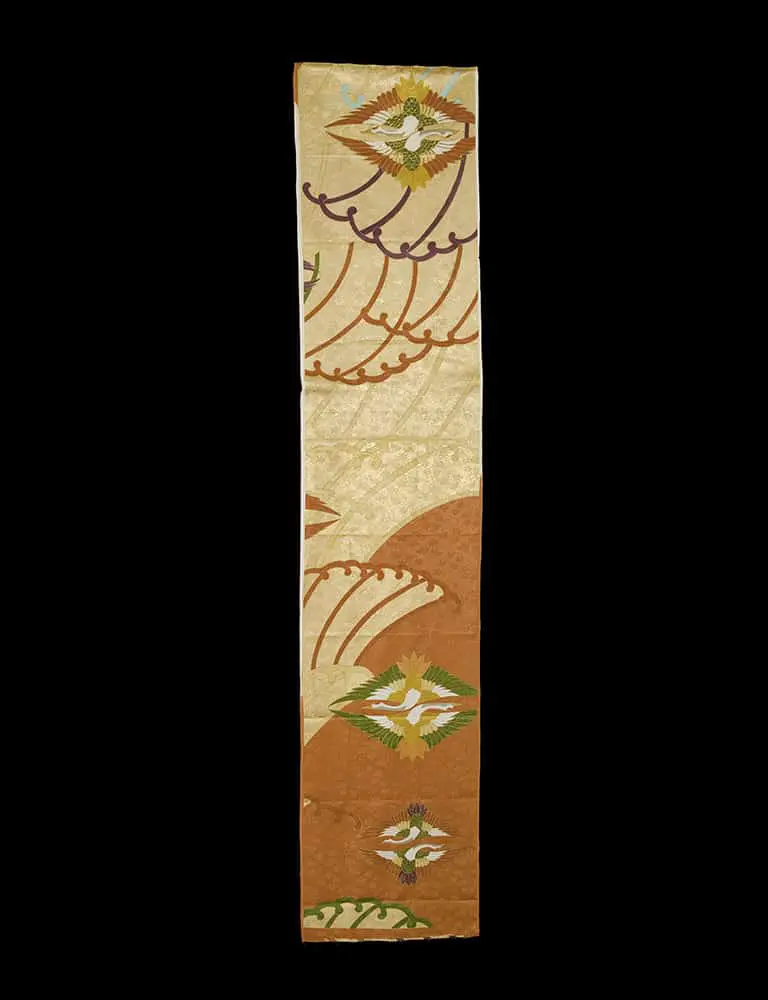
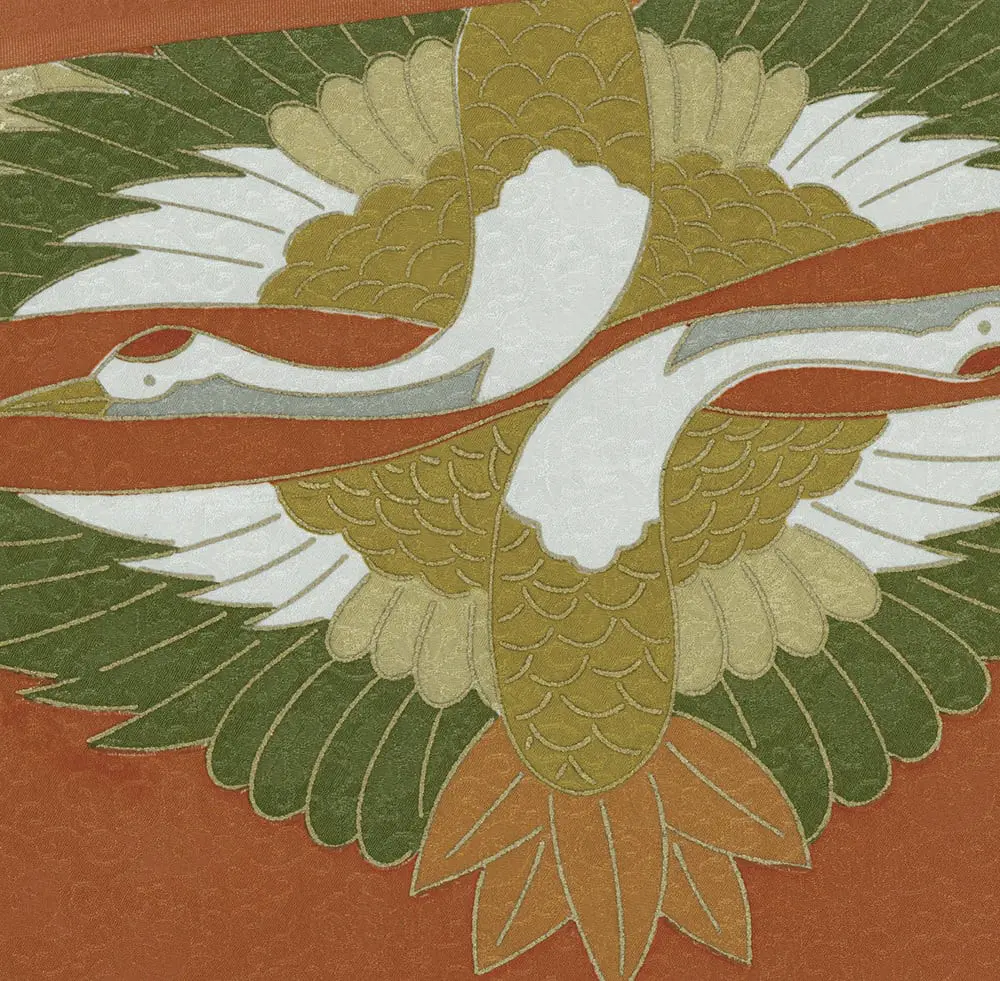

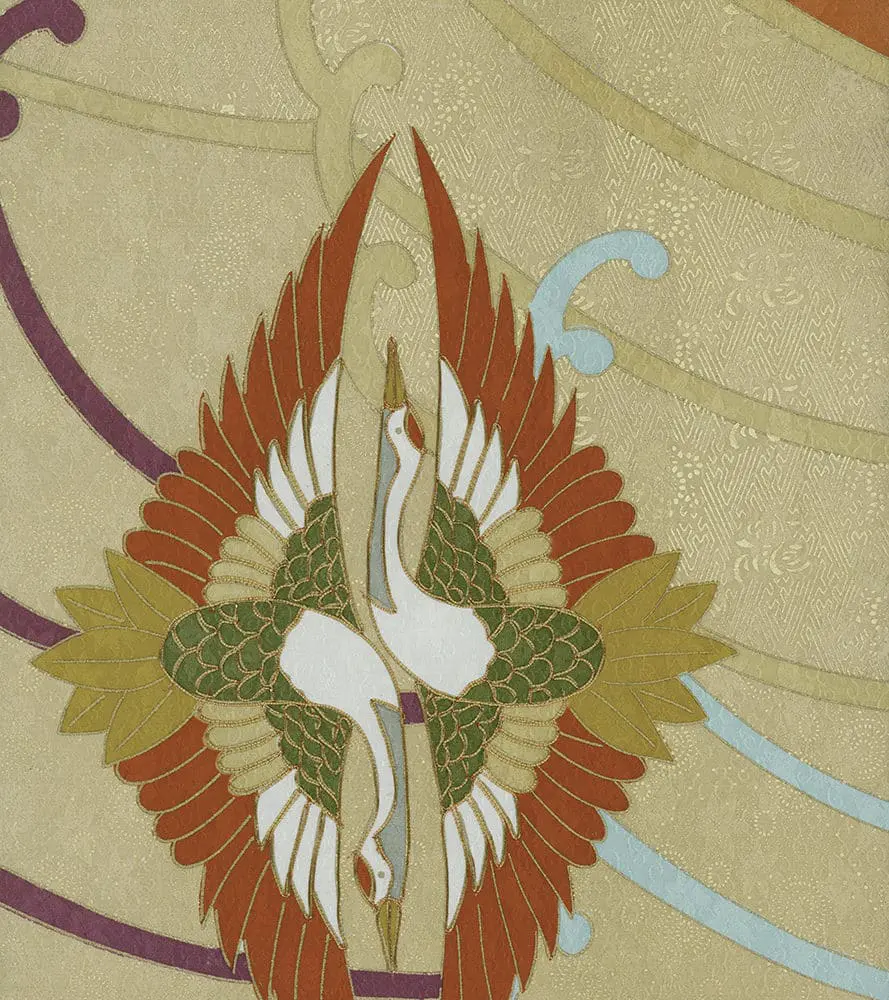
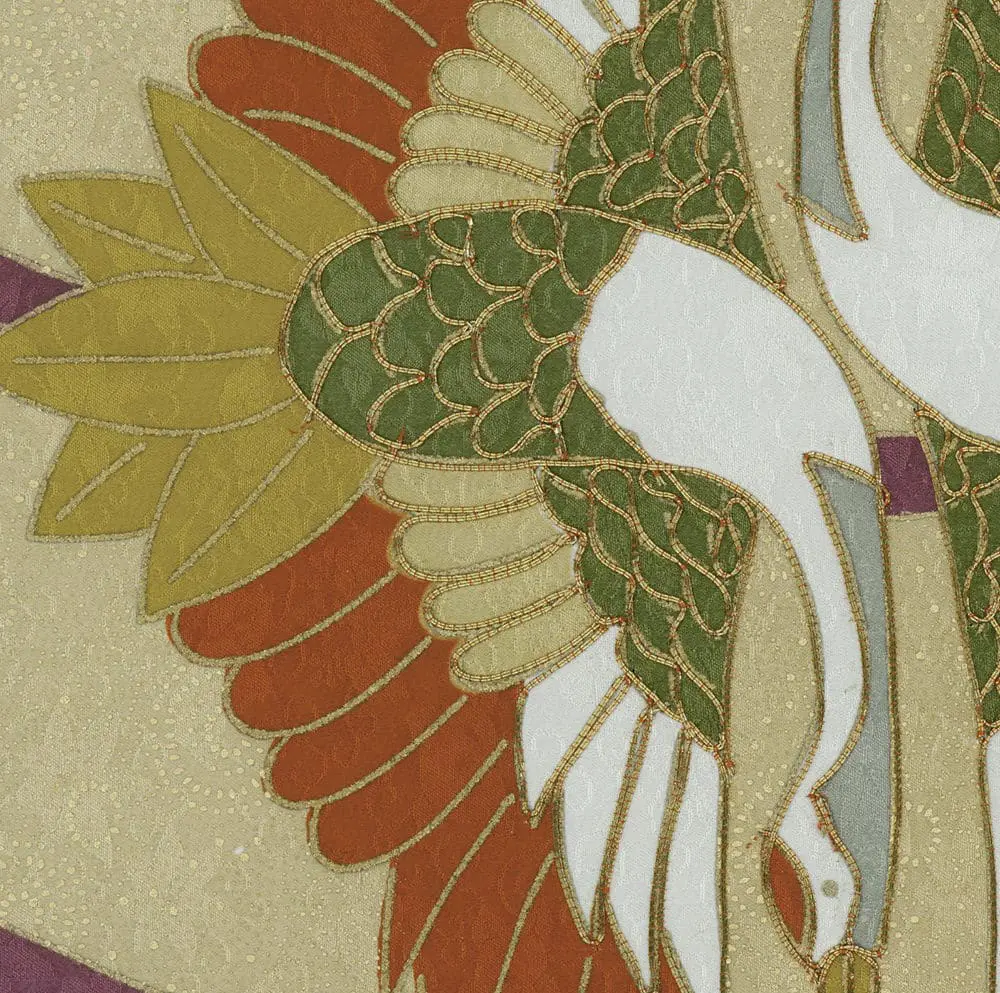

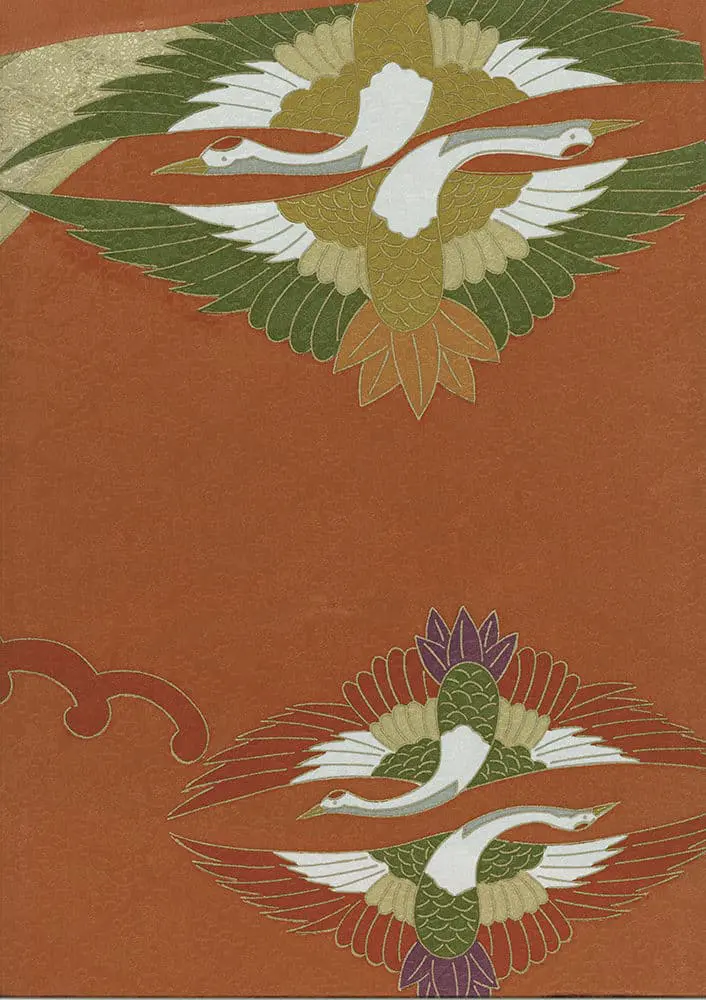
This monumental textile originates from Japan’s early Showa period (1926–1940) and is a scholarly example of the peak of ceremonial craftsmanship. Measuring 15 inches by 87 inches (38 cm x 221 cm), this significant panel was extracted from a wedding uchikake, the most formal over-garment in Japanese tradition. The substrate is a premium rinzu (silk damask), providing a shimmering, tonal background that is heavily augmented by gold and deep orange dyes.
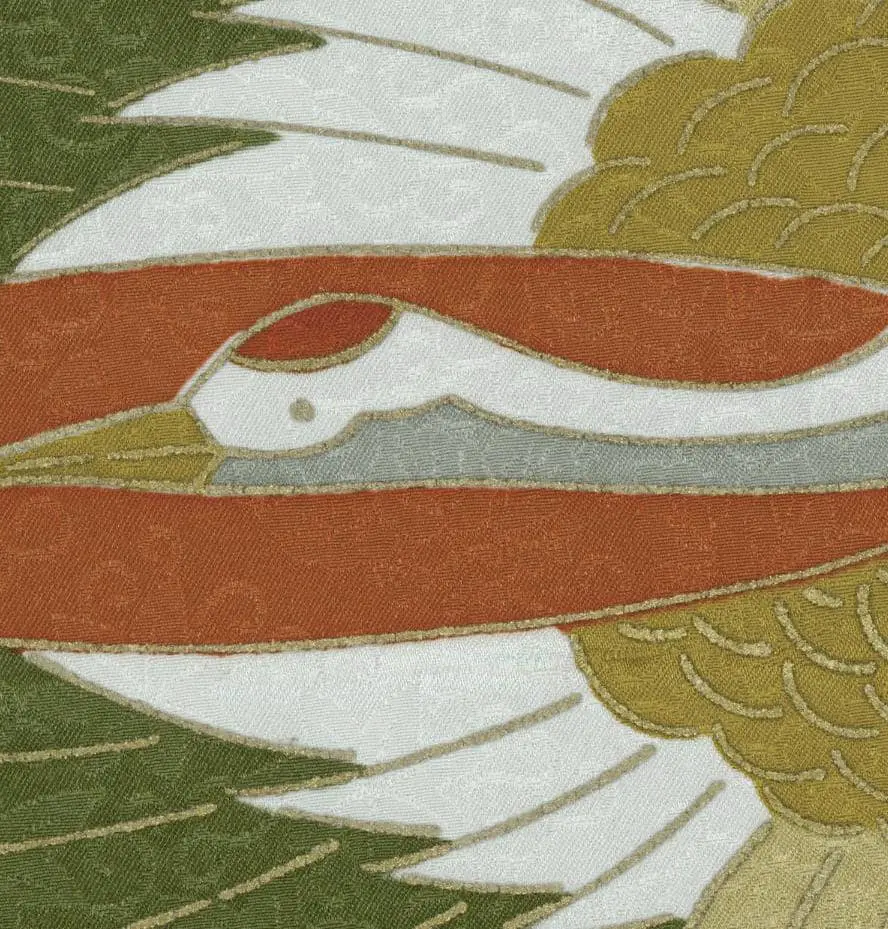
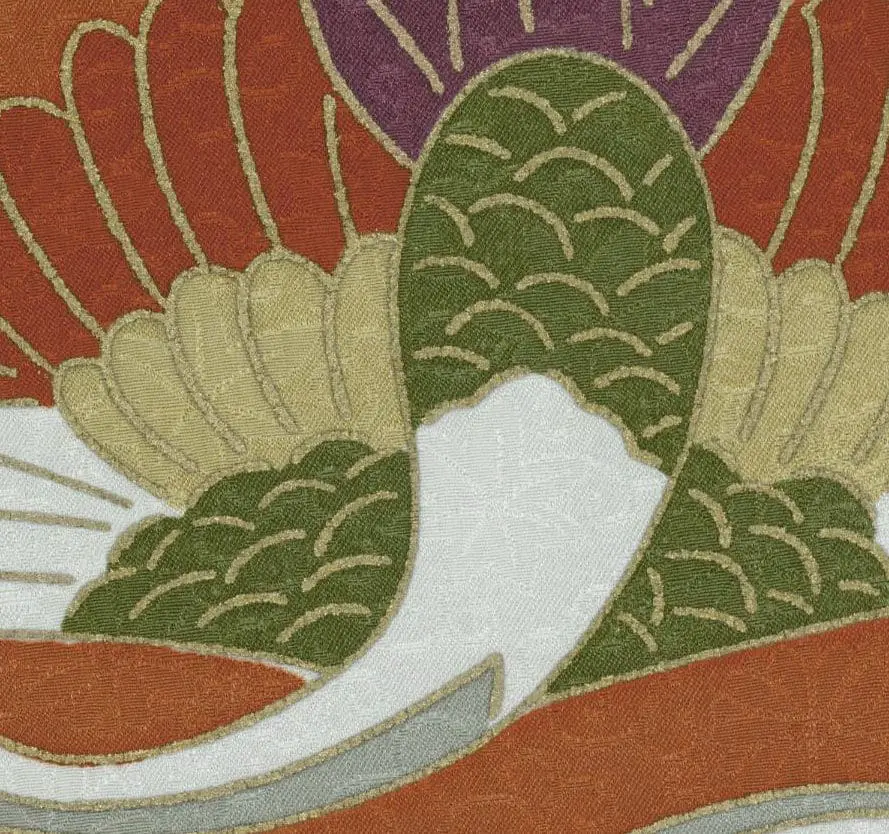
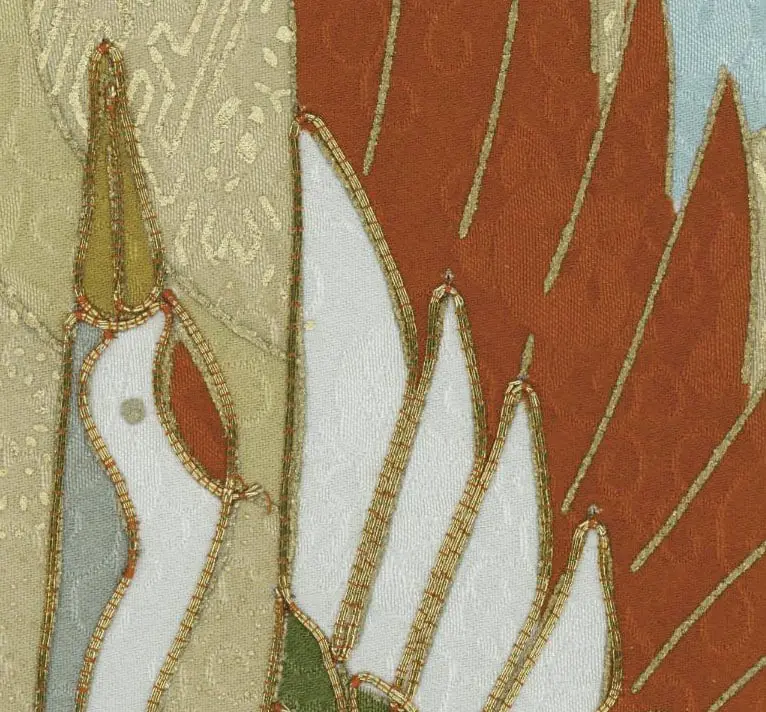
The visual narrative is dominated by immense, stylized nami (cresting waves) and hishi (diamond lozenge) shapes. Within these lozenges are fabulous yuzen painted cranes, rendered with a sophisticated palette of sky blue, deep purple, yellow, and red. The panel is a masterclass in metallic embellishment, featuring an abundance of metallic gold screen washing, meticulous gold metallic thread couching, and hand-painted gold highlighting throughout. These elements combine to create a high-status piece that reflects the grandeur of pre-war celebratory attire, symbolizing resilience through the wave motifs and eternal life through the crane imagery.

Payment Options: We primarily accept PayPal for all transactions. Credit and debit cards are not accepted. If you prefer to pay by personal check instead of PayPal, please note this preference in the "Additional comments" field when placing your order.Ordering Process
To receive your PayPal invoice, simply fill out the form.
Shipping Details: We ship all orders to the address associated with your PayPal payment. Please ensure your PayPal shipping address is current and accurate.A phone number is required during checkout, as our shipping carrier may need to contact you regarding delivery questions.Shipping RatesUnited States and Canada: $20International destinations (air mail): $40
