Copyright © 2026 Yorke Antique Textiles
.avif)

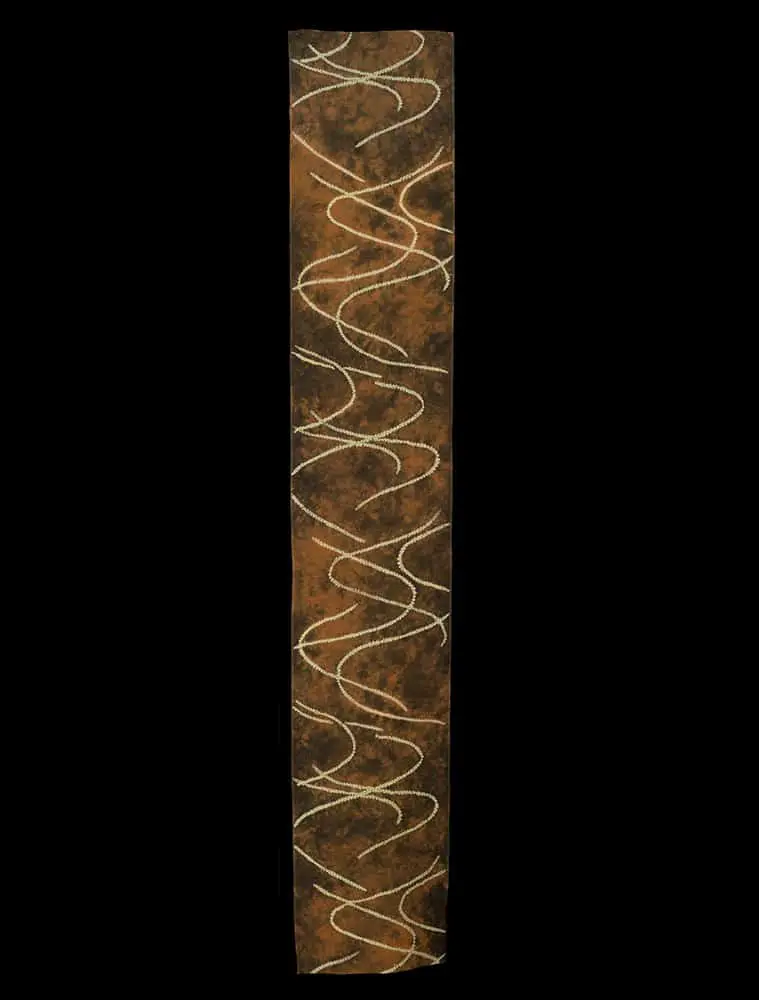
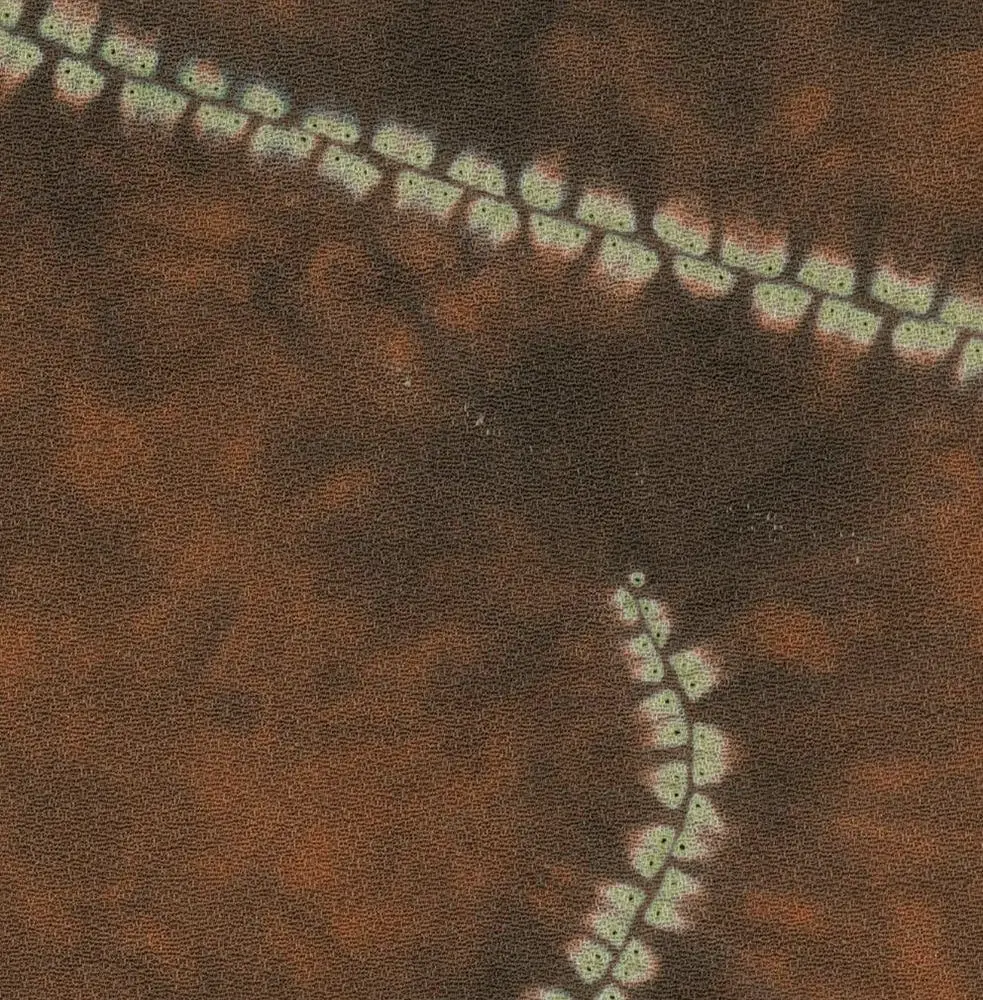
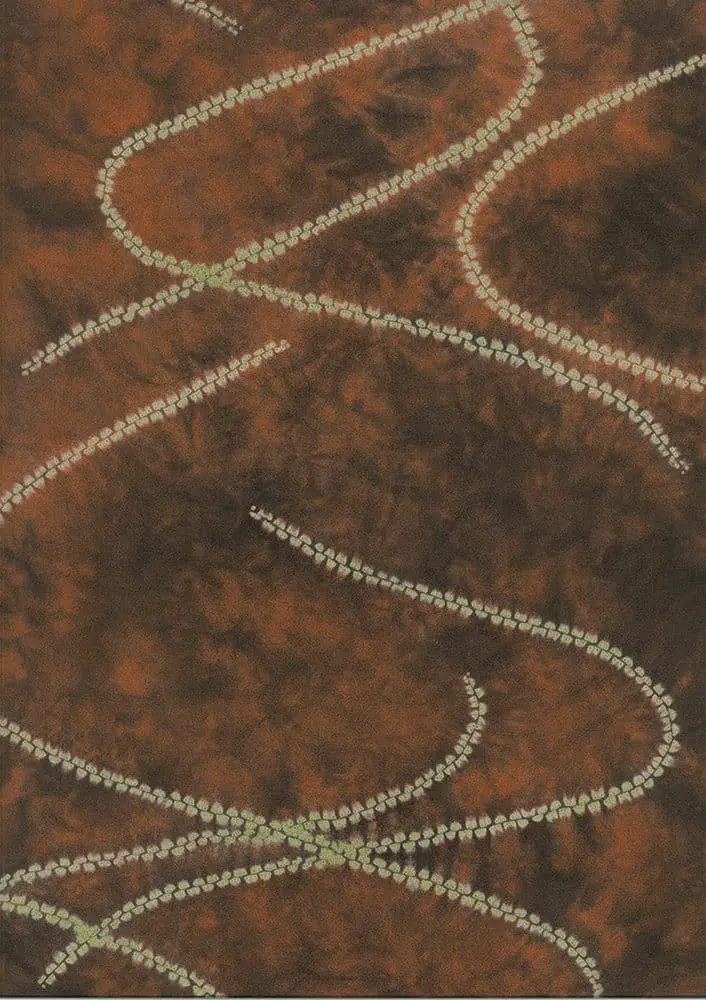
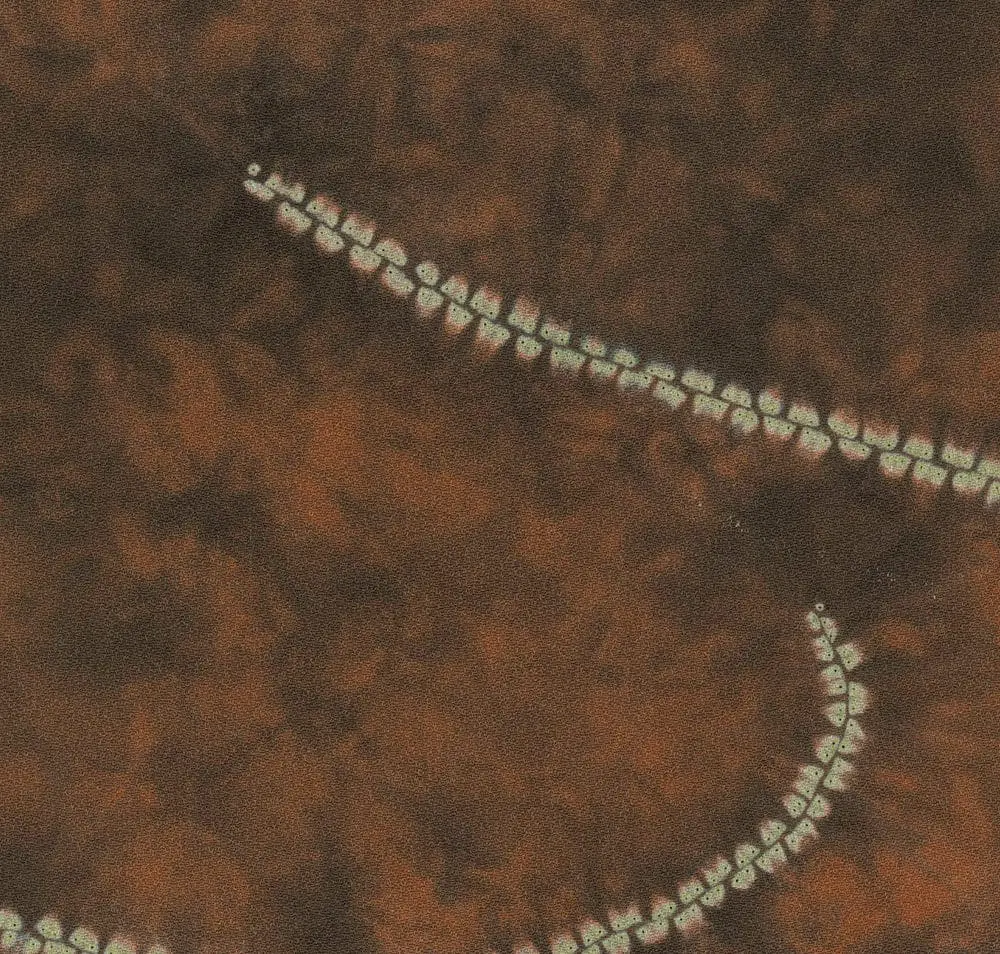
This evocative textile originates from Japan’s mid-Showa period (1940–1960) and is a scholarly example of the atmospheric, experimental dyeing techniques that defined mid-century silk design. Measuring an impressive 14 inches by 83 inches (36 cm x 211 cm), this elongated panel was extracted from a high-quality kimono and remains in excellent condition. The substrate is a refined silk featuring a complex, mottled background achieved through a sophisticated airbrushing technique that mimics the organic texture of weathered metal or dark rust.
The visual narrative is defined by a series of rhythmic, undulating wave patterns executed in the shibori (resist-dyeing) tradition. These waves consist of fine, ivory-colored dotted lines that arc gracefully across the panel, creating a sense of continuous horizontal movement within a vertical frame. The contrast between the precise, granular texture of the shibori resists and the soft, moody gradients of the dark rust-toned background reflects a post-war aesthetic that favored naturalistic textures and subtle, non-traditional color palettes.

Payment Options: We primarily accept PayPal for all transactions. Credit and debit cards are not accepted. If you prefer to pay by personal check instead of PayPal, please note this preference in the "Additional comments" field when placing your order.Ordering Process
To receive your PayPal invoice, simply fill out the form.
Shipping Details: We ship all orders to the address associated with your PayPal payment. Please ensure your PayPal shipping address is current and accurate.A phone number is required during checkout, as our shipping carrier may need to contact you regarding delivery questions.Shipping RatesUnited States and Canada: $20International destinations (air mail): $40
