Copyright © 2026 Yorke Antique Textiles
.avif)

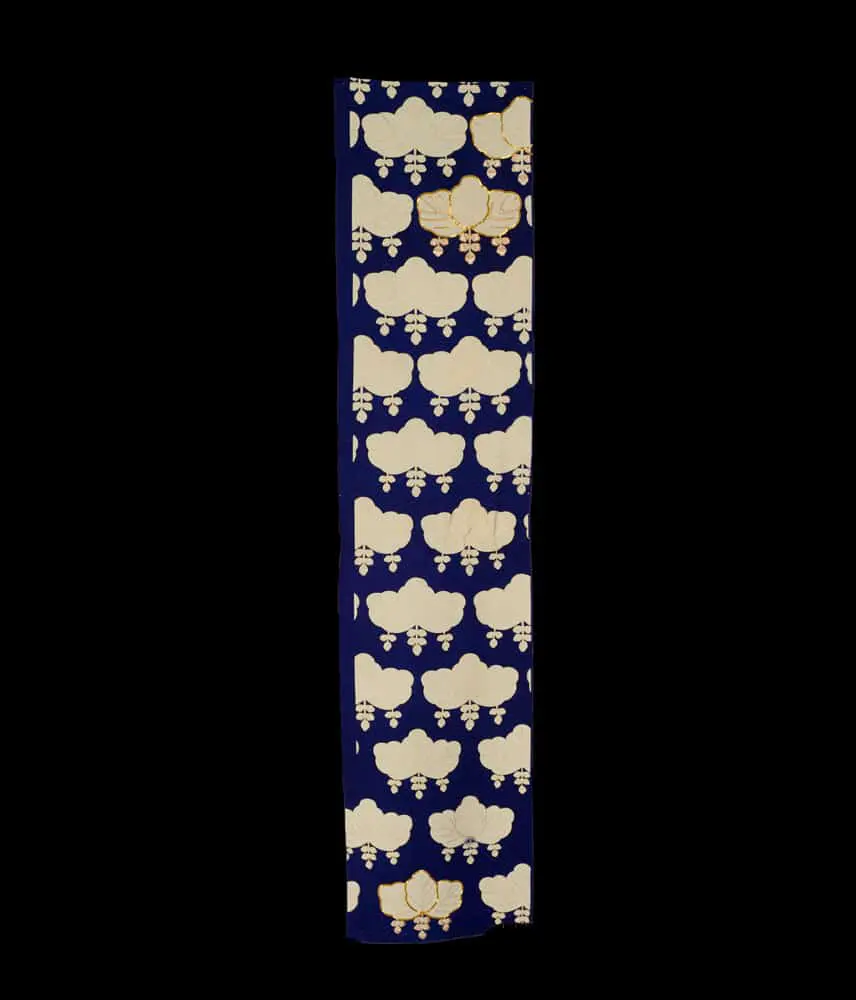
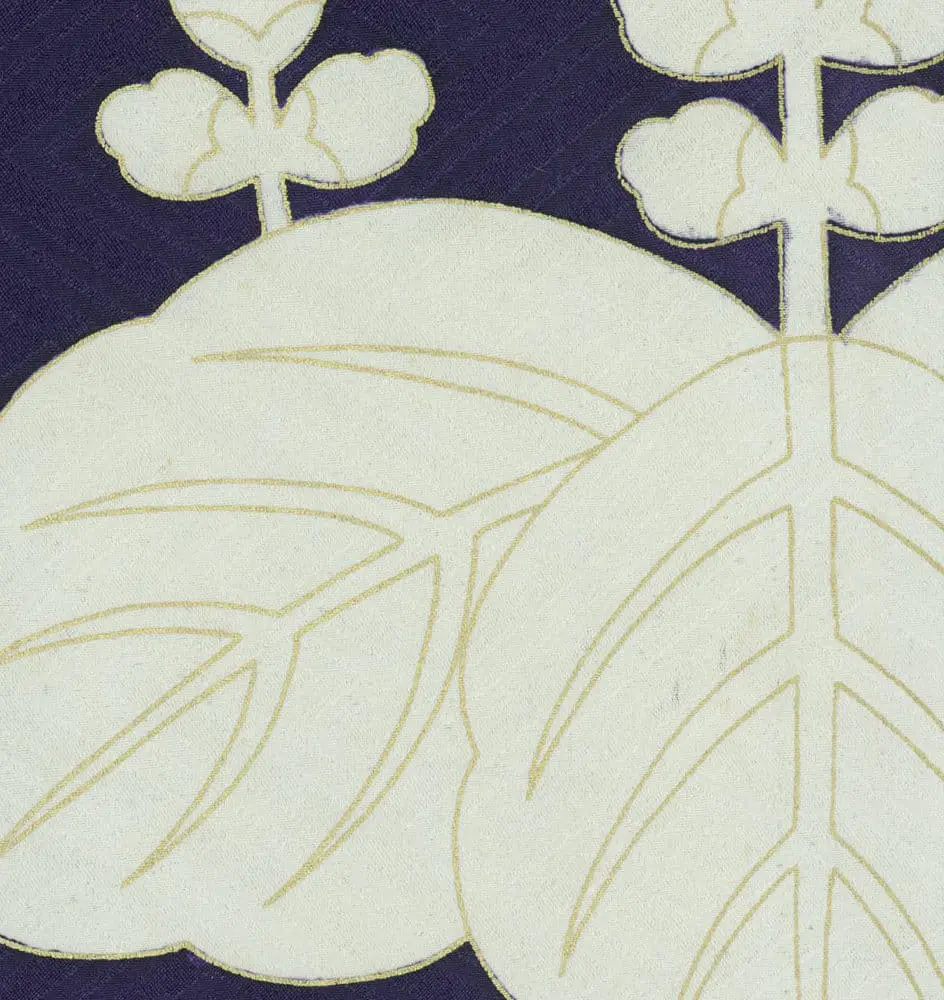
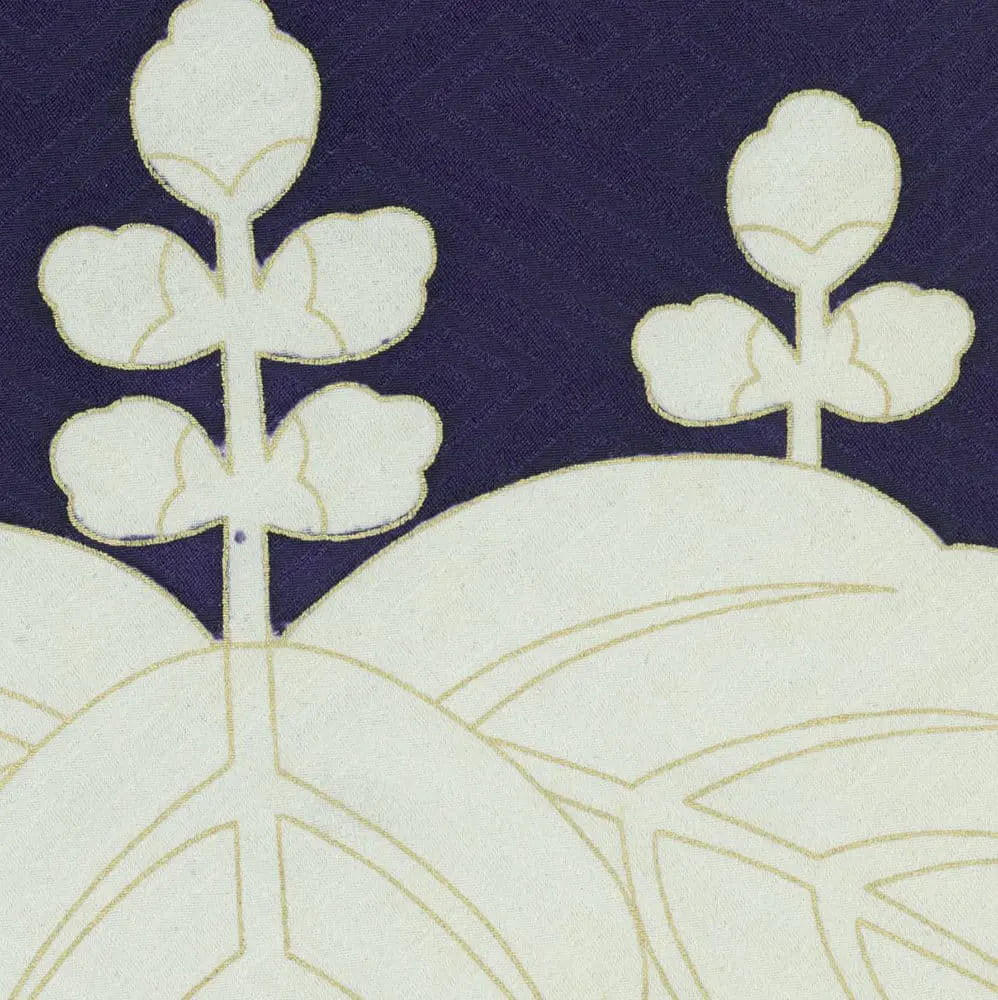
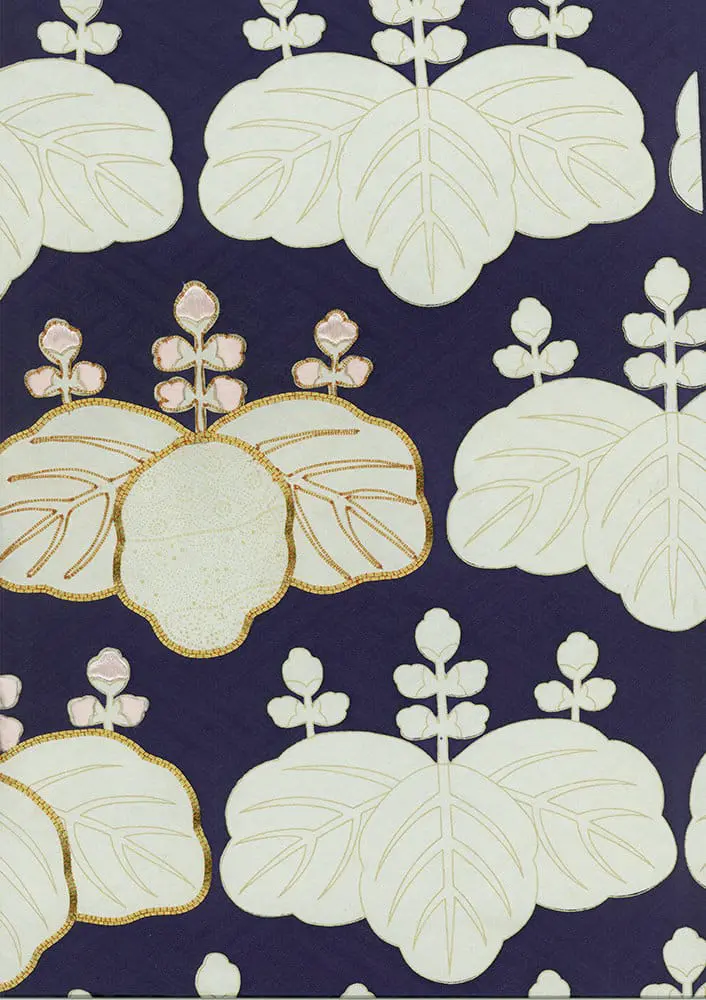
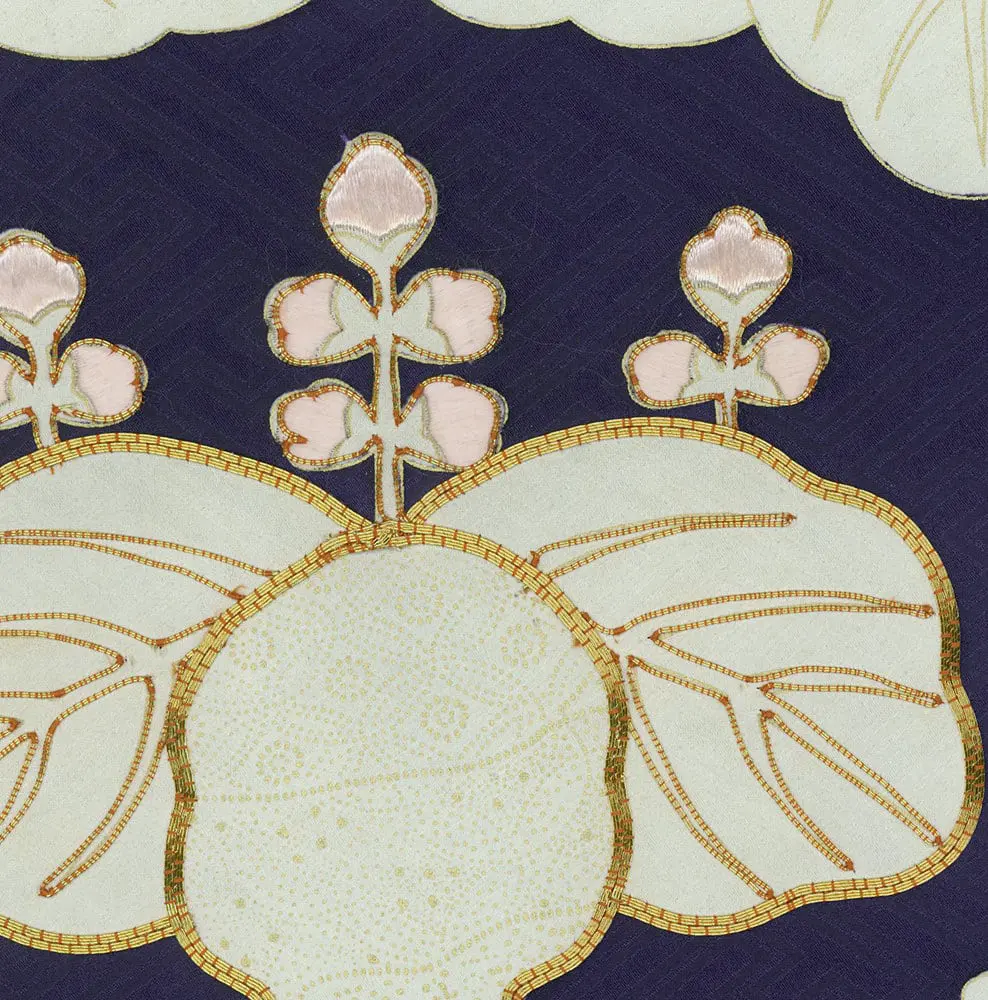
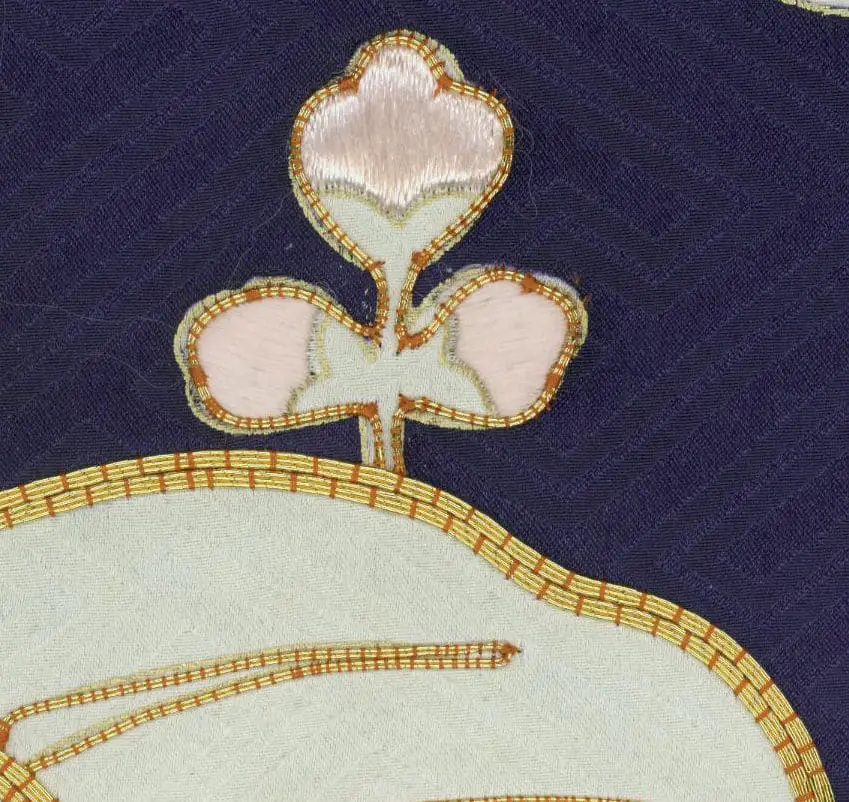
This prestigious textile originates from Japan’s early to mid-Showa period (1926–1950) and is a scholarly example of the refined heraldic motifs used in formal feminine attire. Measuring 14.5 inches by 63 inches (37 cm x 160 cm), the piece represents a complete panel from a disassembled kimono, preserved in very good condition. The substrate is a high-quality rinzu (silk damask), dyed in a deep, saturated navy blue that provides a nocturnal and dignified background for the repeating pattern.
The visual narrative is dominated by the kirimon (paulownia crest), a classical symbol of justice and benevolence traditionally associated with the Imperial family and high-ranking nobility. The paulownias are rendered in a crisp, ivory-white yuzen painting, arranged in a rhythmic, staggered vertical composition. Each blossom is meticulously outlined with gold foil highlights, while select motifs are further elevated with metallic couching and fine embroidery. This combination of traditional resist-dyeing and opulent metallic embellishment reflects the era's mastery of blending ancient crest symbolism with the structured, graphic precision of early 20th-century design.

Payment Options: We primarily accept PayPal for all transactions. Credit and debit cards are not accepted. If you prefer to pay by personal check instead of PayPal, please note this preference in the "Additional comments" field when placing your order.Ordering Process
To receive your PayPal invoice, simply fill out the form.
Shipping Details: We ship all orders to the address associated with your PayPal payment. Please ensure your PayPal shipping address is current and accurate.A phone number is required during checkout, as our shipping carrier may need to contact you regarding delivery questions.Shipping RatesUnited States and Canada: $20International destinations (air mail): $40
