Copyright © 2026 Yorke Antique Textiles
.avif)

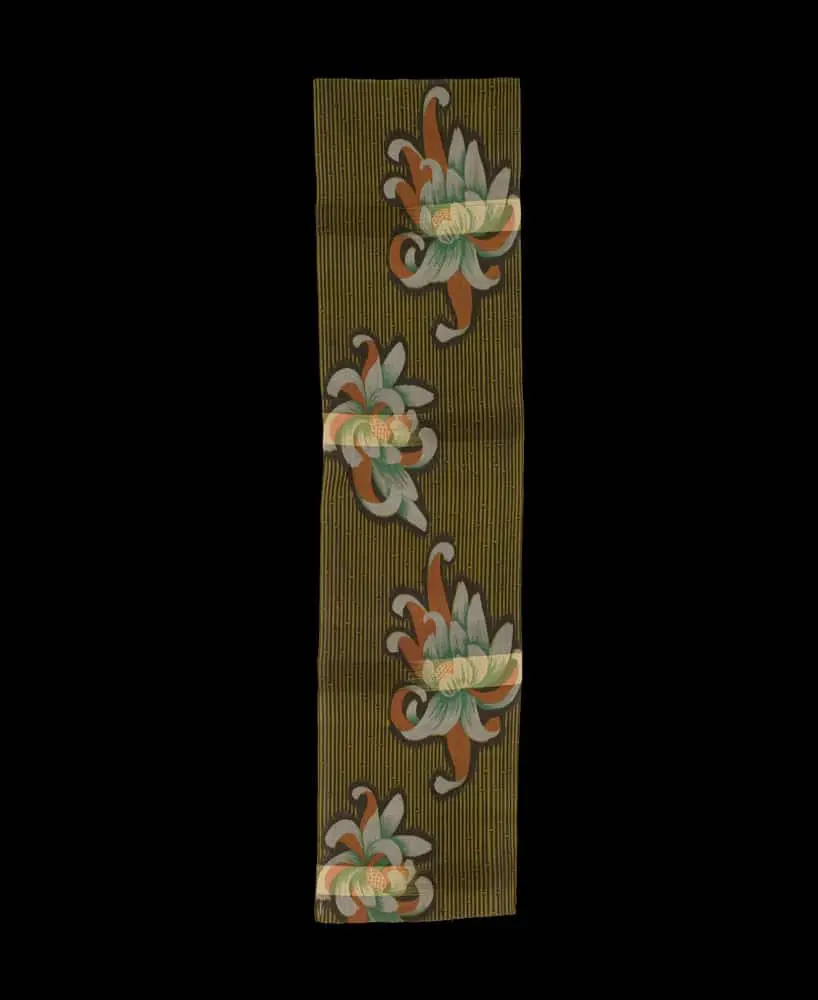

This striking textile originates from Japan’s Early Showa period (1926–1940) and is a scholarly example of the bold, graphic innovation found in pre-war meisen silk. Measuring 13.25 inches by 54 inches (34 cm x 137 cm), the panel remains in very good condition, showcasing the durable weave and vibrant color-fastness typical of high-quality kasuri (ikat) dyeing. The composition features four large-scale kiku (chrysanthemum) blooms set against a rhythmic, vertical background of striped bamboo.
The visual narrative is defined by its sophisticated color palette and architectural motifs. The background consists of olive-green and black vertical stripes representing bamboo stalks, providing a structured, linear contrast to the organic flow of the flowers. Each chrysanthemum is rendered with the characteristic "blurred" edges of the meisen technique, using a palette of soft teal-green, vibrant orange, and pale cream. These large blooms are staggered vertically, creating a dynamic energy that pulls the eye along the panel’s four-foot span. This specific design reflects the Early Showa era's "Modern Girl" aesthetic, where traditional symbols like the chrysanthemum were reimagined with exaggerated proportions and non-traditional color schemes to suit the evolving fashion of the time.

Payment Options: We primarily accept PayPal for all transactions. Credit and debit cards are not accepted. If you prefer to pay by personal check instead of PayPal, please note this preference in the "Additional comments" field when placing your order.Ordering Process
To receive your PayPal invoice, simply fill out the form.
Shipping Details: We ship all orders to the address associated with your PayPal payment. Please ensure your PayPal shipping address is current and accurate.A phone number is required during checkout, as our shipping carrier may need to contact you regarding delivery questions.Shipping RatesUnited States and Canada: $20International destinations (air mail): $40
