Copyright © 2026 Yorke Antique Textiles
.avif)

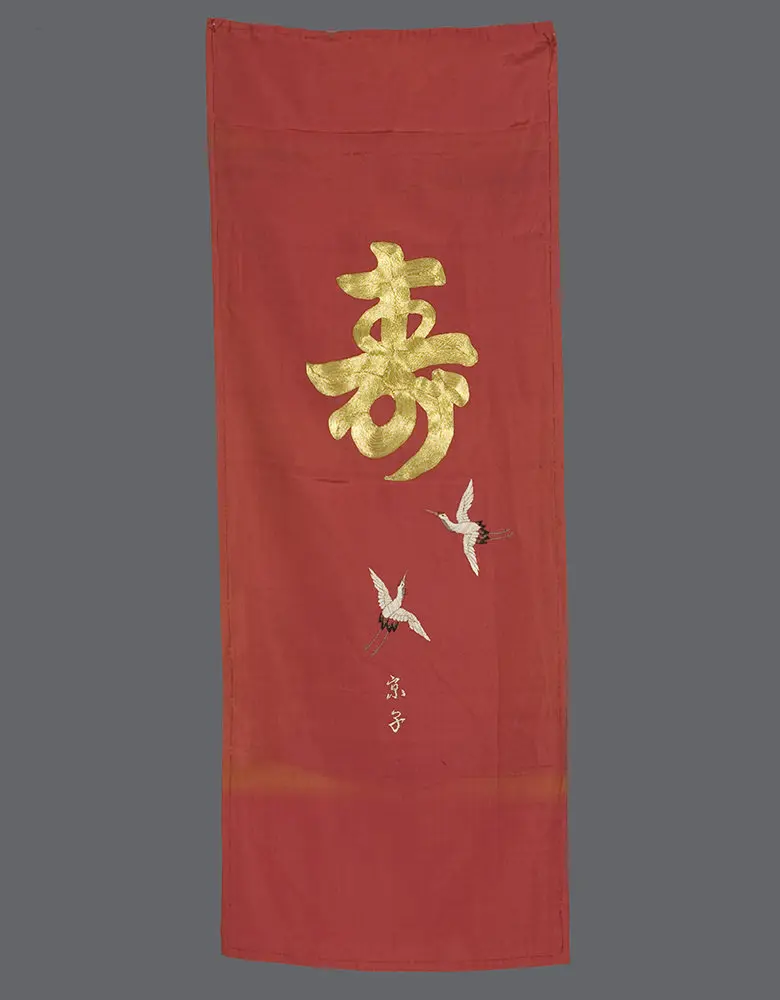
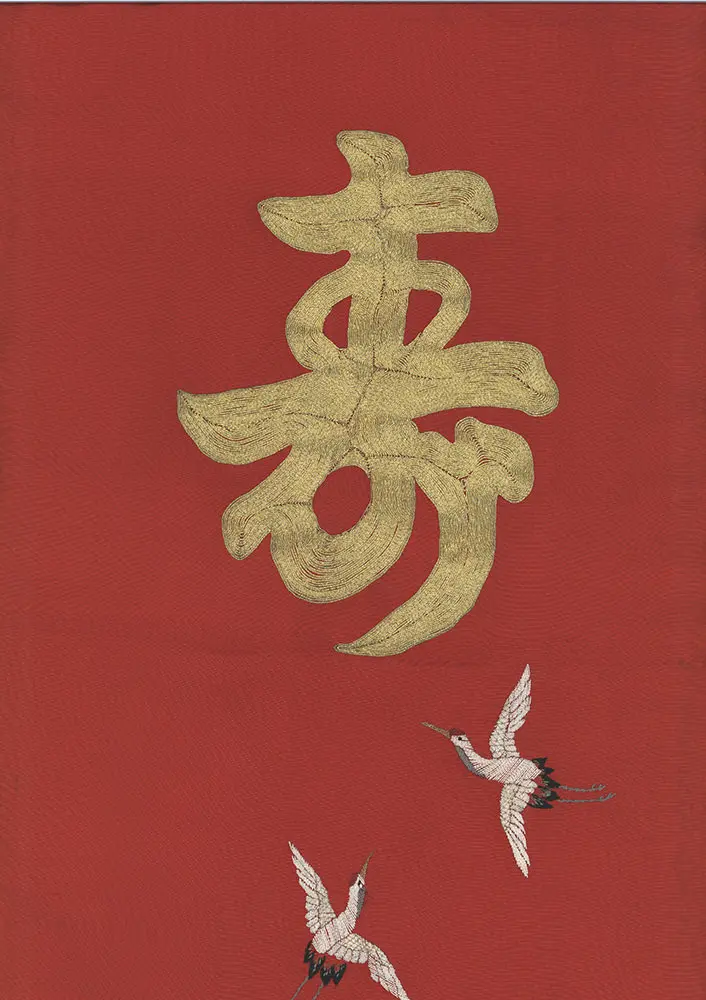
This elegant small silk banner from Japan dates to the late Meiji to mid-Taisho period (1900–1920). Measuring 13 inches by 35 inches (33 cm by 89 cm), the textile is crafted from a vibrant vermilion-red silk and remains in very good condition.
The central focus of the banner is a large, bold kanji character—'kotobuki'—which translates to longevity, congratulations, or auspiciousness. This character is rendered using thick couched embroidery with gold-wrapped threads, creating a raised, shimmering texture that commands attention. Below the calligraphy, two gracefully embroidered cranes (tsuru) are shown in flight. In Japanese iconography, cranes are revered symbols of fidelity and are said to live for a thousand years, further reinforcing the theme of long life and happiness. Small white calligraphic characters at the bottom likely represent a signature or a celebratory dedication.

Payment Options: We primarily accept PayPal for all transactions. Credit and debit cards are not accepted. If you prefer to pay by personal check instead of PayPal, please note this preference in the "Additional comments" field when placing your order.Ordering Process
To receive your PayPal invoice, simply fill out the form.
Shipping Details: We ship all orders to the address associated with your PayPal payment. Please ensure your PayPal shipping address is current and accurate.A phone number is required during checkout, as our shipping carrier may need to contact you regarding delivery questions.Shipping RatesUnited States and Canada: $20International destinations (air mail): $40
