Copyright © 2026 Yorke Antique Textiles
.avif)

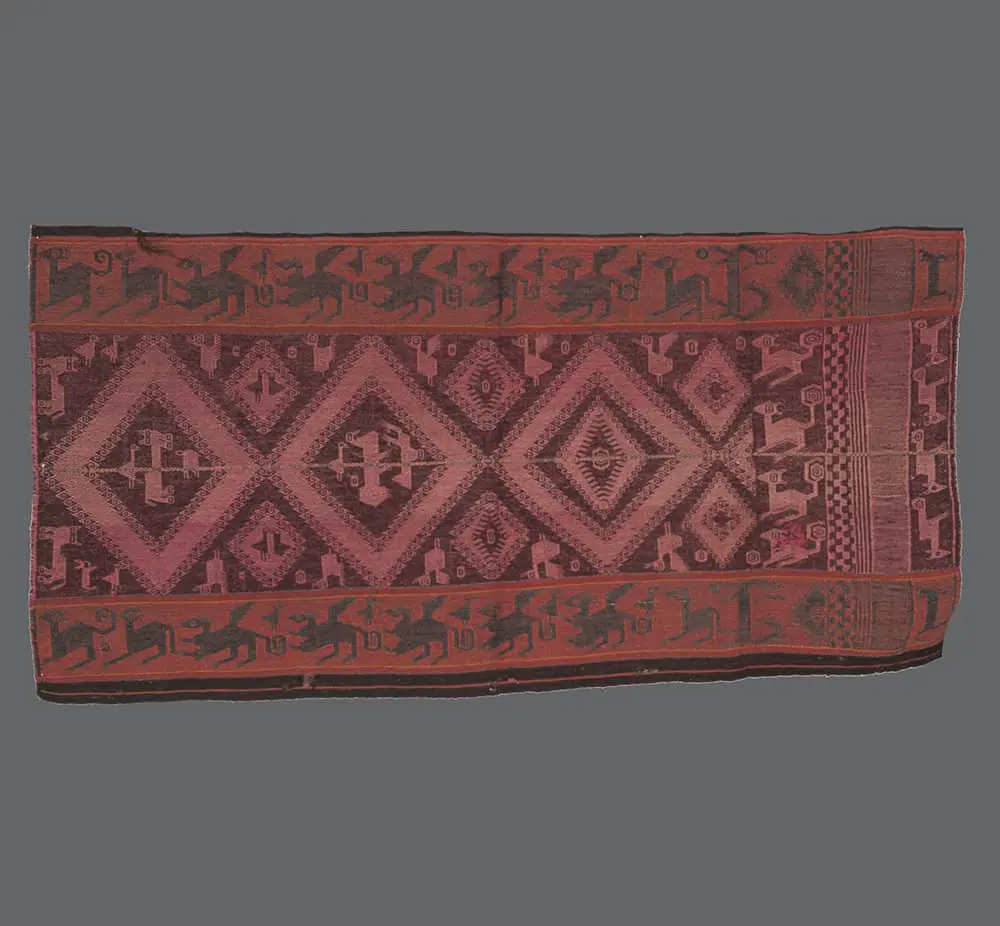
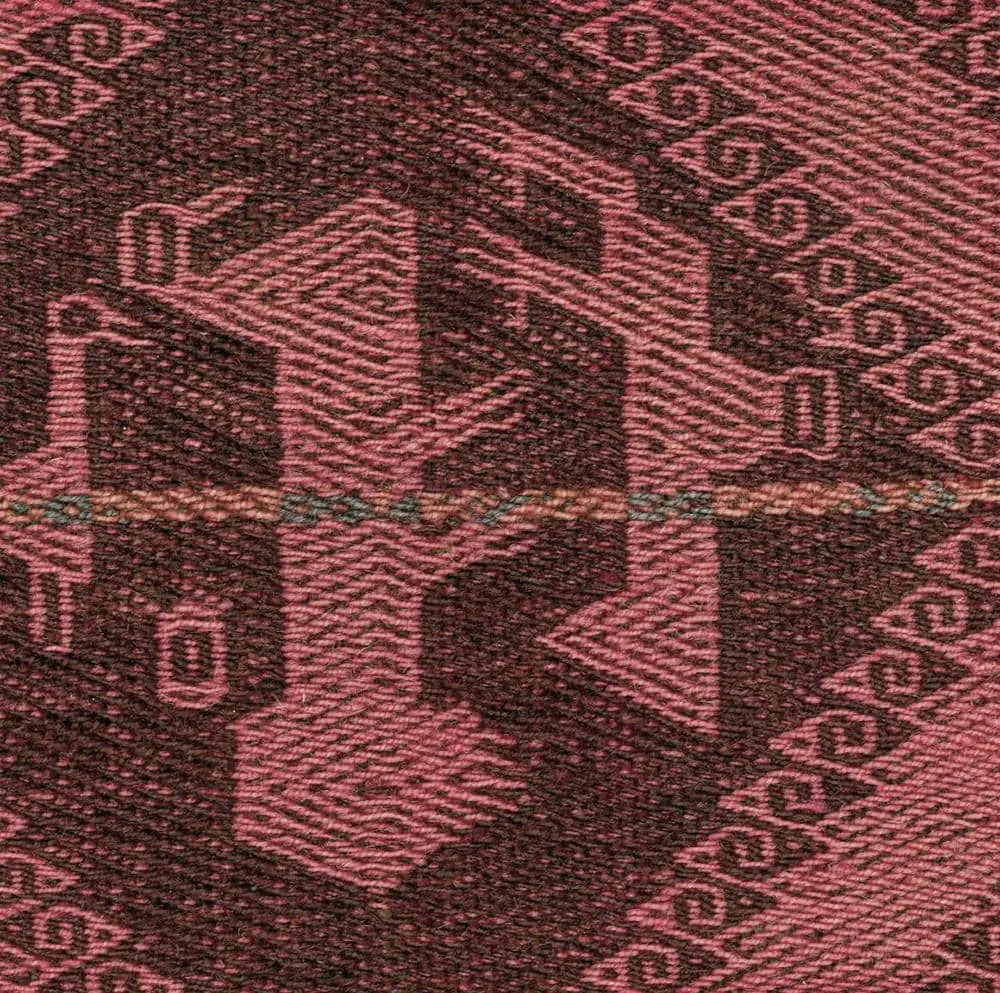
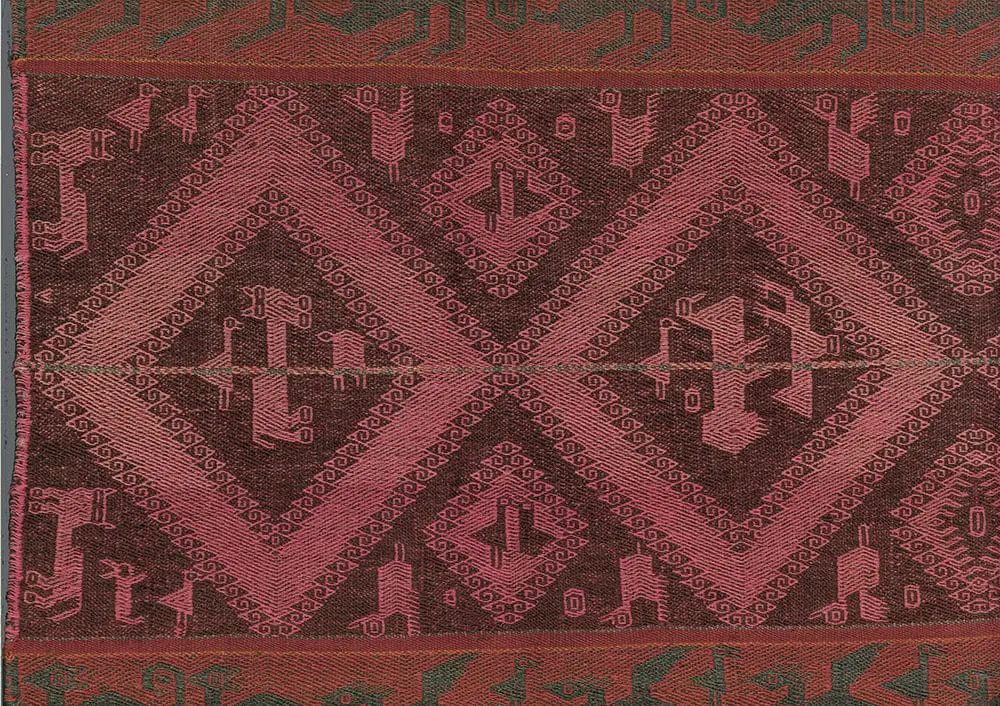

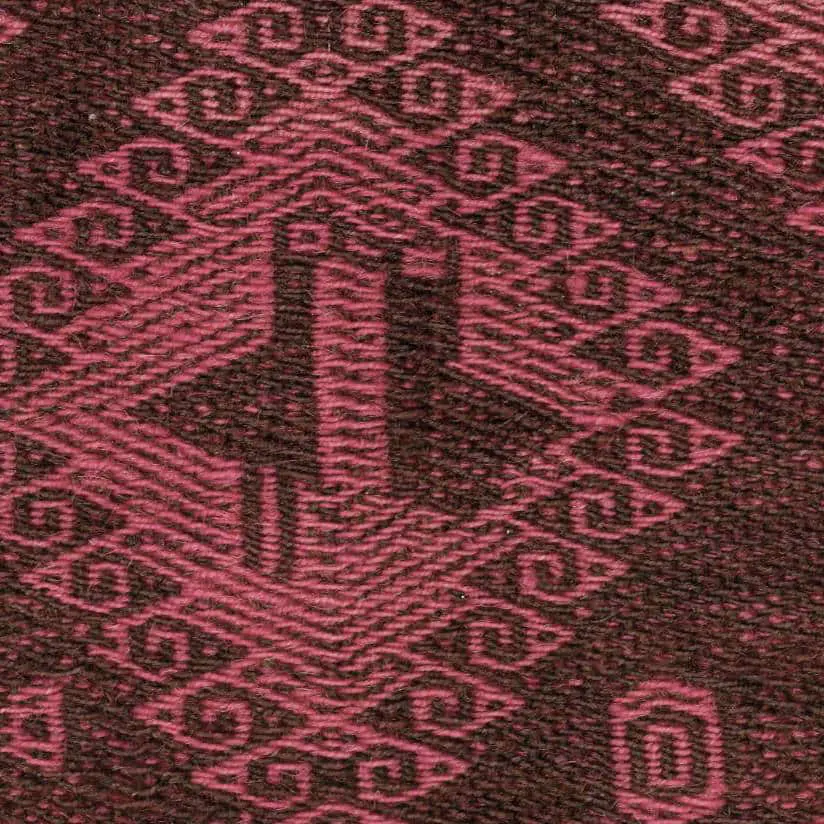
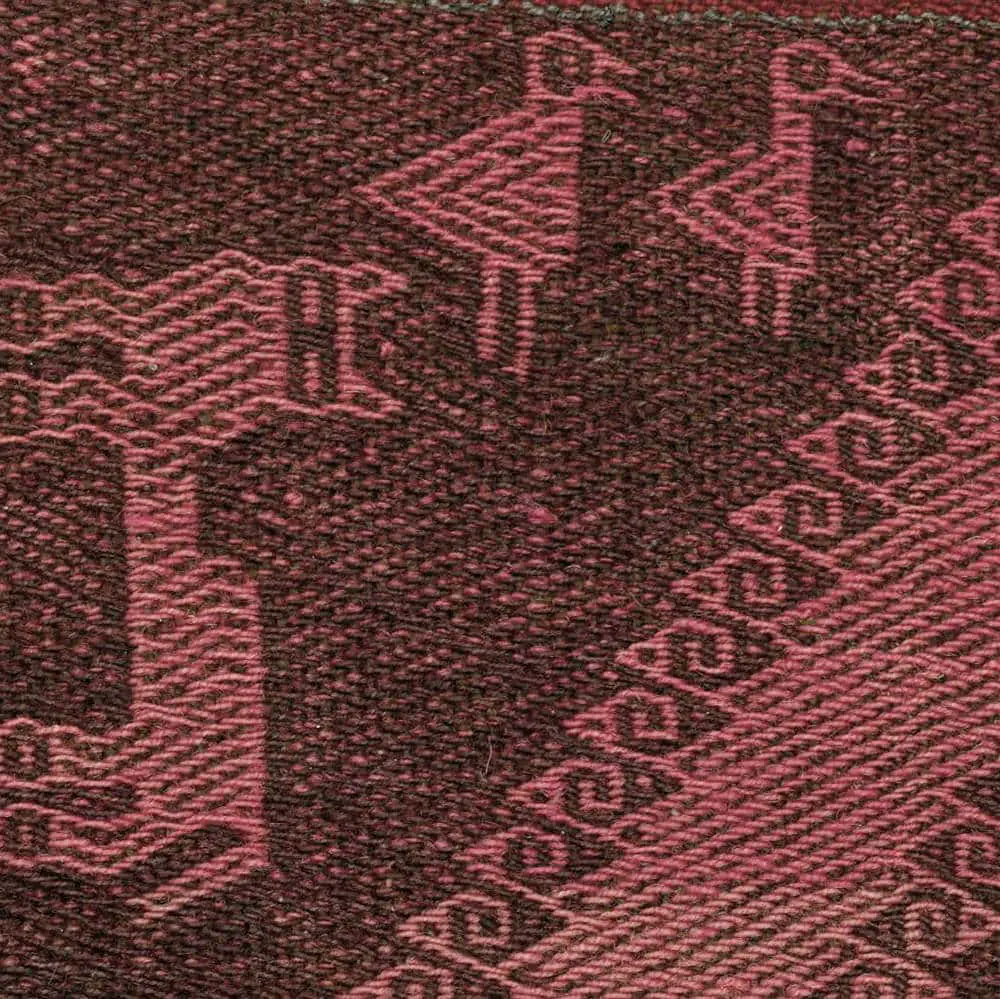
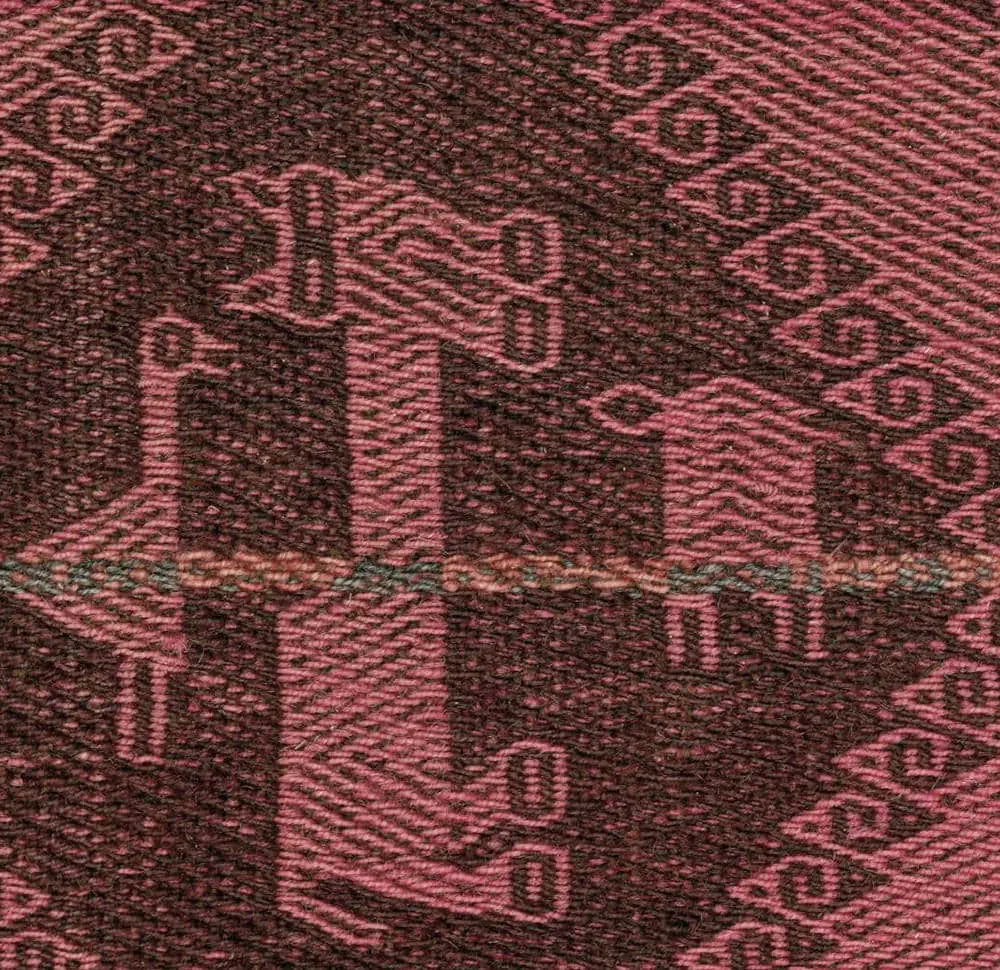
This uncommon vintage ceremonial mantle, known as an aksu in Quechua, originates from the Potolo weaving region in the Department of Chuquisaca, Bolivia. Dating to the 1920s, the piece represents the ancestral "Jalq'a" style, which is renowned for its complex, graphically expressive narratives. Hand-woven primarily from fine alpaca fibers, the textile utilizes a difficult complementary-warp pick-up technique, resulting in a sturdy, double-faced fabric where the color of the figures is mirrored on the reverse.
The composition is characterized by its evocative "khurus" or fantastical animal motifs, specifically featuring vizcachas (large Andean rodents related to the chinchilla) alongside other symbolic creatures. Unlike later suzanis or pichvais, this garment's design field is concentrated exclusively on the lower portion. This specific item is a truncated example, where the large plain swath of dark fabric traditionally tucked into a belt has been removed, leaving the lower patterned section with three preserved sides. While it shows signs of age, including several holes, the textile remains structurally sound and serves as a scholarly example of early 20th-century Jalq'a artistry.

Payment Options: We primarily accept PayPal for all transactions. Credit and debit cards are not accepted. If you prefer to pay by personal check instead of PayPal, please note this preference in the "Additional comments" field when placing your order.Ordering Process
To receive your PayPal invoice, simply fill out the form.
Shipping Details: We ship all orders to the address associated with your PayPal payment. Please ensure your PayPal shipping address is current and accurate.A phone number is required during checkout, as our shipping carrier may need to contact you regarding delivery questions.Shipping RatesUnited States and Canada: $20International destinations (air mail): $40
