Copyright © 2026 Yorke Antique Textiles
.avif)

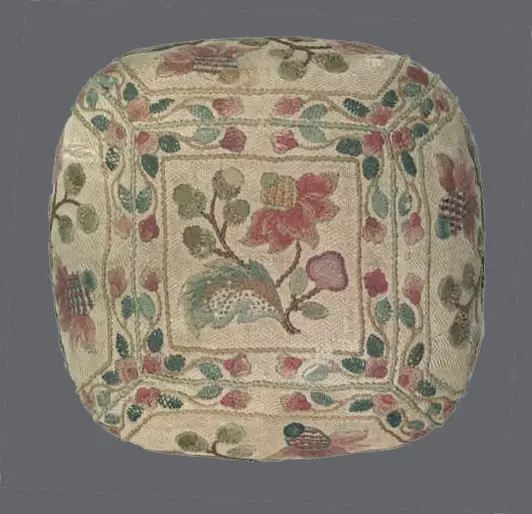
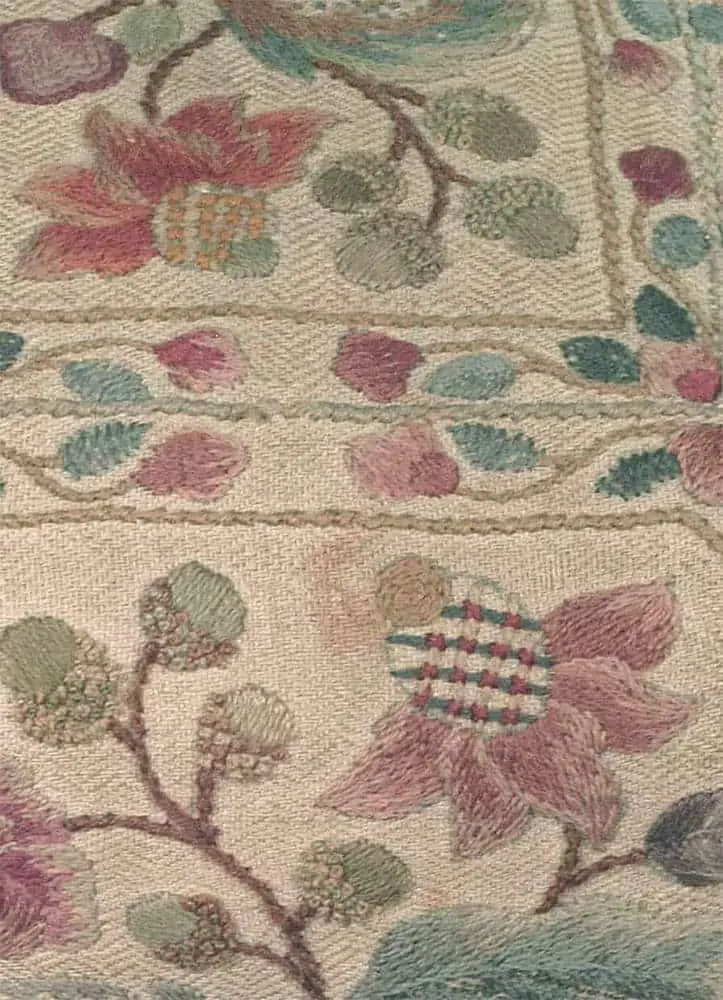
This tactile cushion, likely originating from England during the late 18th to early 19th century (1775–1825), is a classic example of Georgian-period domestic needlework. Measuring 10 inches square and 6 inches tall (25 cm x 15 cm), the piece is crafted from a durable herringbone-patterned linen ground—a twill foundation frequently used for heavy upholstery and functional home textiles.
The front features traditional wool crewelwork, a form of free-style surface embroidery using two-ply worsted wool yarn. During this transitional period, patterns often moved away from the heavily stylized Jacobean "Tree of Life" toward more naturalistic botanical motifs, including native garden flowers and meandering stems. The cushion remains filled with down, a luxury stuffing material of the era that provided superior loft and resilience compared to common fillers like horsehair or straw. Despite two or three small 1/2-inch holes, the textile remains in good condition, retaining its original structural character.

Payment Options: We primarily accept PayPal for all transactions. Credit and debit cards are not accepted. If you prefer to pay by personal check instead of PayPal, please note this preference in the "Additional comments" field when placing your order.Ordering Process
To receive your PayPal invoice, simply fill out the form.
Shipping Details: We ship all orders to the address associated with your PayPal payment. Please ensure your PayPal shipping address is current and accurate.A phone number is required during checkout, as our shipping carrier may need to contact you regarding delivery questions.Shipping RatesUnited States and Canada: $20International destinations (air mail): $40
