Copyright © 2026 Yorke Antique Textiles
.avif)

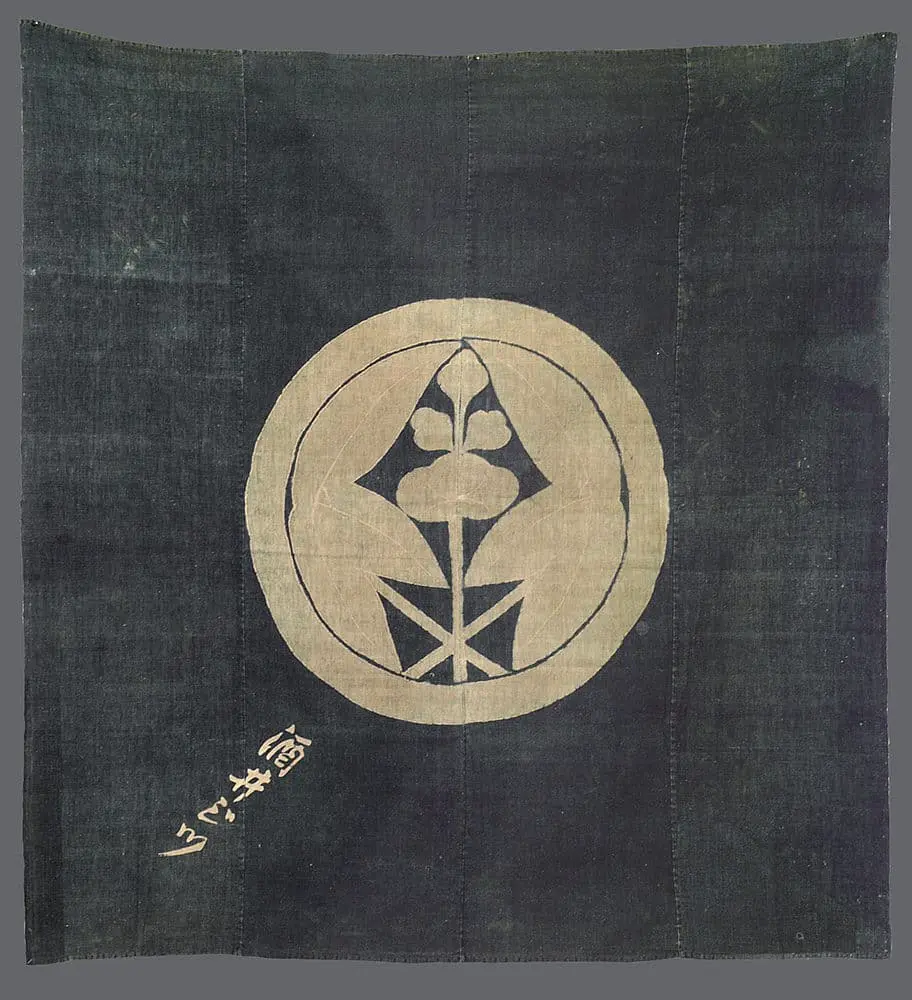
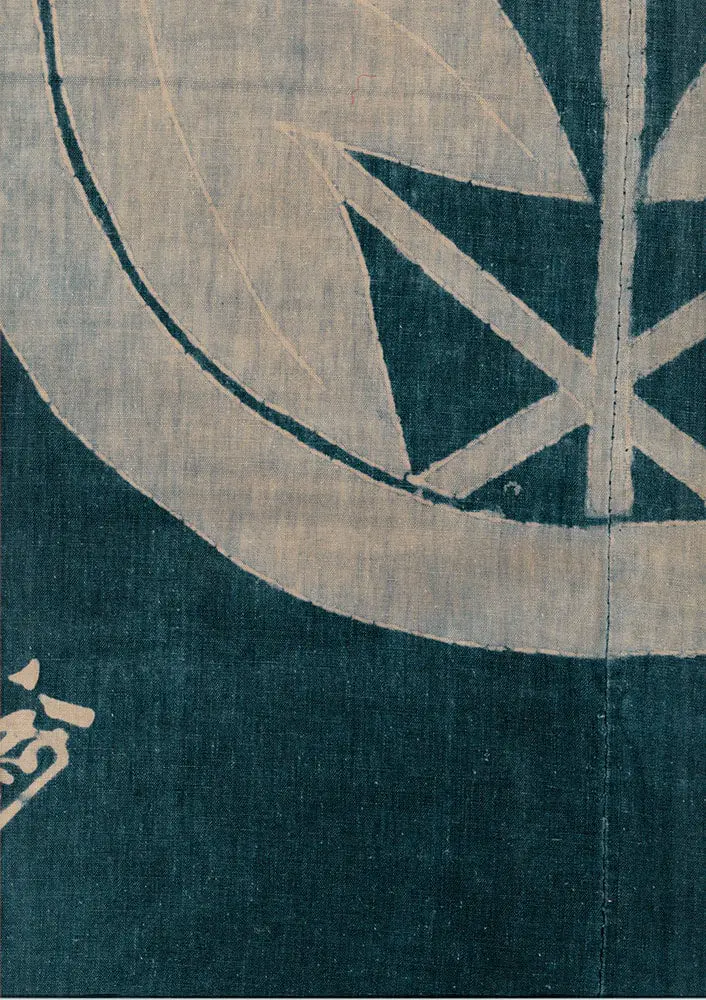
This substantial furoshiki (wrapping cloth), dating to the late Edo period (1825–1868), is a beautiful example of Japanese utilitarian textile art. Measuring 51 inches by 54 inches (130 cm x 137 cm), the cloth is constructed from four panels of medium-thick cotton that was entirely spun and woven by hand. The deep, soulful blue was achieved through multiple immersions in natural ai (indigo).
The kanji inscription indicates ownership, identifying the item as belonging to Mr./Ms. Sakai. The central emblem is a Japanese family crest (kamon), specifically representing a stylized ginger leaf (myōga) design inside a circle. Family crests on traditional textiles like this furoshiki (wrapping cloth) were frequently paired with the family or business name written in the corner for easy identification.
Reflecting its history of use, the textile features approximately twelve inconspicuous repairs where circular indigo fabric patches have been seamlessly integrated, adding to its wabi-sabi character while remaining in good overall condition.

Payment Options: We primarily accept PayPal for all transactions. Credit and debit cards are not accepted. If you prefer to pay by personal check instead of PayPal, please note this preference in the "Additional comments" field when placing your order.Ordering Process
To receive your PayPal invoice, simply fill out the form.
Shipping Details: We ship all orders to the address associated with your PayPal payment. Please ensure your PayPal shipping address is current and accurate.A phone number is required during checkout, as our shipping carrier may need to contact you regarding delivery questions.Shipping RatesUnited States and Canada: $20International destinations (air mail): $40
