Copyright © 2026 Yorke Antique Textiles
.avif)


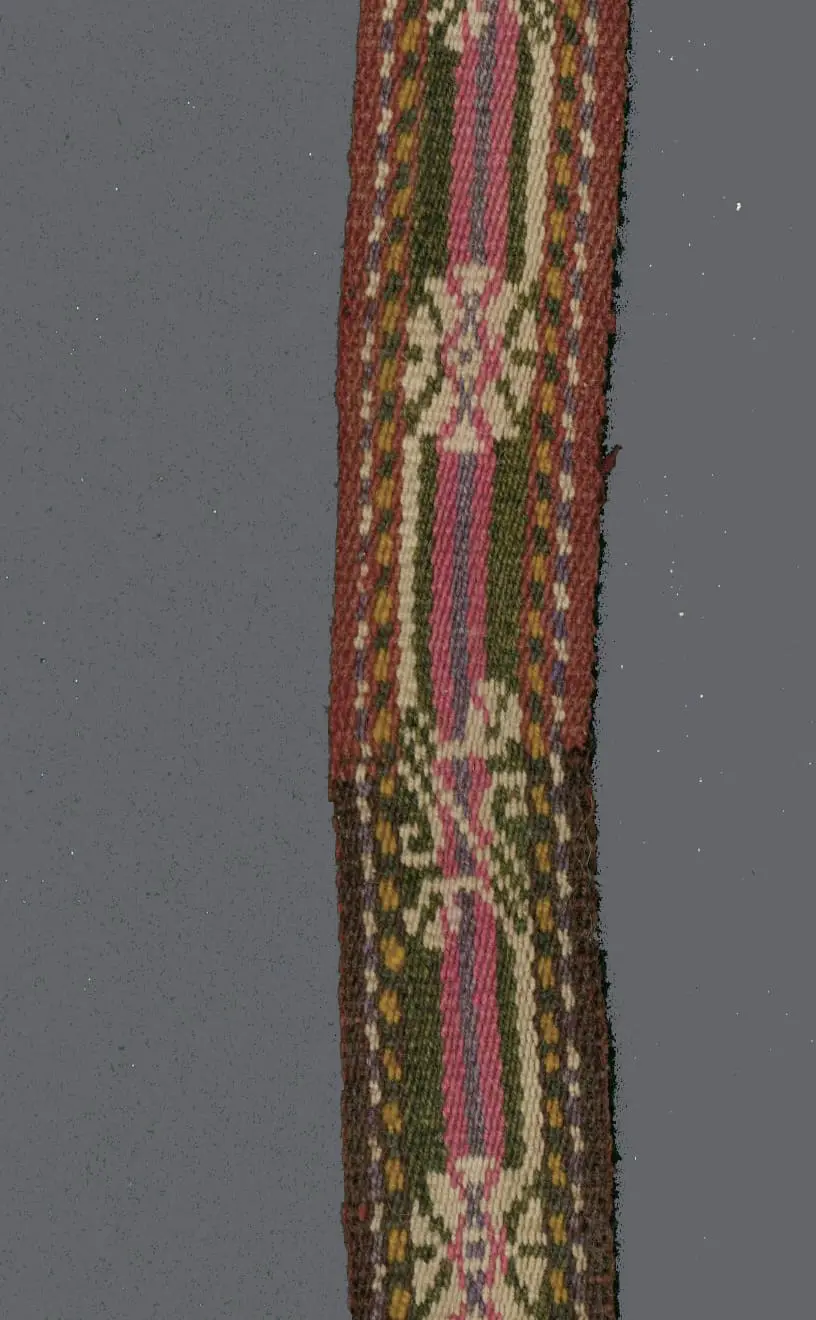
This finely woven ceremonial belt originates from the Northern Department of Potosí, Bolivia, and dates to the mid-20th century, approximately 1940–1960. Measuring 1 inch by 42 inches (2.54 cm x 106.68 cm), the textile is a masterful example of the double-cloth weaving technique, which produces a reversible fabric with mirrored colors on either side. The belt is constructed with a narrow, high-tension warp that results in a sturdy, architectural ribbon suitable for ceremonial use.
The composition features a continuous vertical progression of geometric and symbolic motifs. The primary design consists of repeating white floral or solar wheels set within hexagonal frames, interspersed with stylized S-shaped scrolls and diamond patterns. The color palette is rich and earthy, dominated by deep madder red and olive green, with secondary accents of pink and ochre providing a rhythmic pulse along the length of the band. A small, hand-twisted red tassel remains at one end, indicating the traditional finishing methods of the Potosí highland weavers.

Payment Options: We primarily accept PayPal for all transactions. Credit and debit cards are not accepted. If you prefer to pay by personal check instead of PayPal, please note this preference in the "Additional comments" field when placing your order.Ordering Process
To receive your PayPal invoice, simply fill out the form.
Shipping Details: We ship all orders to the address associated with your PayPal payment. Please ensure your PayPal shipping address is current and accurate.A phone number is required during checkout, as our shipping carrier may need to contact you regarding delivery questions.Shipping RatesUnited States and Canada: $20International destinations (air mail): $40
