Copyright © 2026 Yorke Antique Textiles
.avif)

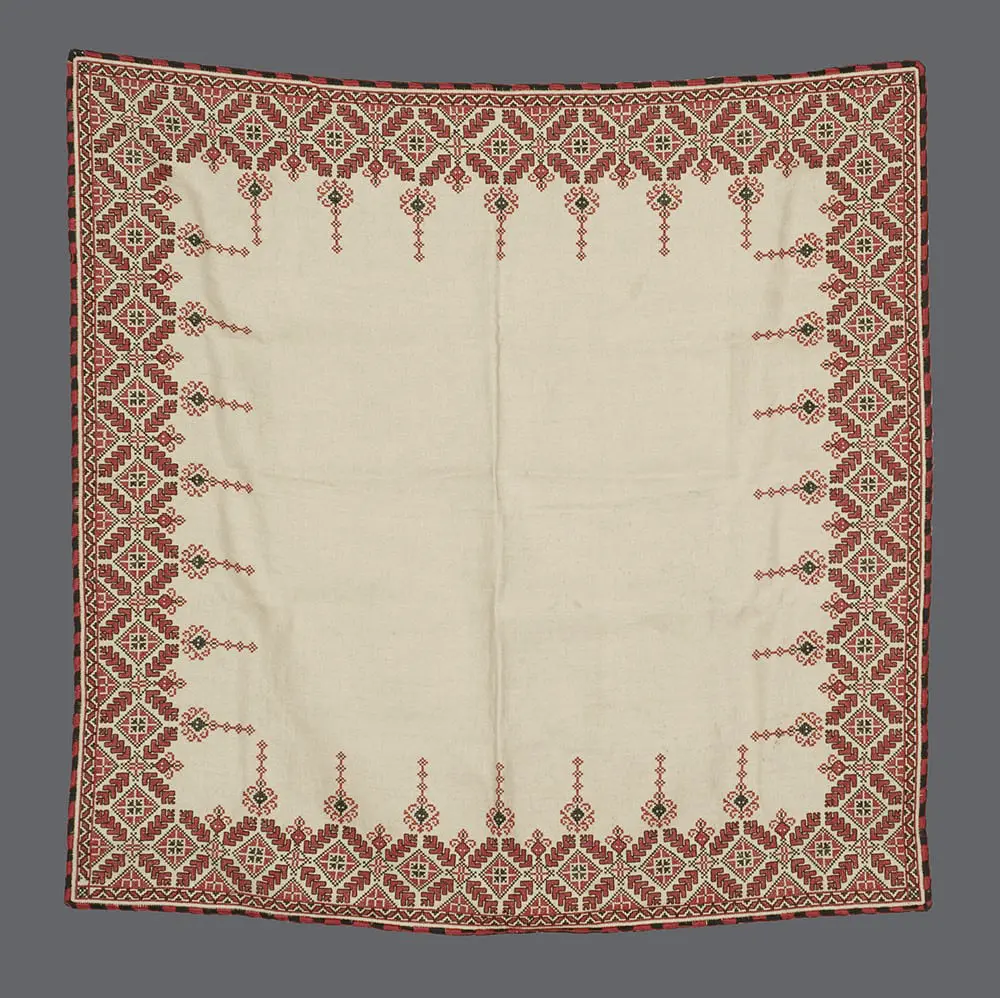
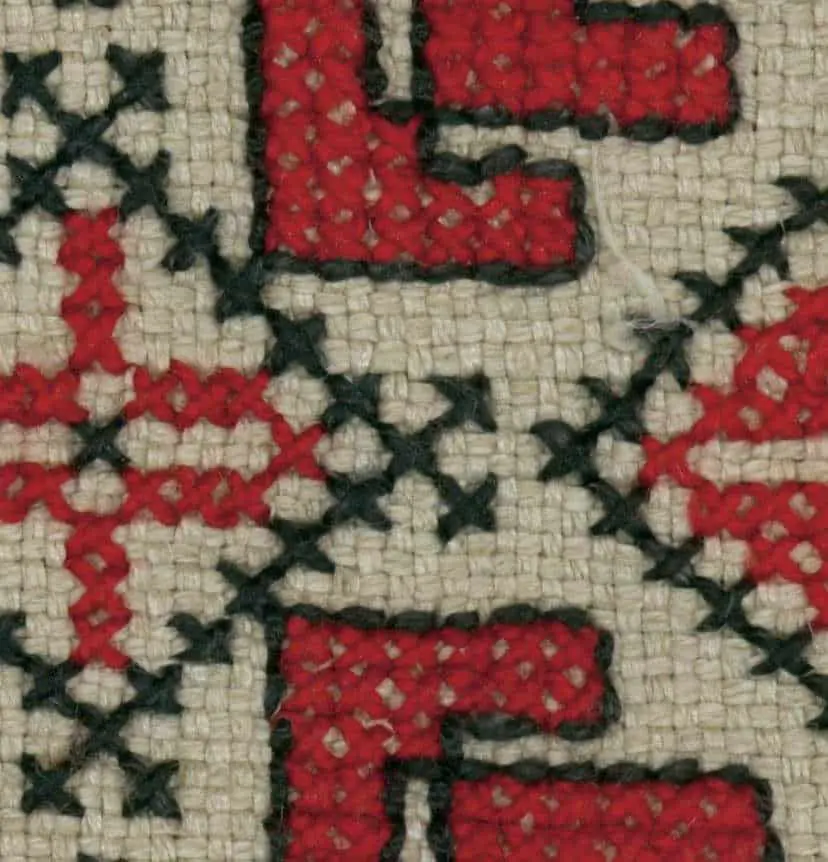

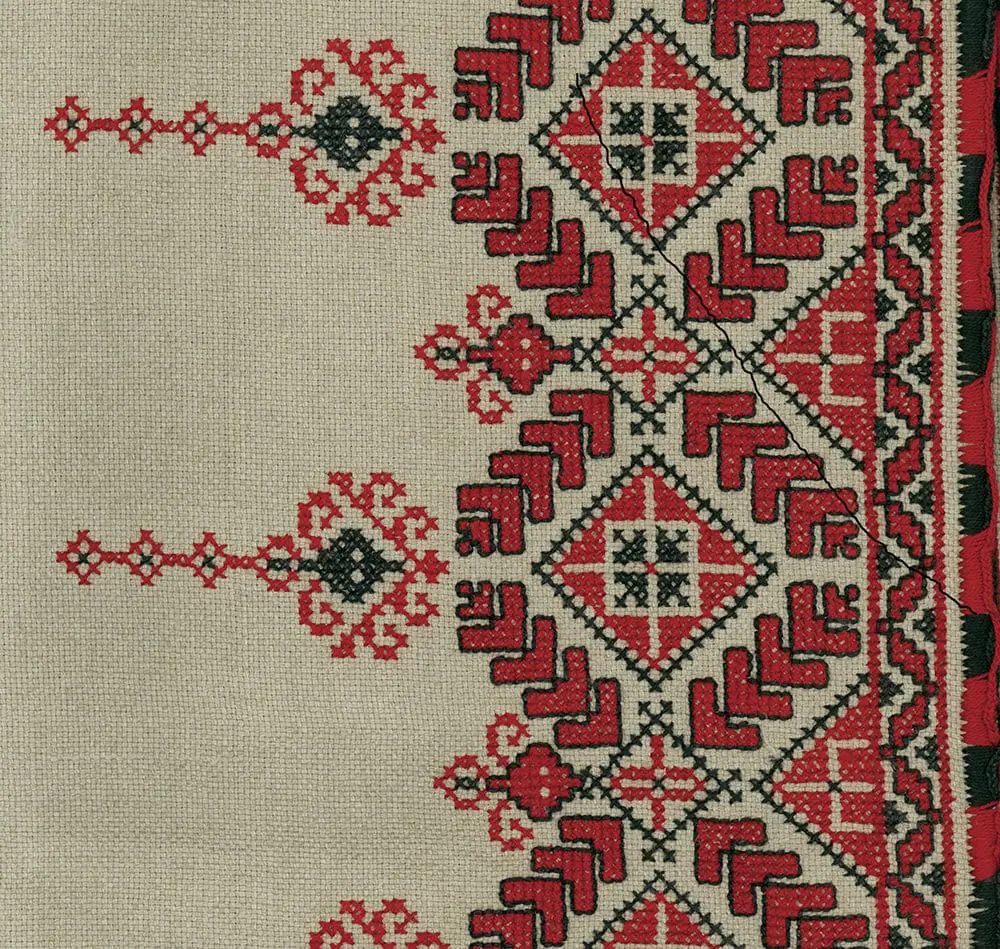
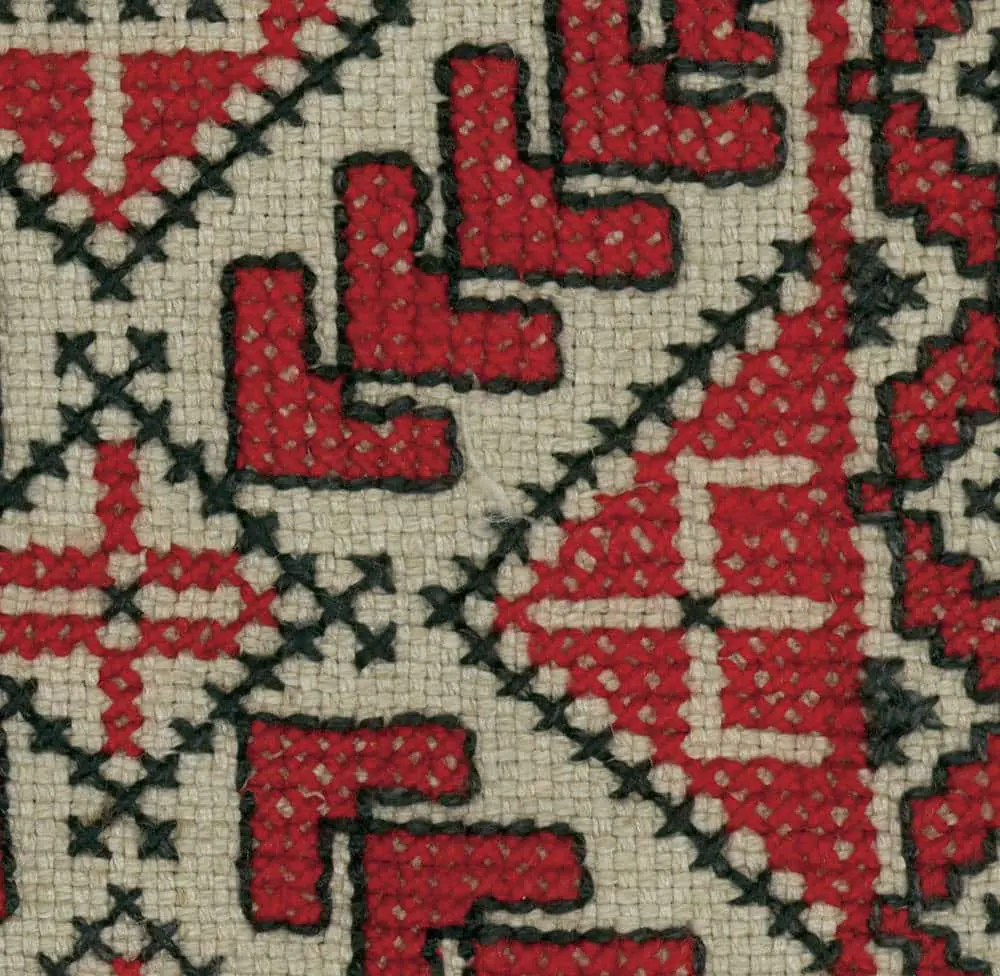
This substantial square tablecloth, originating from Macedonia, Greece, between 1880 and 1900, is a robust example of late 19th-century Balkan folk embroidery. Measuring 36 inches by 36 inches (91 cm x 91 cm), the piece is crafted from a durable, heavy-weave linen ground. The design is concentrated along the perimeter, featuring a dense, repeating border of geometric diamond motifs worked in a traditional palette of deep madder red and black silk or cotton thread.
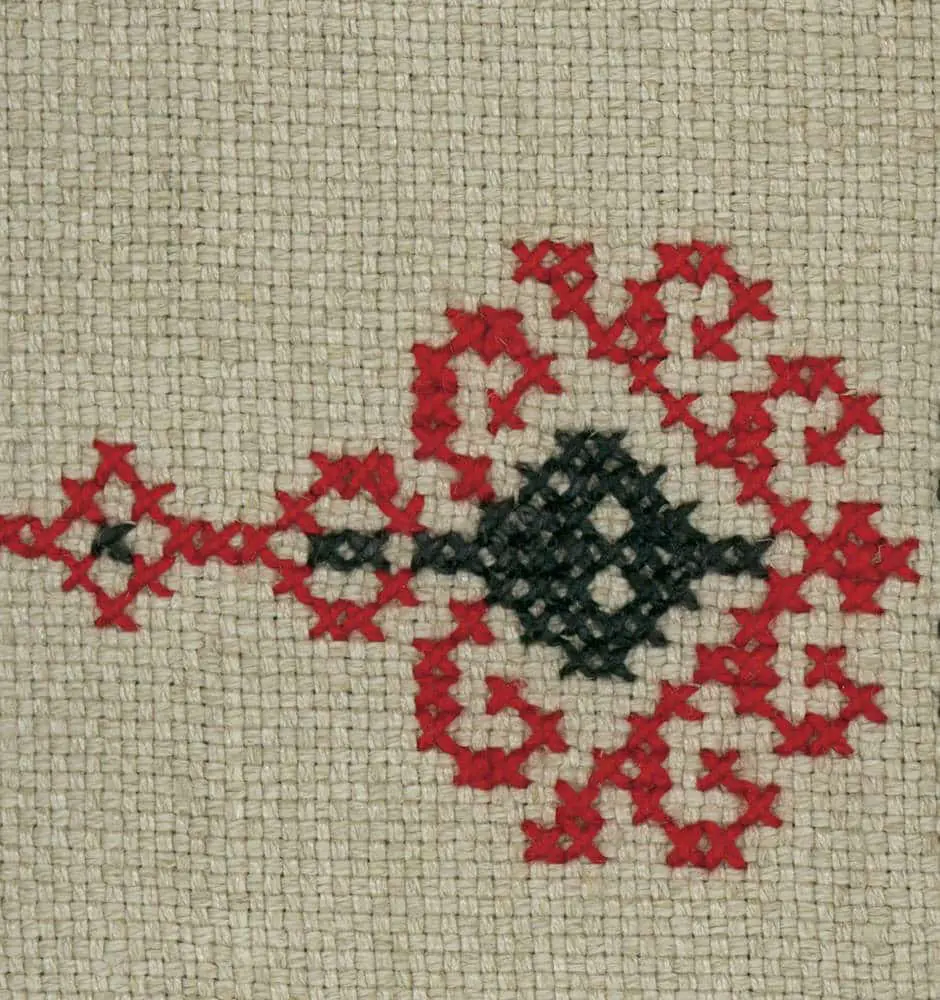
The embroidery utilizes a combination of counted-thread and cross-stitch techniques common to the region, with stylized "tree" or floral pendants extending inward from the main border toward the plain central field. The outermost edge is finished with a delicate, whip-stitched bicolor binding that mirrors the primary color scheme. Despite its age and likely functional history, the textile remains in very good condition, preserving its structural integrity and the clarity of its intricate needlework.

Payment Options: We primarily accept PayPal for all transactions. Credit and debit cards are not accepted. If you prefer to pay by personal check instead of PayPal, please note this preference in the "Additional comments" field when placing your order.Ordering Process
To receive your PayPal invoice, simply fill out the form.
Shipping Details: We ship all orders to the address associated with your PayPal payment. Please ensure your PayPal shipping address is current and accurate.A phone number is required during checkout, as our shipping carrier may need to contact you regarding delivery questions.Shipping RatesUnited States and Canada: $20International destinations (air mail): $40
