Copyright © 2026 Yorke Antique Textiles
.avif)

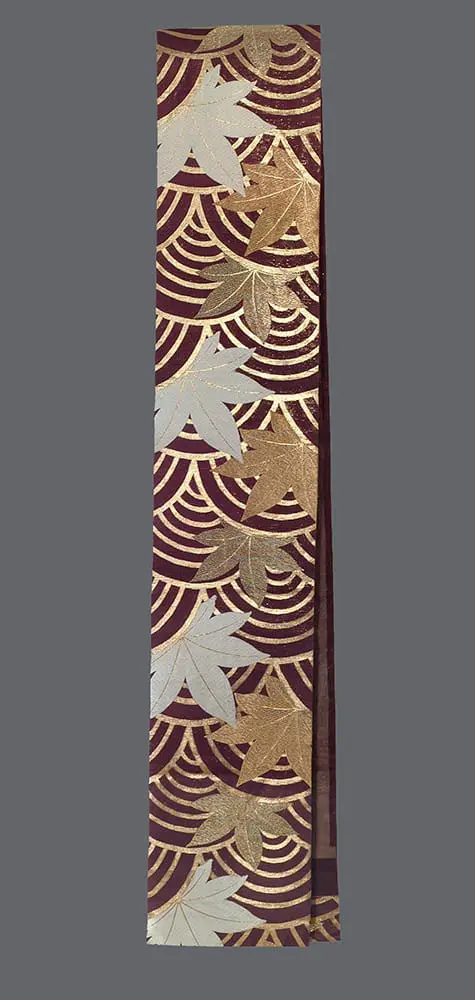
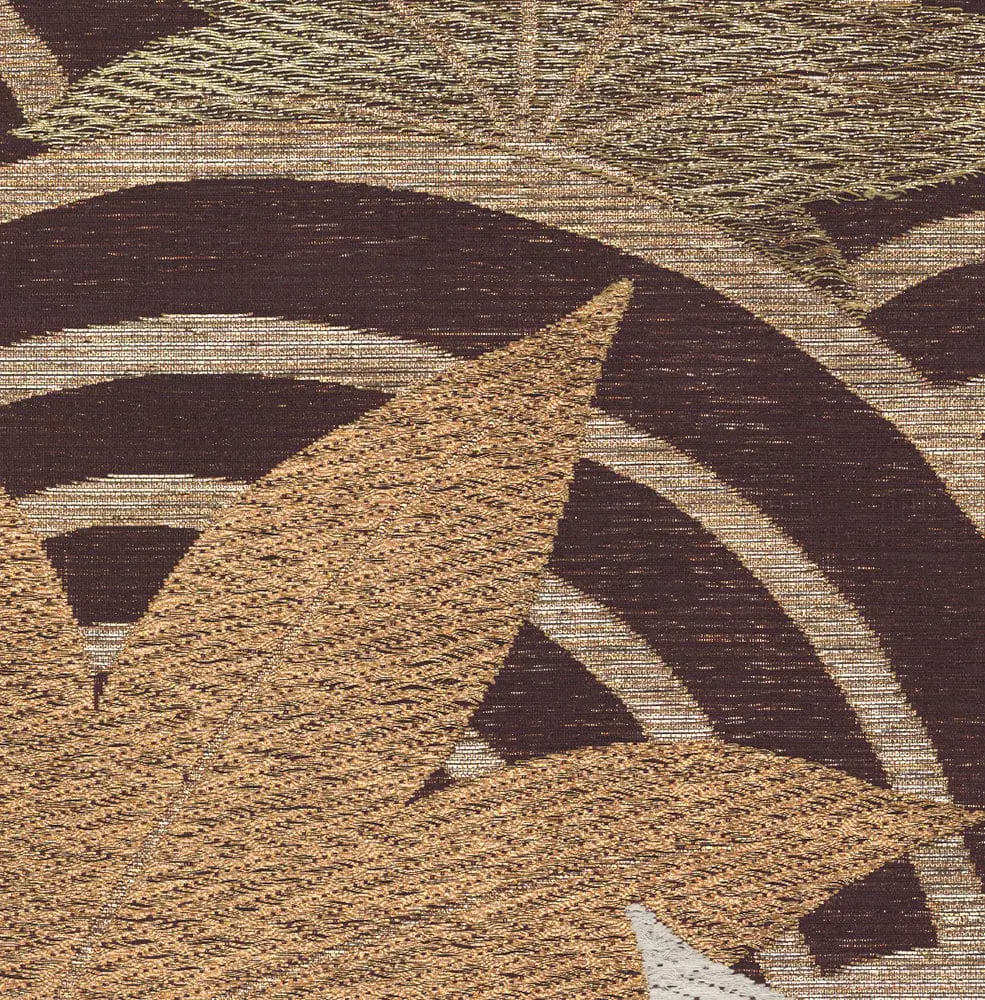
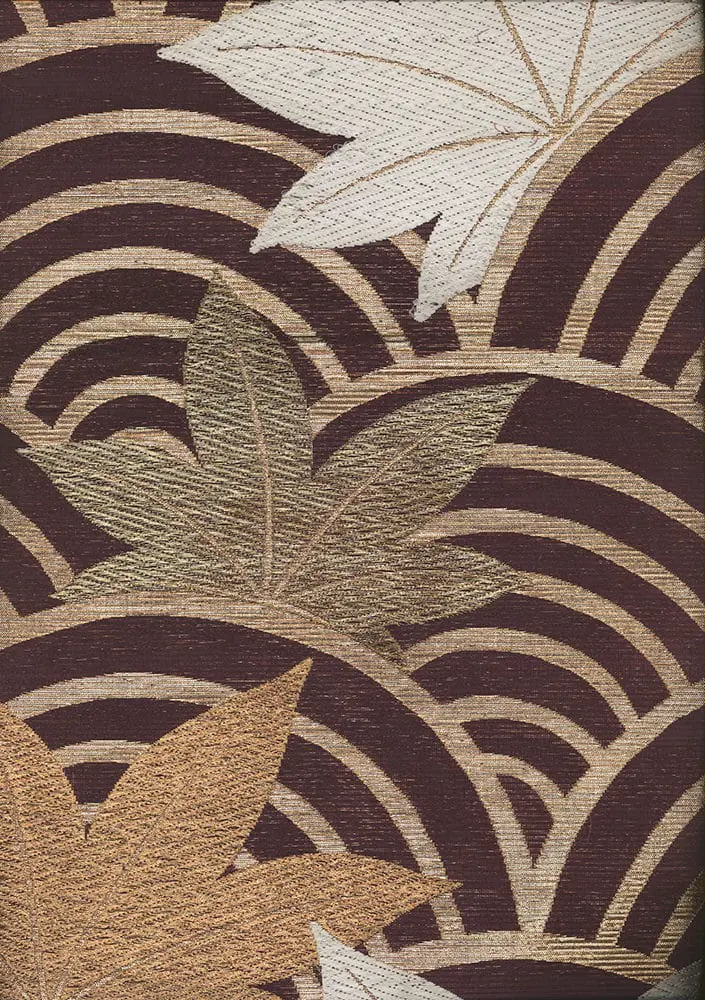

This elegant hand-woven silk obi originates from Japan and dates to the Taisho period (1912–1926). Spanning a substantial 174 inches in length and 13 inches in width (442 cm x 33 cm), this garment was crafted specifically for the rigorous movement and high-visual impact required of geisha during traditional dance performances. The textile features a bold "Taisho Roman" aesthetic, characterized by its vibrant deep burgundy or plum ground and a rhythmic, large-scale pattern of falling maple leaves (momiji).
The background is decorated with a stylized seigaiha (blue sea wave) pattern rendered in gold, which provides a textured, wave-like foundation for the central autumn leaf motif. The maple leaves themselves are executed in alternating tones of shimmering silver and gold metallic threads, creating a sense of seasonal transition and natural movement. This combination of the wave and the leaf—traditionally known as the Tatsutagawa motif—alludes to a famous river in Nara celebrated in classical poetry for its autumn colors. Despite its age and use in performance, the silk and metallic brocade remain in very good condition.

Payment Options: We primarily accept PayPal for all transactions. Credit and debit cards are not accepted. If you prefer to pay by personal check instead of PayPal, please note this preference in the "Additional comments" field when placing your order.Ordering Process
To receive your PayPal invoice, simply fill out the form.
Shipping Details: We ship all orders to the address associated with your PayPal payment. Please ensure your PayPal shipping address is current and accurate.A phone number is required during checkout, as our shipping carrier may need to contact you regarding delivery questions.Shipping RatesUnited States and Canada: $20International destinations (air mail): $40
