Copyright © 2026 Yorke Antique Textiles
.avif)


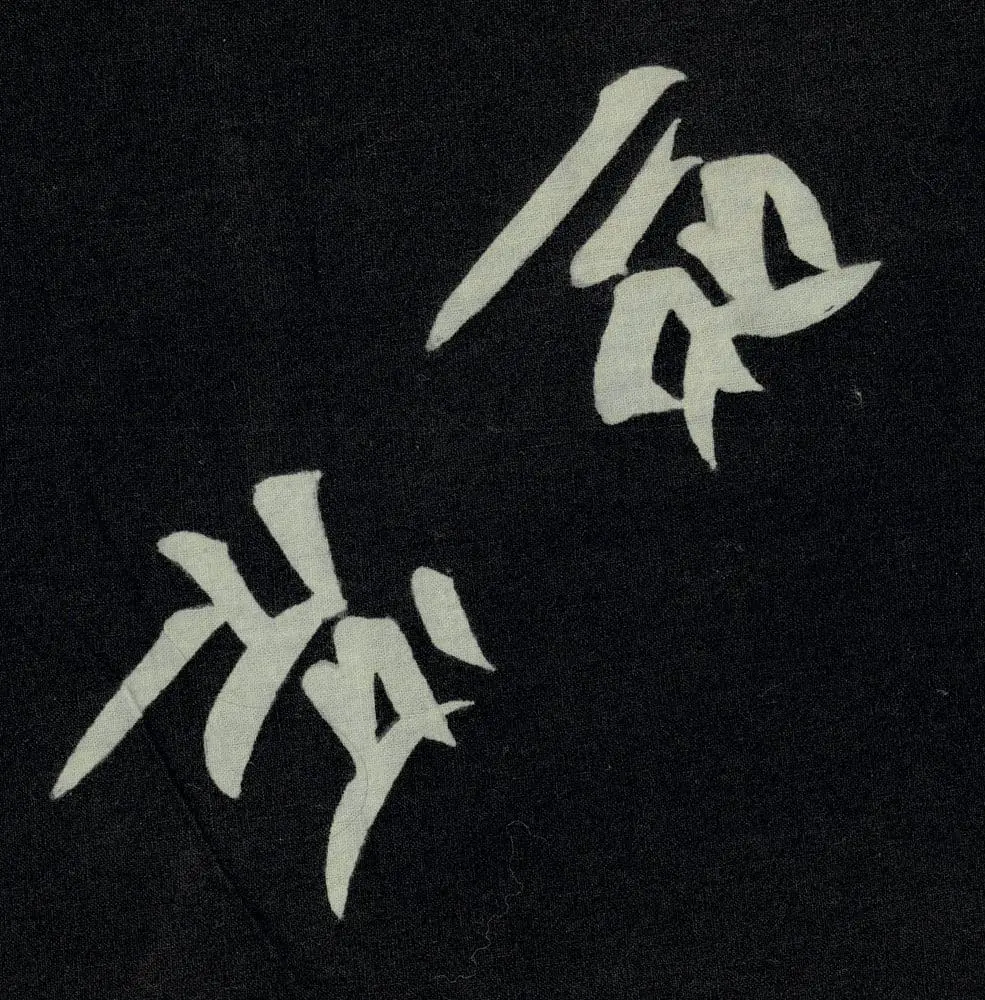
This substantial cotton furoshiki (carrying cloth) from Japan dates to the mid-Showa period (1945–1960). Measuring approximately 54 inches by 57 inches (137 cm x 145 cm), this textile is dyed a very dark green, appearing nearly black, and was designed for the practical wrapping and transport of large items.
The cloth features bold white resist-dyed elements that stand out in sharp contrast against the dark ground. Centered on the textile is a massive family crest (mon) depicting the mitsu-tomoe (triple comma) motif. This powerful symbol is traditionally associated with the Shinto god of war, Hachiman, and is frequently used to represent protection or the cycle of life. In the upper right corner, Japanese kanji characters spell out "Besho" (別所), identifying the family or business name. The piece is in very good condition, showing only slight stains and natural discoloration consistent with its age and utilitarian history.

Payment Options: We primarily accept PayPal for all transactions. Credit and debit cards are not accepted. If you prefer to pay by personal check instead of PayPal, please note this preference in the "Additional comments" field when placing your order.Ordering Process
To receive your PayPal invoice, simply fill out the form.
Shipping Details: We ship all orders to the address associated with your PayPal payment. Please ensure your PayPal shipping address is current and accurate.A phone number is required during checkout, as our shipping carrier may need to contact you regarding delivery questions.Shipping RatesUnited States and Canada: $20International destinations (air mail): $40
