Copyright © 2026 Yorke Antique Textiles
.avif)

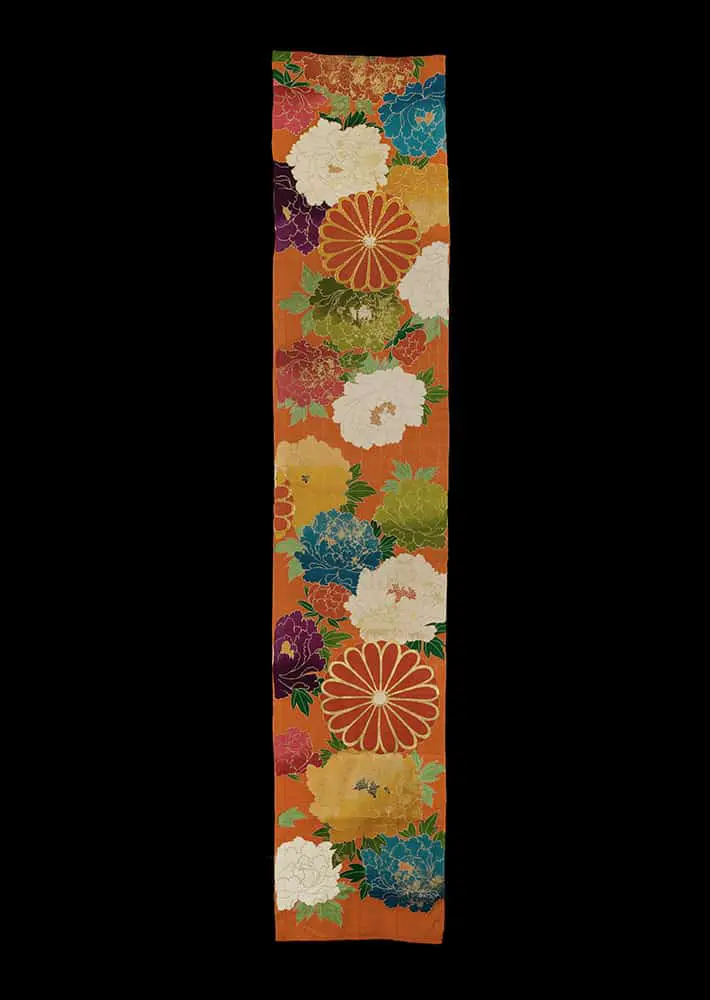

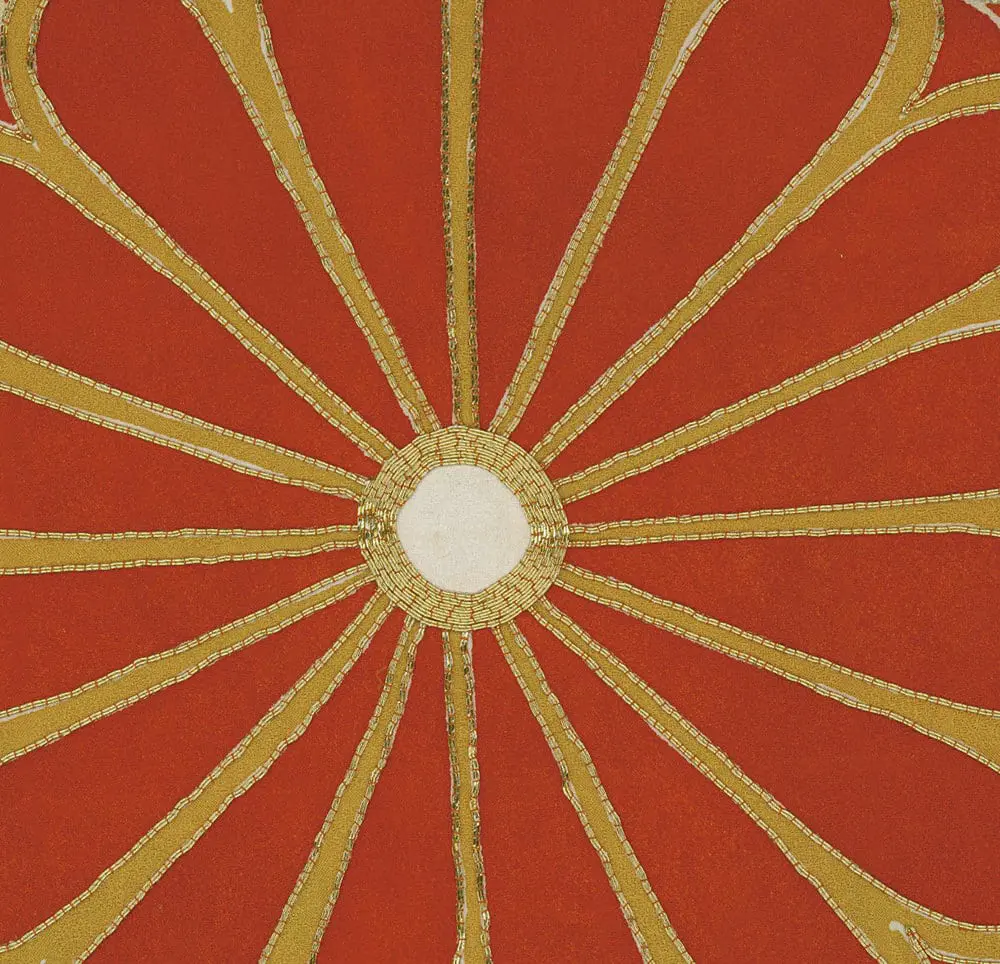
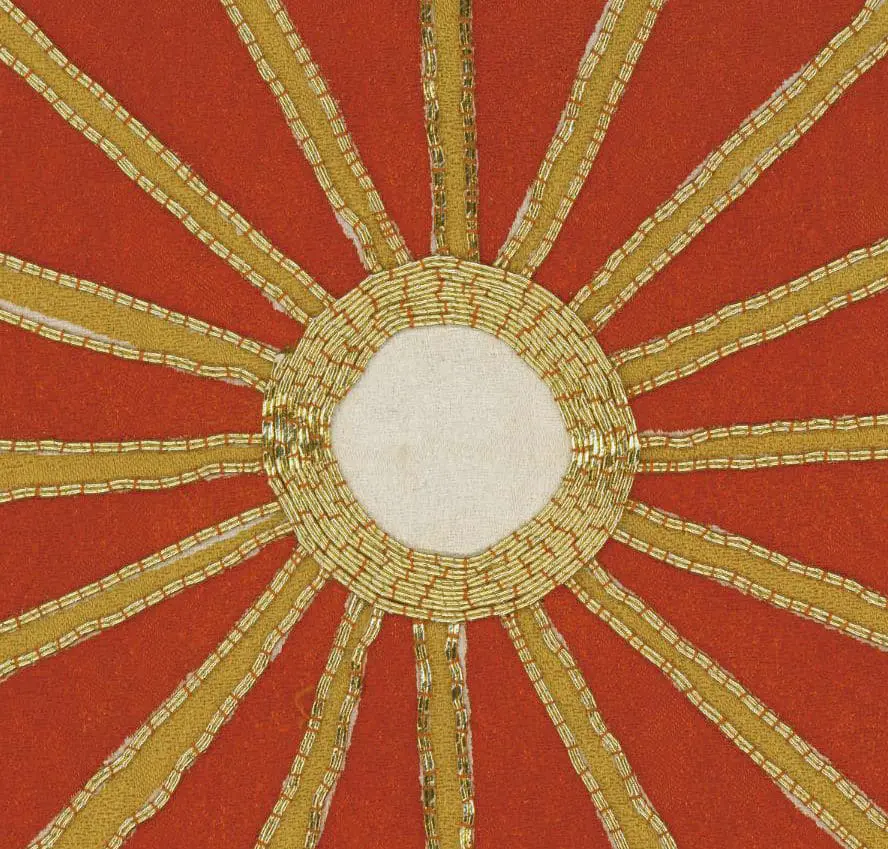
This opulent textile originates from Japan’s mid-Showa period (1950–1970) and is a scholarly example of the grand, celebratory aesthetics reserved for furisode, the formal attire of young unmarried women. Measuring an impressive 15 inches by 90 inches (38 cm x 229 cm), this significant panel represents the full length of a ceremonial garment and remains in very good condition. The substrate is a high-quality silk dyed in a vibrant, saturated orange that serves as a high-energy canvas for a dense botanical narrative.
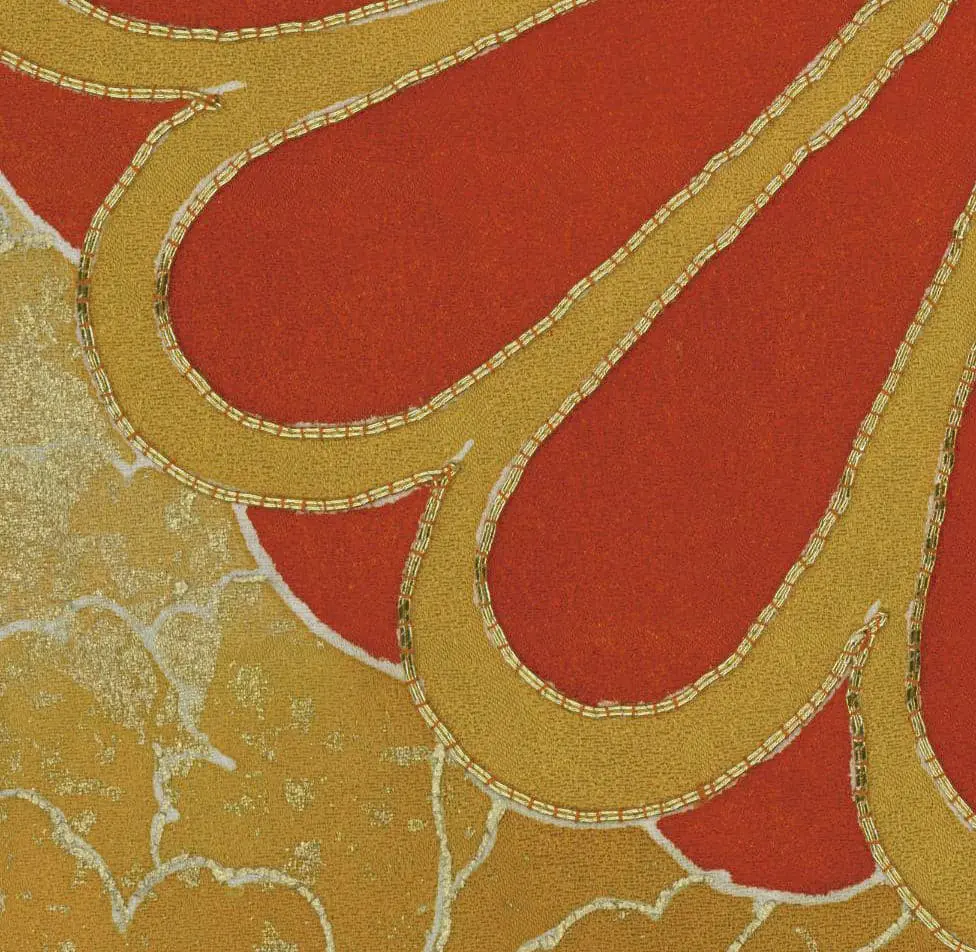
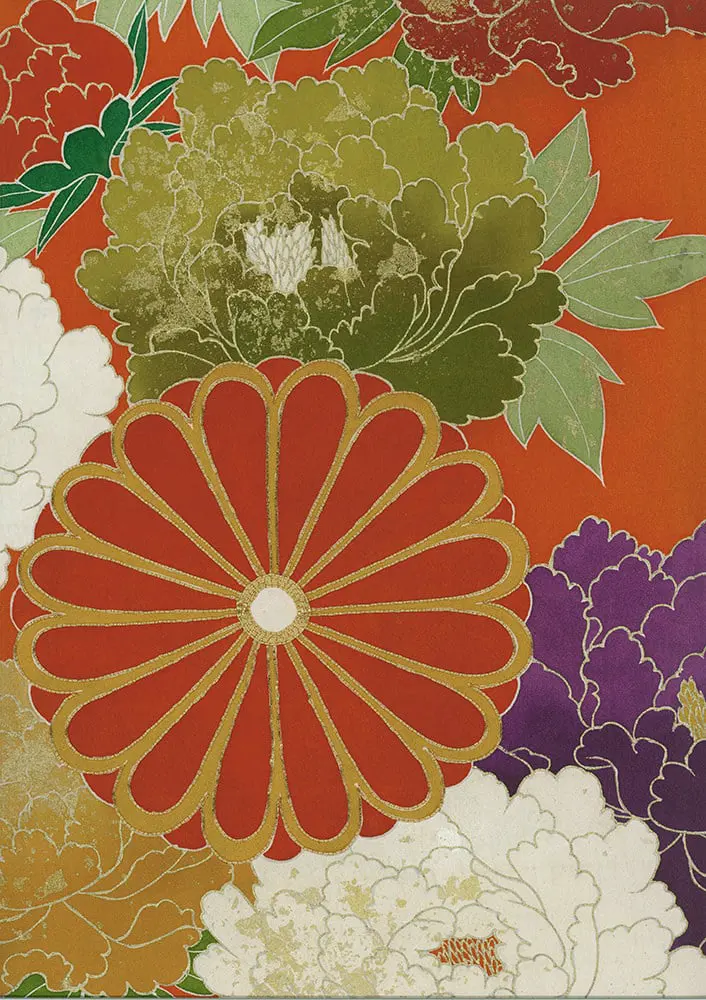
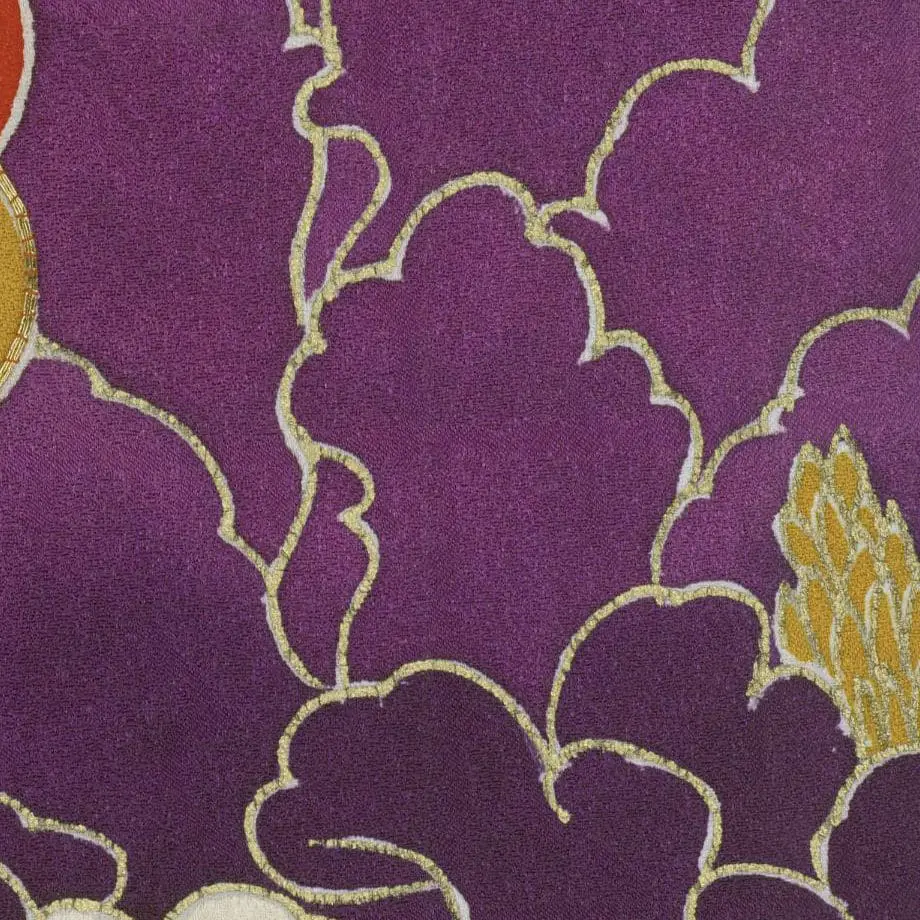
The visual narrative is dominated by oversized, hand-painted botan (peony) and kiku (chrysanthemum) blossoms that cascade vertically across the panel. The peonies are rendered in a diverse palette of ivory white, deep plum, forest green, and teal, while the radiating chrysanthemums feature bold vermilion petals with golden centers. A defining feature of this piece is its multi-layered embellishment; the blossoms are further enriched with couched embroidery and luminous highlights of gold foil (kintsugi-style accents), which provide a sophisticated three-dimensional texture and a regal shimmer. This combination of auspicious florals and metallic finishes reflects the post-war era's mastery of blending classical symbols of wealth and longevity with a radiant, modern optimism.

Payment Options: We primarily accept PayPal for all transactions. Credit and debit cards are not accepted. If you prefer to pay by personal check instead of PayPal, please note this preference in the "Additional comments" field when placing your order.Ordering Process
To receive your PayPal invoice, simply fill out the form.
Shipping Details: We ship all orders to the address associated with your PayPal payment. Please ensure your PayPal shipping address is current and accurate.A phone number is required during checkout, as our shipping carrier may need to contact you regarding delivery questions.Shipping RatesUnited States and Canada: $20International destinations (air mail): $40
