Copyright © 2026 Yorke Antique Textiles
.avif)

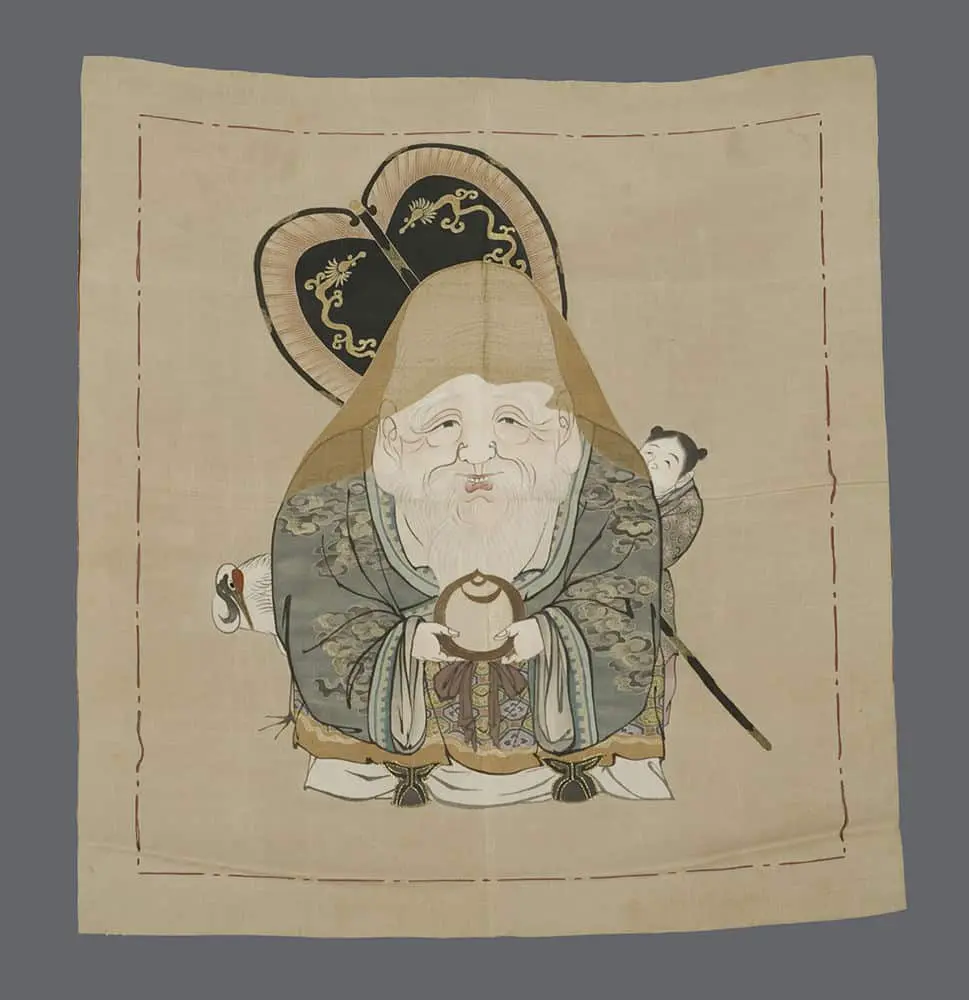


This elegant silk fukusa (gift cover), dating from the late Edo to mid-Meiji period (1840–1868), features a masterful depiction of Fukurokuju, one of Japan’s Seven Lucky Gods. Measuring 25 inches by 27 inches (63.5 cm x 68.5 cm), the textile is rendered on a sophisticated cream silk ground that serves as a neutral stage for the highly detailed figure. Fukurokuju is portrayed with his characteristic high forehead, signifying vast wisdom, and wears a voluminous, patterned robe decorated with scrolling clouds. He holds a sacred houju (wish-granting jewel) in both hands, a powerful Buddhist symbol of spiritual and material abundance.
The composition is enriched with further auspicious symbols: a large ceremonial fan rises behind the deity, and a red-crowned crane peers out from behind his shoulder, reinforcing the themes of good fortune and immortality. A small karako (Chinese child) is also visible, clutching a staff and representing the joy of family and a prosperous lineage. The artwork is framed by a delicate dotted red border, and the textile remains in very good condition, preserving the clarity of the fine line work and subtle washes of color that define the deity's benevolent expression.

Payment Options: We primarily accept PayPal for all transactions. Credit and debit cards are not accepted. If you prefer to pay by personal check instead of PayPal, please note this preference in the "Additional comments" field when placing your order.Ordering Process
To receive your PayPal invoice, simply fill out the form.
Shipping Details: We ship all orders to the address associated with your PayPal payment. Please ensure your PayPal shipping address is current and accurate.A phone number is required during checkout, as our shipping carrier may need to contact you regarding delivery questions.Shipping RatesUnited States and Canada: $20International destinations (air mail): $40
