Copyright © 2026 Yorke Antique Textiles
.avif)

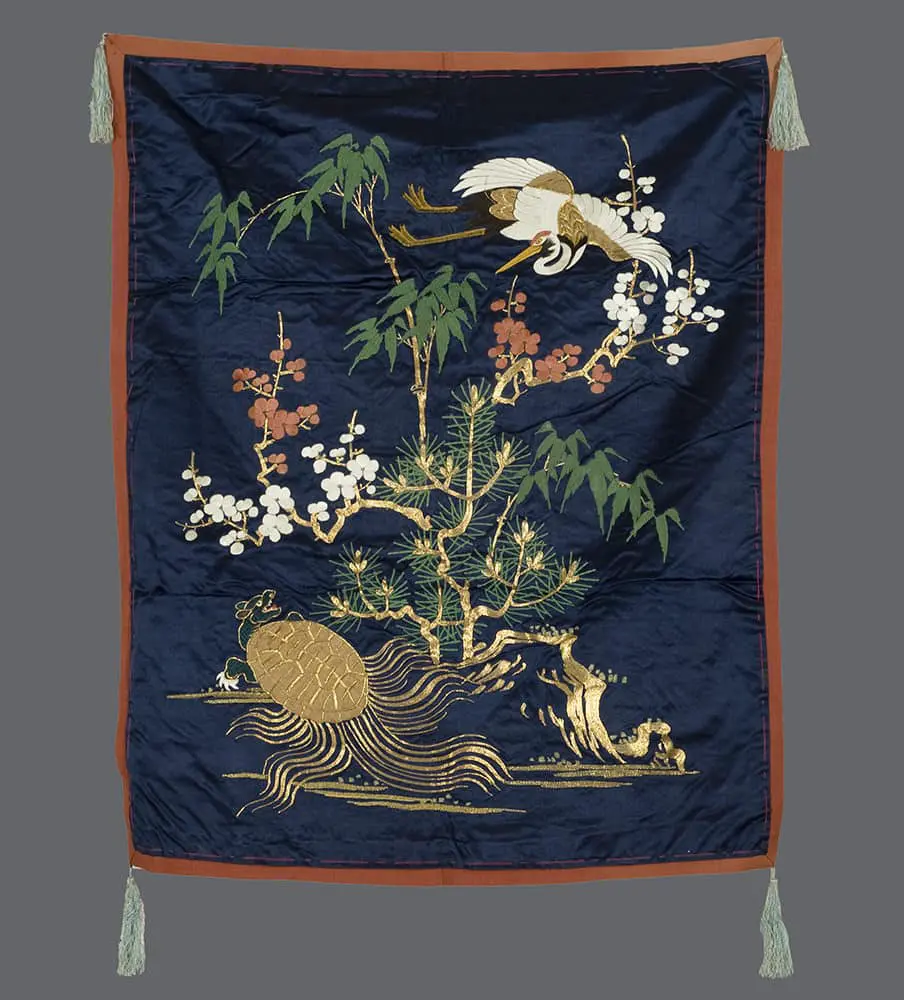

This expansive fukusa (gift-wrapping cloth) from Japan dates to the late Meiji or early Taisho period (1900–1920). Measuring 27 inches by 33 inches (69 cm x 84 cm), the textile is crafted from a deep navy shusu (silk satin) and remains in excellent condition.
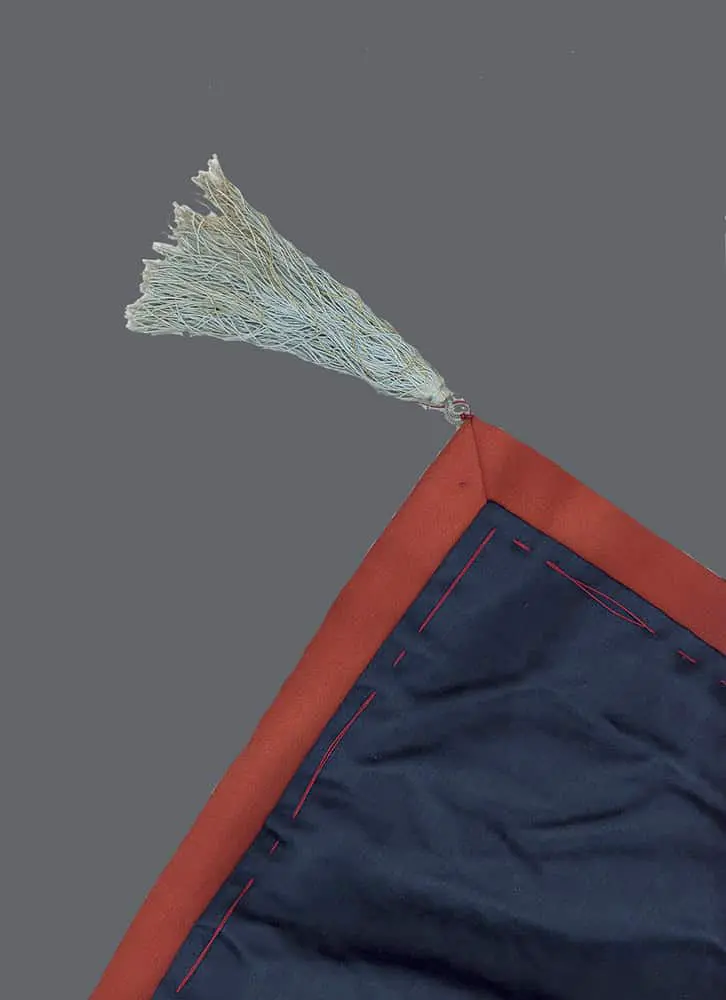
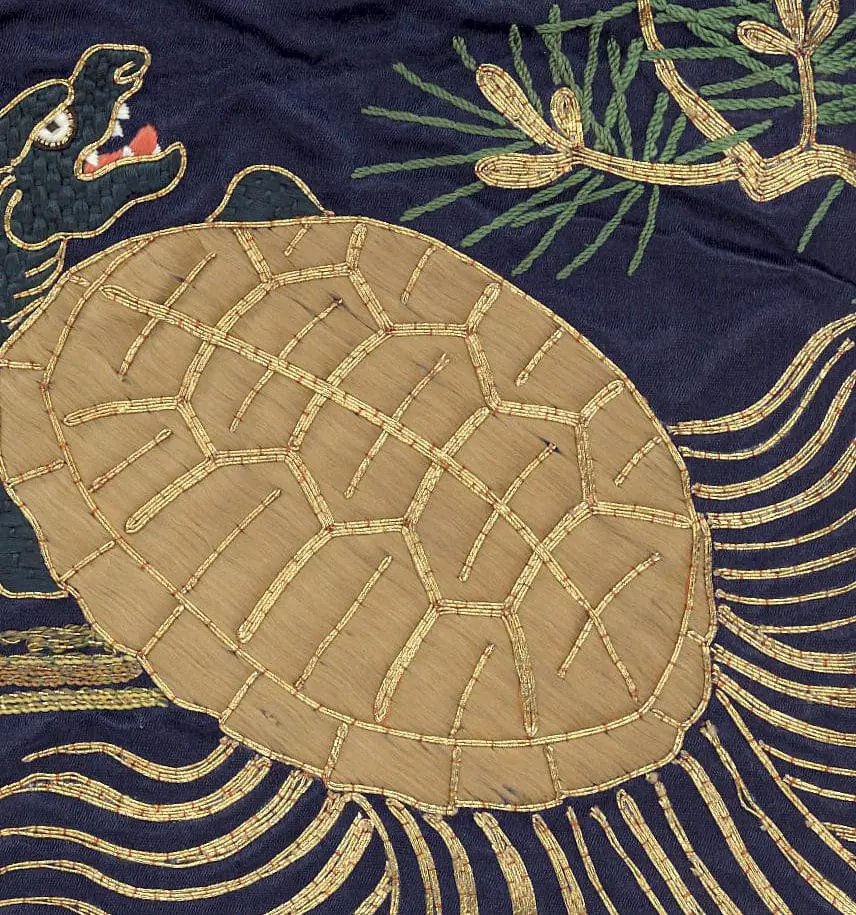
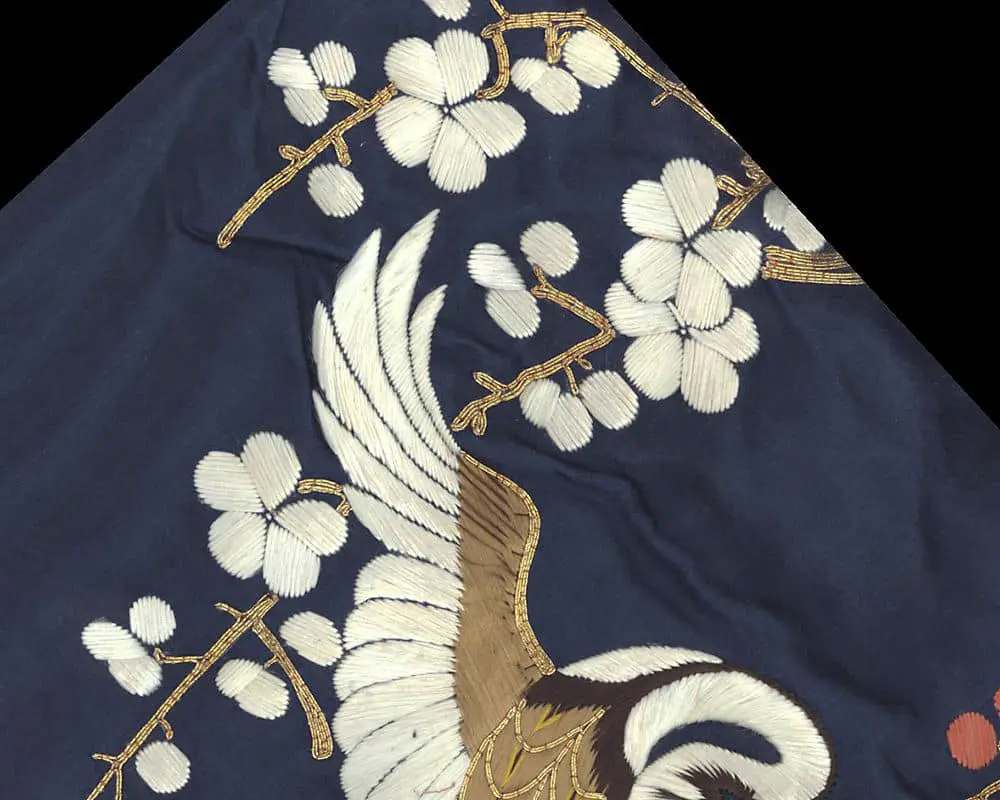
The cloth is adorned with a rich landscape of auspicious symbols, most notably the crane (tsuru) and the turtle (minogame). The crane is depicted in flight, its feathers rendered in white and gold silk thread. Below, a long-tailed minogame—a mythical turtle said to live for ten thousand years—rests near a rocky shore. Both creatures represent longevity and marital fidelity. The scene is further embellished with the "Three Friends of Winter" (Sho Chiku Bai): pine (matsu), bamboo (take), and plum (ume), which symbolize resilience and new beginnings. The intricate detailing is achieved through extensive embroidery and metallic-thread couching, giving the elements a raised, three-dimensional quality. The banner is finished with a burnt-orange silk border and four pale blue tassels at the corners.

Payment Options: We primarily accept PayPal for all transactions. Credit and debit cards are not accepted. If you prefer to pay by personal check instead of PayPal, please note this preference in the "Additional comments" field when placing your order.Ordering Process
To receive your PayPal invoice, simply fill out the form.
Shipping Details: We ship all orders to the address associated with your PayPal payment. Please ensure your PayPal shipping address is current and accurate.A phone number is required during checkout, as our shipping carrier may need to contact you regarding delivery questions.Shipping RatesUnited States and Canada: $20International destinations (air mail): $40
