Copyright © 2026 Yorke Antique Textiles
.avif)

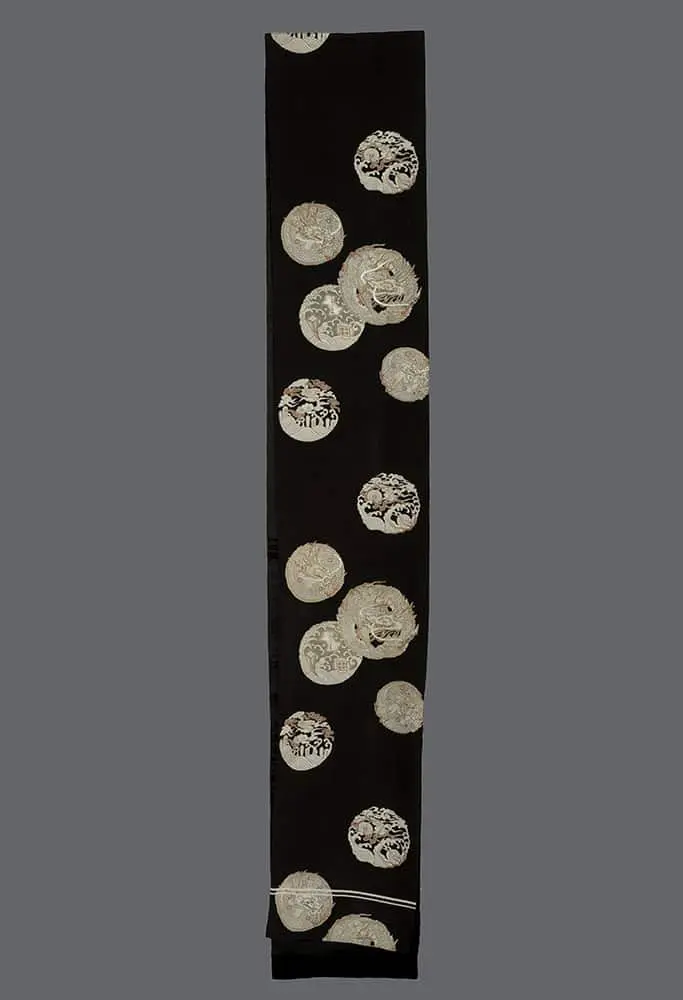
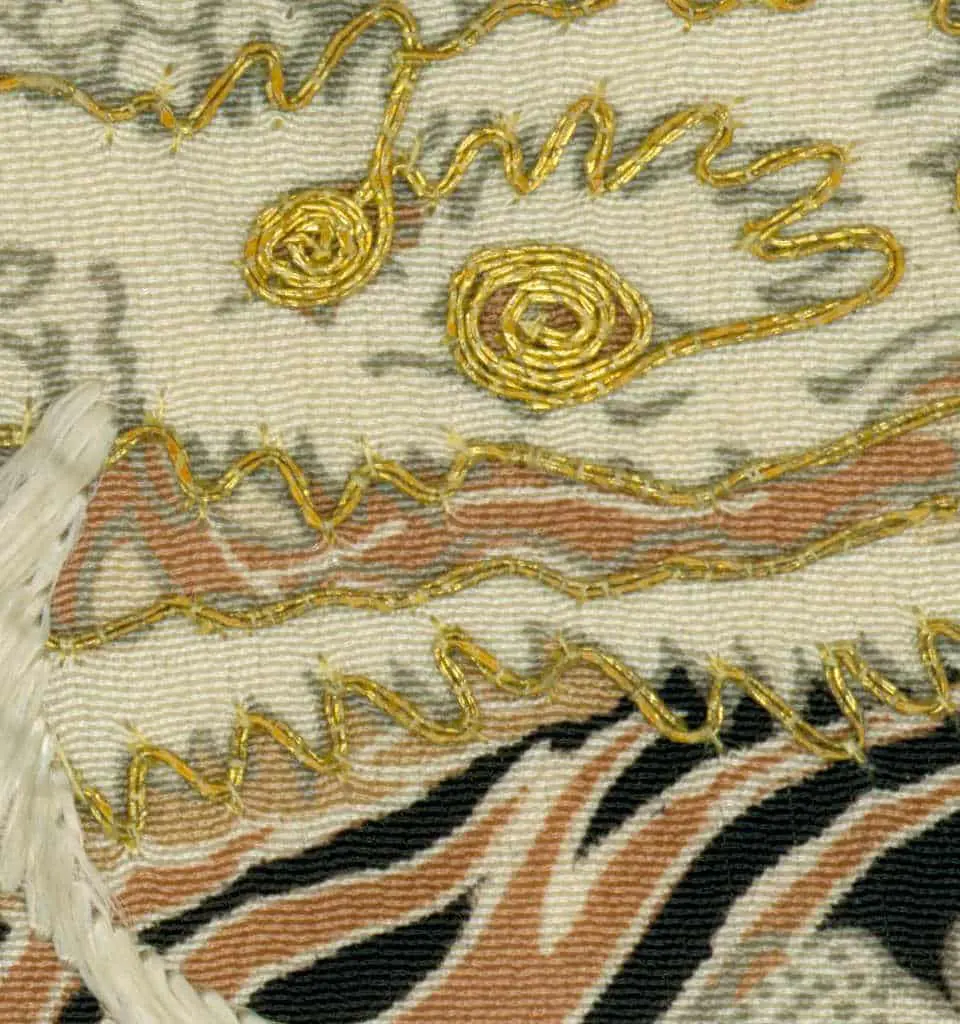
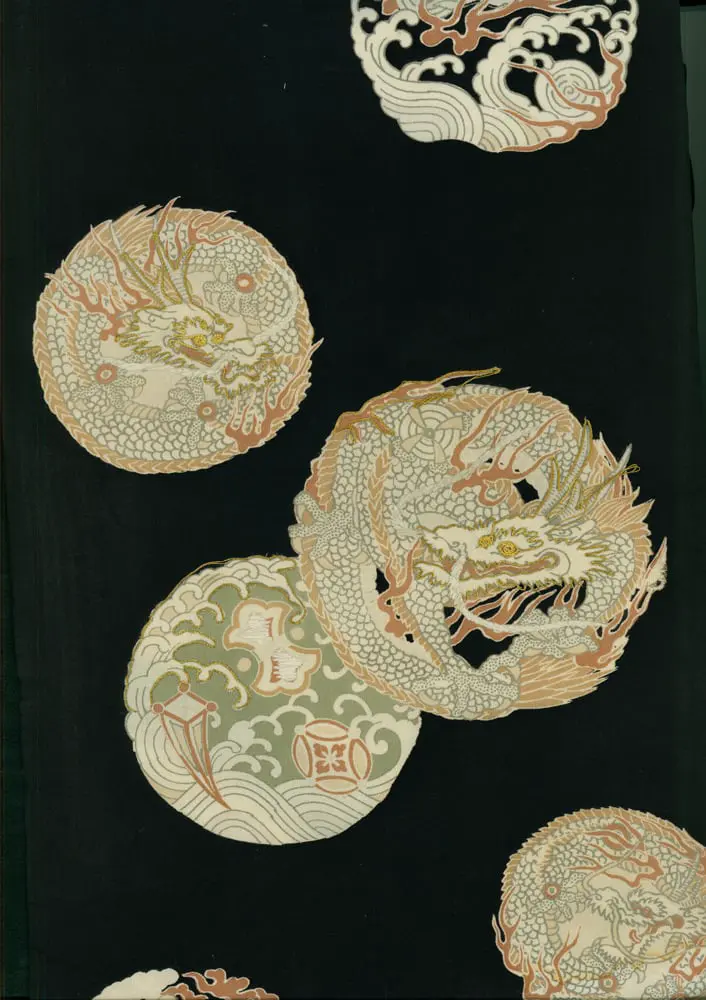
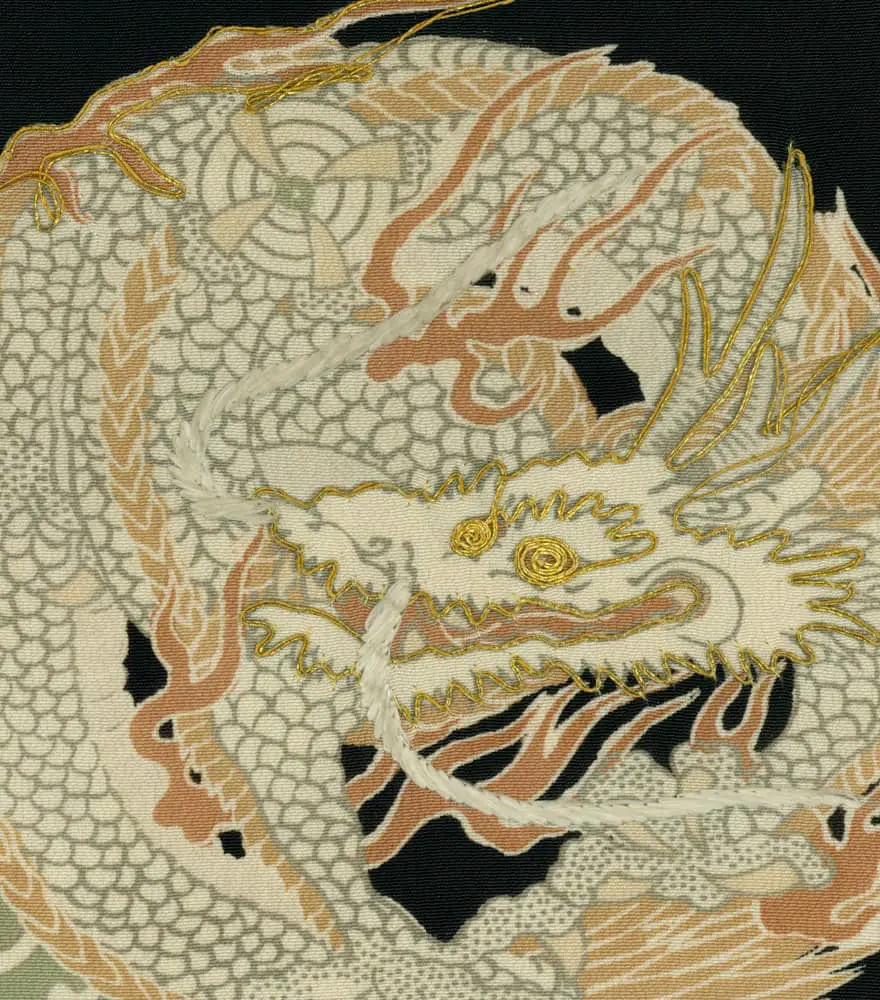
This silk fukuro obi originates from Japan and dates to the Taisho period (1912–1926), an era known for its "Taisho Roman" aesthetic that blended traditional Japanese themes with bold, innovative expressions. Measuring 12 inches by 143 inches (30 cm x 363 cm), this piece is a fukuro (pouch) obi, which is constructed from a decorative outer silk layer and a lighter lining. Notably, this example deviates from the heavy brocade typically seen in formal obi of this time, utilizing a "faux-brocade" simple weave. This technique creates a flatter, more flexible surface that lacks the dense structural wefts of traditional nishiki brocade but retains a sophisticated, patterned appearance.
The visual composition is centered on three large Chinese-inspired roundels (maru-mon), a motif that traces back to the Silk Road and early Buddhist influence in Japan. These medallions are reminiscent of much older generations of textile design, representing a nostalgic or "revivalist" style often seen in theatrical costumes or geisha attire. The roundels are elevated by silk and metallic embroidery, which provides a luminous, three-dimensional contrast to the simpler woven ground. While the obi is in very good condition, it possesses minor imperfections, including a short section of loose embroidery—a common sign of age in delicate Taisho-era silks.

Payment Options: We primarily accept PayPal for all transactions. Credit and debit cards are not accepted. If you prefer to pay by personal check instead of PayPal, please note this preference in the "Additional comments" field when placing your order.Ordering Process
To receive your PayPal invoice, simply fill out the form.
Shipping Details: We ship all orders to the address associated with your PayPal payment. Please ensure your PayPal shipping address is current and accurate.A phone number is required during checkout, as our shipping carrier may need to contact you regarding delivery questions.Shipping RatesUnited States and Canada: $20International destinations (air mail): $40
