Copyright © 2026 Yorke Antique Textiles
.avif)

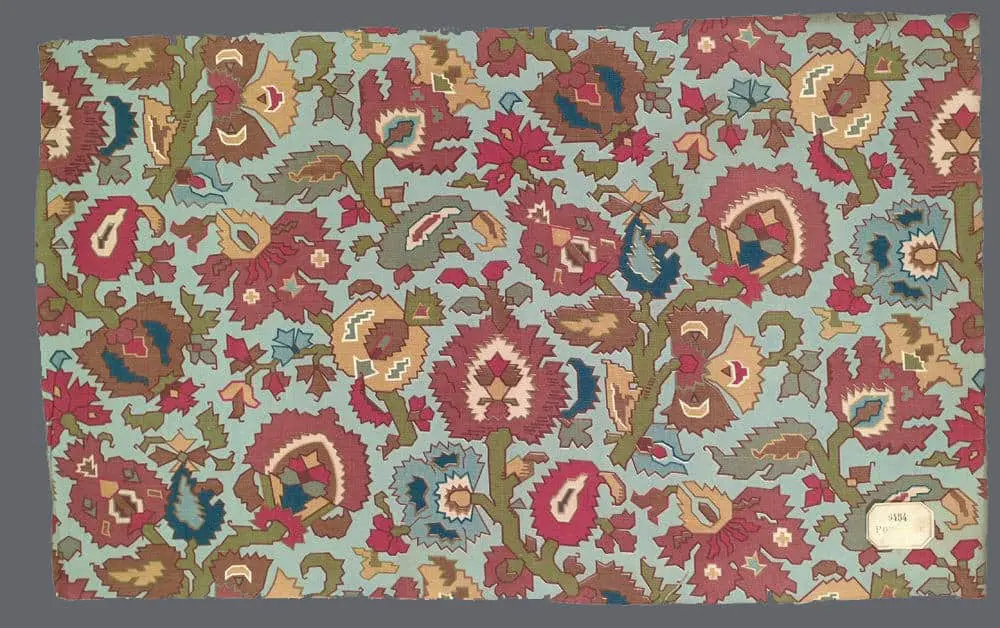
This remarkable textile originates from France, dating to the 1870–1880 period, and serves as a scholarly example of the eclectic "ethnic" and global design influences that characterized European decorative arts in the late 19th century. Measuring 30 inches by 20.5 inches (76 cm x 52 cm), the piece is an original roller-printed sample crafted from a sturdy poplin (ribbed cotton). Manufactured by the esteemed Scheurer company in Mulhouse, Alsace, this sample was acquired at auction in Paris and remarkably retains its original archival label specifying the design and fabric content. Because it was protected from environmental degradation within a sample book for over a century, the pigments remain exceptionally vibrant, though the piece features one original selvedge and three cut edges from its removal for archival sale.
The visual narrative is a densely packed, rhythmic composition set against a cool, dusty blue backdrop. The design features an "ethnic weave" style, utilizing jagged, serrated edges and geometric internal detailing to mimic the appearance of traditional hand-woven indigenous textiles. The palette is strikingly vibrant, featuring large botanical and paisley-adjacent motifs in shades of deep red, magenta, ochre yellow, and earth brown, with accents of forest green and turquoise blue. This technical mastery reflects the Scheurer company's ability to achieve high-contrast, multi-layered prints on durable poplin, capturing the mid-to-late Victorian obsession with bold, saturated patterns inspired by global folk traditions.

Payment Options: We primarily accept PayPal for all transactions. Credit and debit cards are not accepted. If you prefer to pay by personal check instead of PayPal, please note this preference in the "Additional comments" field when placing your order.Ordering Process
To receive your PayPal invoice, simply fill out the form.
Shipping Details: We ship all orders to the address associated with your PayPal payment. Please ensure your PayPal shipping address is current and accurate.A phone number is required during checkout, as our shipping carrier may need to contact you regarding delivery questions.Shipping RatesUnited States and Canada: $20International destinations (air mail): $40
