Copyright © 2026 Yorke Antique Textiles
.avif)


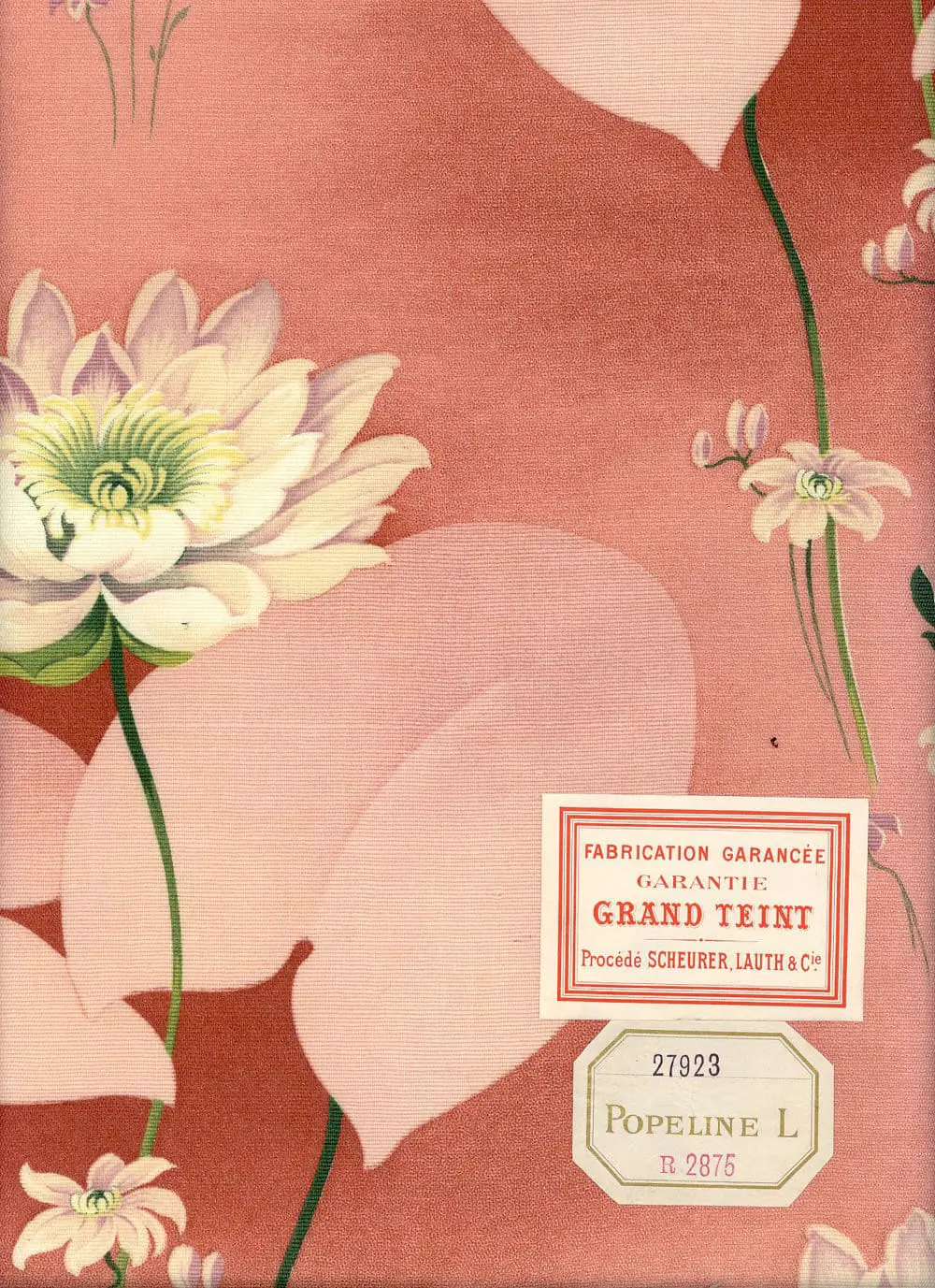
This elegant textile originates from France, produced circa 1905, and serves as a scholarly example of the refined botanical printing that characterized the later stages of the Art Nouveau movement. Measuring 30 inches by 18 inches (76 cm x 46 cm), the piece is an original roller-printed sample crafted from a durable poplin (ribbed cotton). Manufactured by the esteemed Scheurer company in Mulhouse, Alsace, this sample was acquired at auction in Paris and remarkably retains its original archival label specifying the design and fabric content. Having been protected from environmental degradation within a sample book for over a century, the pigments remain exceptionally vibrant, though the piece features one original selvedge and three cut edges from its removal for archival sale.
The visual narrative is a serene and rhythmic arrangement of water lilies (nymphéas) set against a warm, saturated salmon backdrop. The composition features large, white blossoms with delicate mauve-shaded petals and pale yellow centers, accompanied by oversized, heart-shaped lily pads in a soft, muted pink. Interspersed between the primary blooms are vertical sprays of smaller white wildflowers on slender green stems, which provide a sense of upward movement and structural balance. This technical mastery reflects the Scheurer company’s ability to achieve subtle tonal grading and crisp line-work, capturing the turn-of-the-century fascination with aquatic flora and the tranquil, floating aesthetics popularized by French Impressionism.

Payment Options: We primarily accept PayPal for all transactions. Credit and debit cards are not accepted. If you prefer to pay by personal check instead of PayPal, please note this preference in the "Additional comments" field when placing your order.Ordering Process
To receive your PayPal invoice, simply fill out the form.
Shipping Details: We ship all orders to the address associated with your PayPal payment. Please ensure your PayPal shipping address is current and accurate.A phone number is required during checkout, as our shipping carrier may need to contact you regarding delivery questions.Shipping RatesUnited States and Canada: $20International destinations (air mail): $40
