Copyright © 2026 Yorke Antique Textiles
.avif)

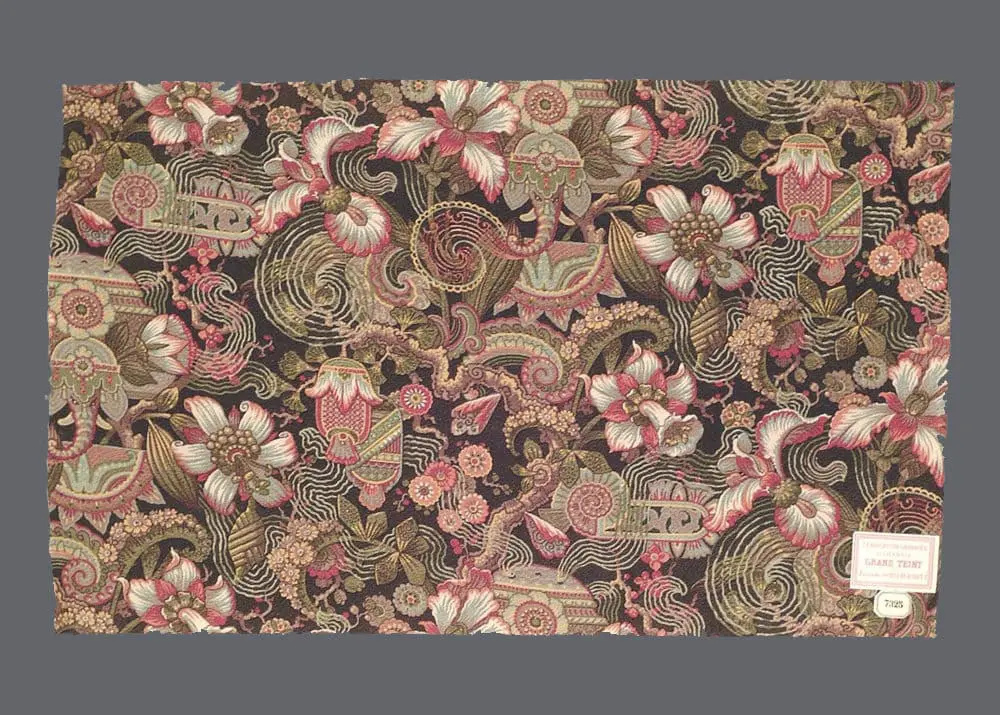
This extraordinary textile originates from France, dating to the late 19th century (1880–1900), and serves as a scholarly example of the exotic "Orientalist" and Chinoiserie trends that permeated European design during the late 19th century. Measuring 30 inches by 18 inches (76 cm x 46 cm), the piece is an original roller-printed cotton sample from the esteemed Scheurer company in Mulhouse, Alsace. Acquired at auction in Paris, the sample remarkably retains its original archival label, certifying its design provenance. Because it was preserved within a sample book and shielded from light for over a century, the fabric remains in excellent condition with exceptionally vibrant pigments, although it features one original selvedge and three cut edges from its removal from the archival binding.
The visual narrative is a dense and fantastical composition set against a deep, dark green backdrop. The design is centered around highly stylized elephant heads, adorned with ornamental headdresses, emerging from a lush thicket of exotic lilies and sprawling vines. Rendered in a saturated palette of red, pink, orange, and mauve with earthy green and brown accents, the imagery is further enriched by intricate, swirling line-work and geometric patterns that mimic fine engraving. This technical mastery reflect the Scheurer company’s ability to print complex, multi-layered "Gros Teint" designs that blended diverse cultural motifs into a cohesive, maximalist aesthetic popular in high-end late-Victorian interiors.

Payment Options: We primarily accept PayPal for all transactions. Credit and debit cards are not accepted. If you prefer to pay by personal check instead of PayPal, please note this preference in the "Additional comments" field when placing your order.Ordering Process
To receive your PayPal invoice, simply fill out the form.
Shipping Details: We ship all orders to the address associated with your PayPal payment. Please ensure your PayPal shipping address is current and accurate.A phone number is required during checkout, as our shipping carrier may need to contact you regarding delivery questions.Shipping RatesUnited States and Canada: $20International destinations (air mail): $40
