Copyright © 2026 Yorke Antique Textiles
.avif)

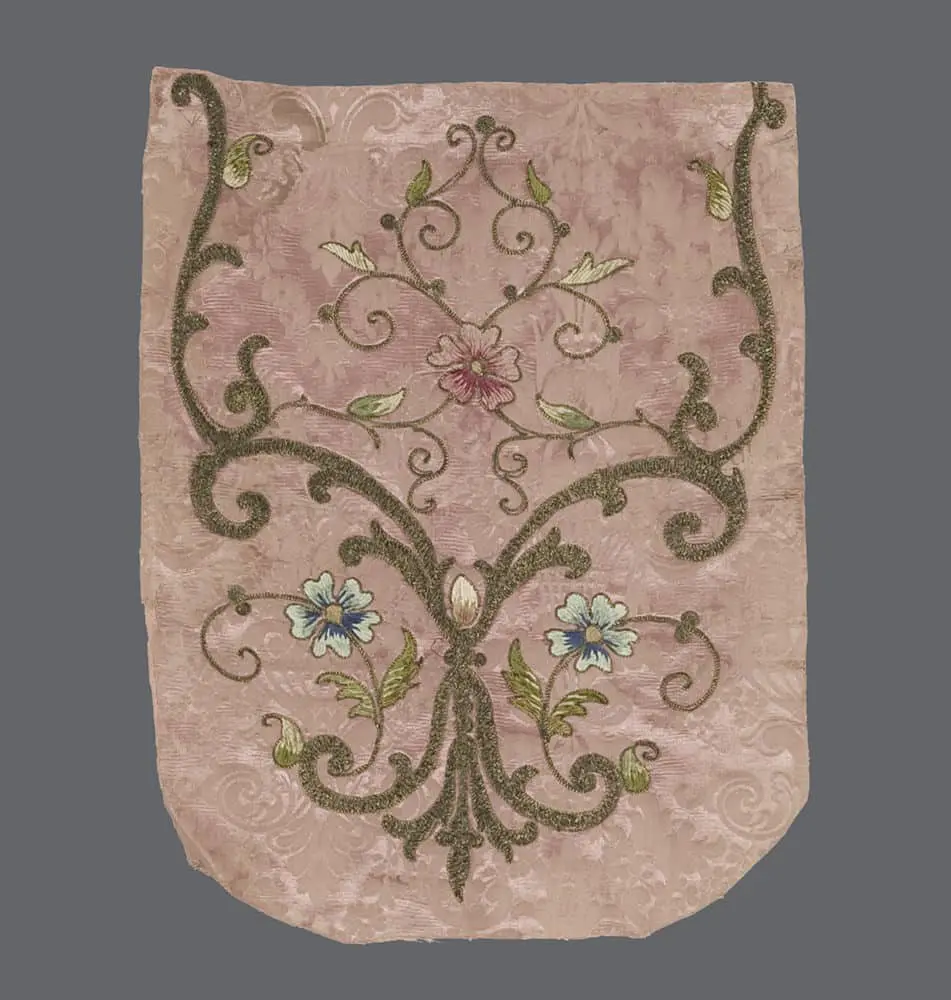

This elegant textile fragment, originating from Western Europe between 1825 and 1875, is a storied remnant of 19th-century domestic upholstery. Measuring 16.5 inches by 19 inches (42 cm x 48 cm), the piece was originally part of an old chair cover, a function that required both durability and high-status ornamentation. The foundation is a silk damask, a figured fabric where the pattern is created through the interplay of matte and lustrous weave structures.
The fragment is distinguished by its complex embroidery, which incorporates both metallic and chenille elements. The use of chenille—a fuzzy, caterpillar-like silk or wool yarn—adds a soft, three-dimensional pile that creates deep shadows and a velvety texture alongside the reflective metallic threads. This combination was often used in the mid-1800s to depict lush, tactile botanical scenes. While the piece is in good condition overall, it exhibits age-appropriate wear, including some small silk slits along the edges where the fine fibers have naturally weakened.

Payment Options: We primarily accept PayPal for all transactions. Credit and debit cards are not accepted. If you prefer to pay by personal check instead of PayPal, please note this preference in the "Additional comments" field when placing your order.Ordering Process
To receive your PayPal invoice, simply fill out the form.
Shipping Details: We ship all orders to the address associated with your PayPal payment. Please ensure your PayPal shipping address is current and accurate.A phone number is required during checkout, as our shipping carrier may need to contact you regarding delivery questions.Shipping RatesUnited States and Canada: $20International destinations (air mail): $40
