Copyright © 2026 Yorke Antique Textiles
.avif)

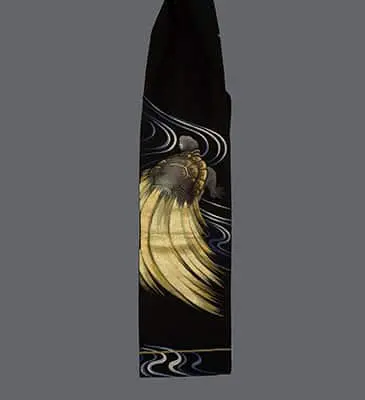

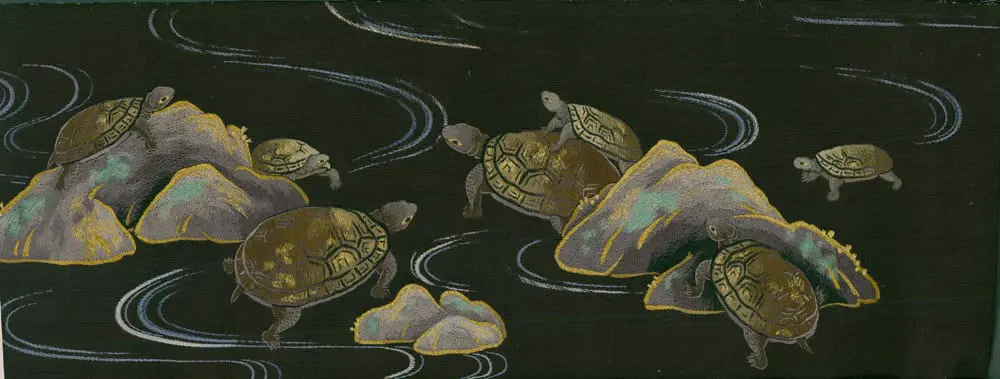

This hand-woven silk nagoya obi originates from Japan and dates to the early Showa period (1926–1940). Measuring 137 inches in length with a main section width of 12 inches (348 cm x 30.5 cm), the textile is crafted from a deep black silk ground that serves as a high-contrast canvas for its lush embroidery. The Nagoya obi style, characterized by a pre-folded and sewn narrow section for the waist, was a popular innovation of the early 20th century, offering a more practical yet elegant alternative to the heavier maru obi.
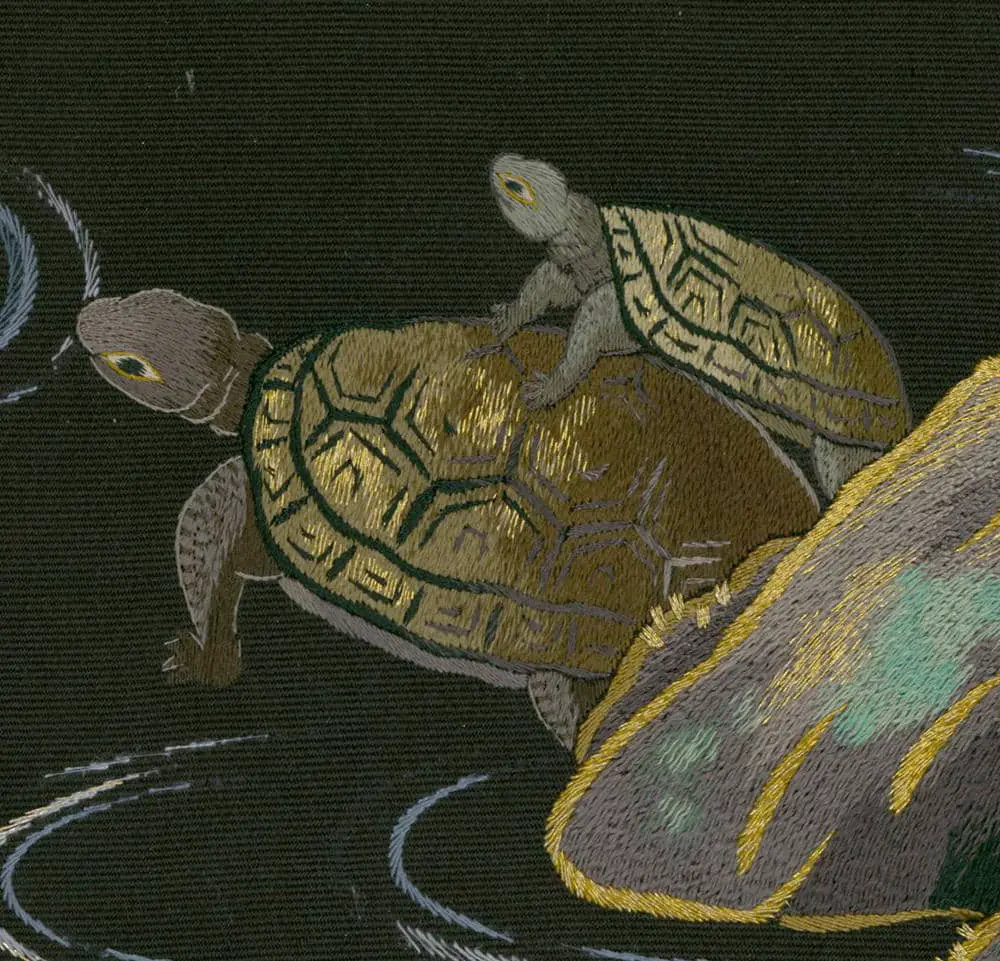
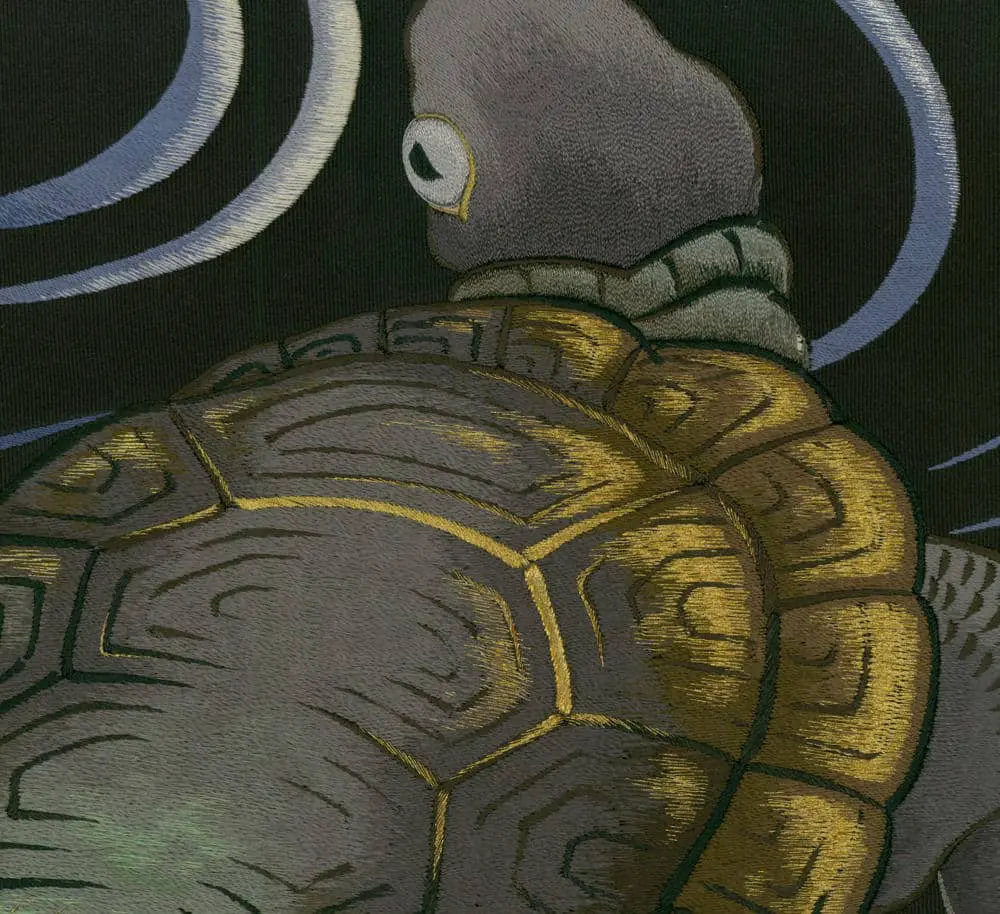
The visual centerpiece of this garment is the depiction of minogame (long-haired tortoises) navigating a stream amidst stylized rocks. In Japanese mythology, the minogame is a tortoise that has lived for ten thousand years, eventually growing a long "tail" of seaweed and algae. Rendered here with masterful silk and metallic threadwork, the golden "tails" flow with a fluid grace that mimics the movement of water. The composition utilizes swirling silver and blue embroidery to represent the stream, creating a sense of natural vitality and ancient wisdom. While the embroidery remains in very good condition, the black silk background exhibits small, localized tears, which are characteristic of the delicate nature of early Showa-era weighted silks.

Payment Options: We primarily accept PayPal for all transactions. Credit and debit cards are not accepted. If you prefer to pay by personal check instead of PayPal, please note this preference in the "Additional comments" field when placing your order.Ordering Process
To receive your PayPal invoice, simply fill out the form.
Shipping Details: We ship all orders to the address associated with your PayPal payment. Please ensure your PayPal shipping address is current and accurate.A phone number is required during checkout, as our shipping carrier may need to contact you regarding delivery questions.Shipping RatesUnited States and Canada: $20International destinations (air mail): $40
