Copyright © 2026 Yorke Antique Textiles
.avif)

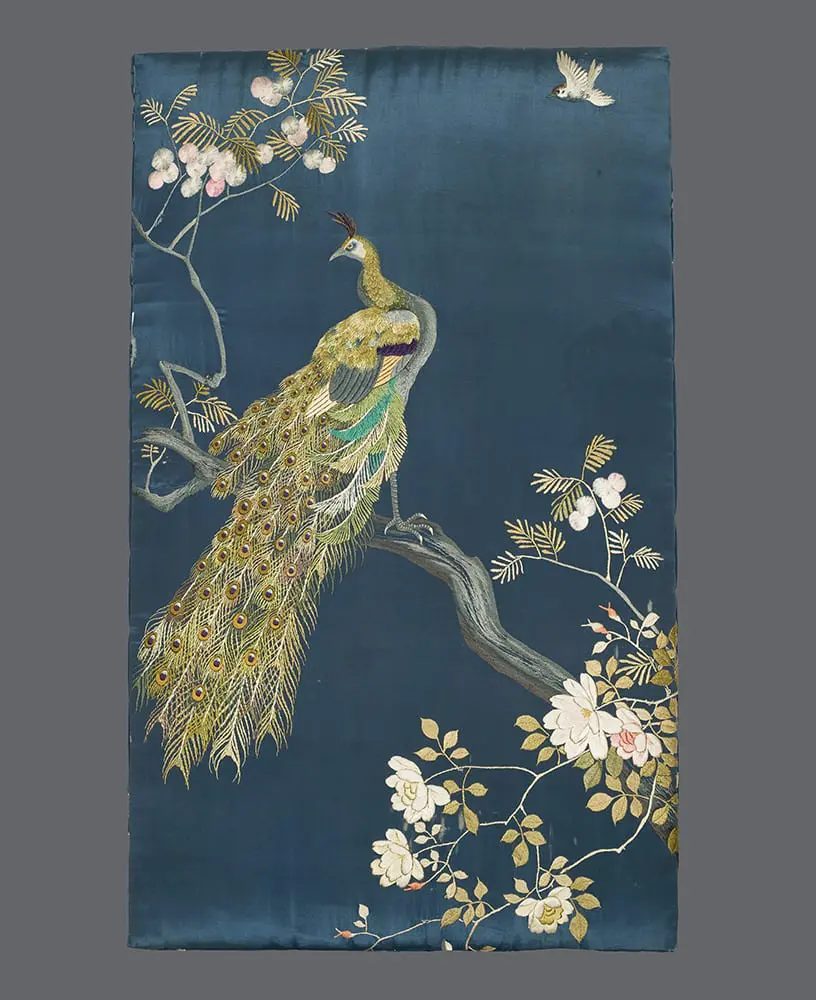
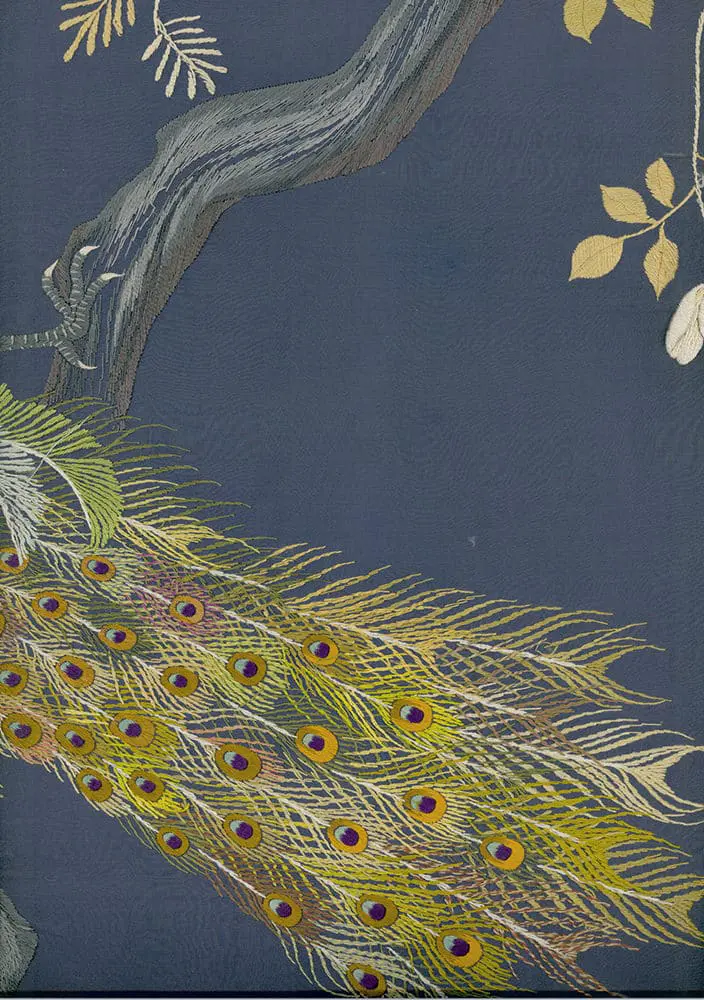
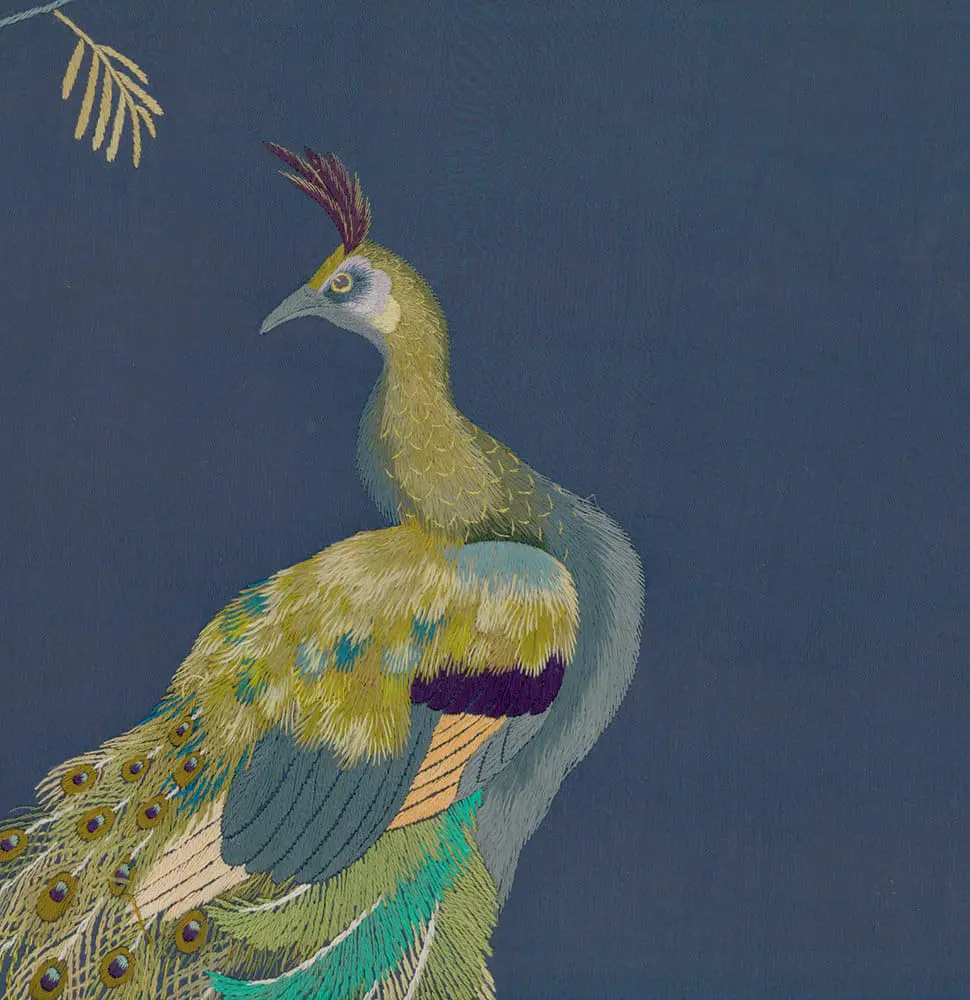
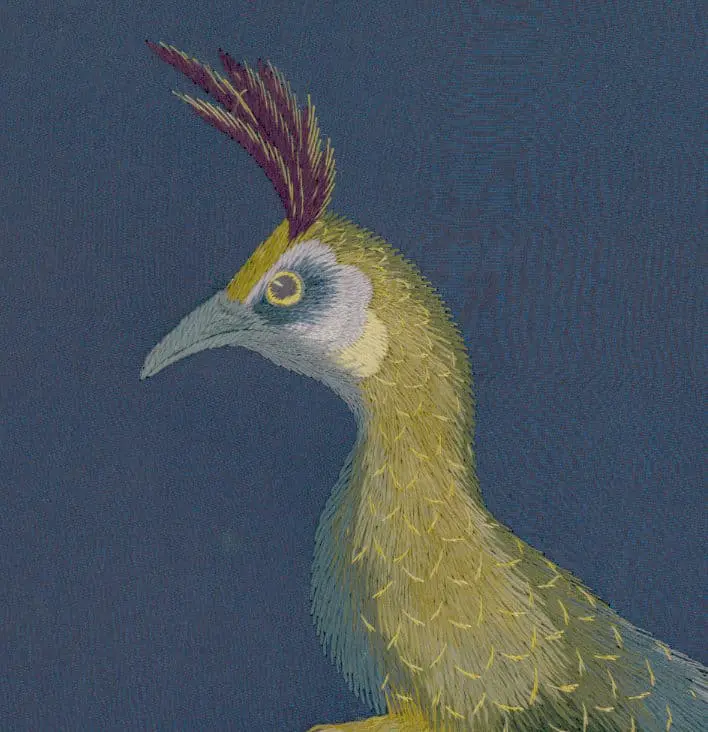
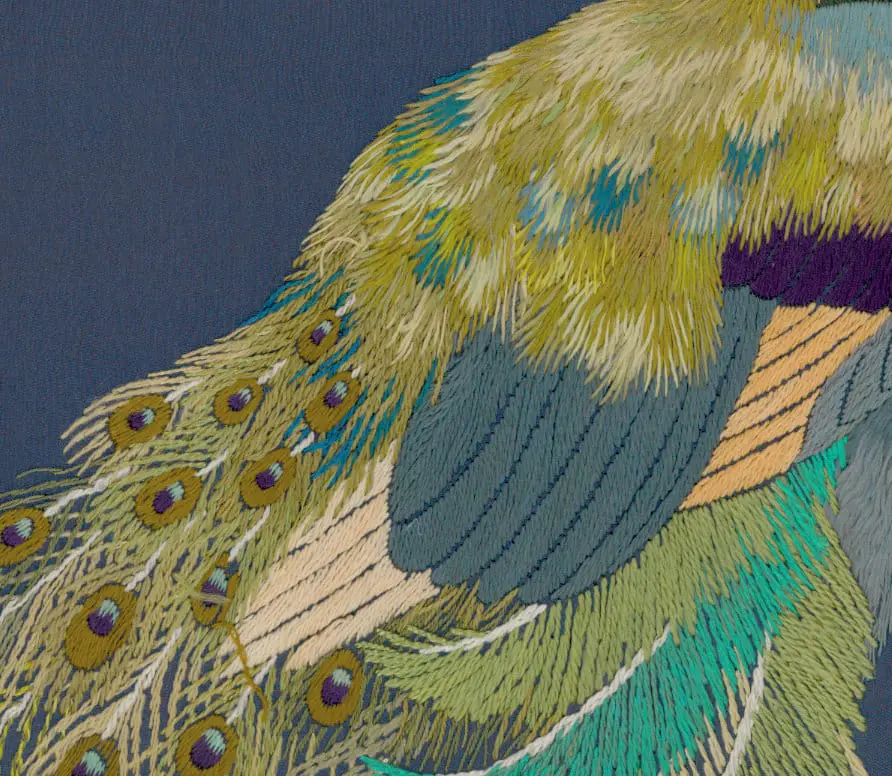
This remarkable and distinctive silk embroidery fragment, dating to the latter Edo period (1800–1850), was originally part of a high-ranking woman's kimono. Measuring 24 inches by 41 inches (61 cm x 104 cm), the piece is a breathtaking display of technical skill, featuring a majestic peacock perched upon a gnarled tree branch amidst a profusion of white peonies.
In a Buddhist context, the peacock is a complex symbol representing the transformation of "poison" into beauty, as the bird was believed to be able to eat poisonous snakes without harm. It also symbolizes worldly pride and regal authority. The embroidery is executed with extraordinary detail; the peacock's "eyes" on its tail feathers are highlighted with shimmering gold and green silk, while the white peonies are rendered with thick, satin-stitched petals that create a three-dimensional effect. A small sparrow is seen in flight at the top right, adding a sense of dynamic movement to the scene. While the silk background shows a few age-related splits, the embroidery remains vibrant and in good condition.

Payment Options: We primarily accept PayPal for all transactions. Credit and debit cards are not accepted. If you prefer to pay by personal check instead of PayPal, please note this preference in the "Additional comments" field when placing your order.Ordering Process
To receive your PayPal invoice, simply fill out the form.
Shipping Details: We ship all orders to the address associated with your PayPal payment. Please ensure your PayPal shipping address is current and accurate.A phone number is required during checkout, as our shipping carrier may need to contact you regarding delivery questions.Shipping RatesUnited States and Canada: $20International destinations (air mail): $40
