Copyright © 2026 Yorke Antique Textiles
.avif)

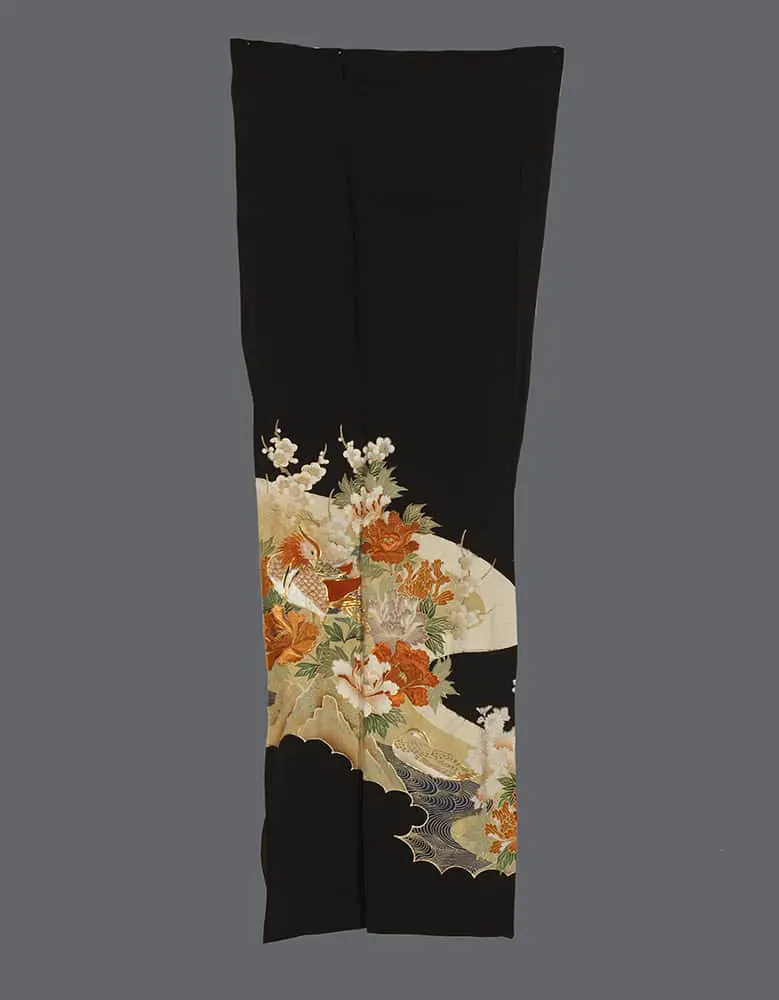
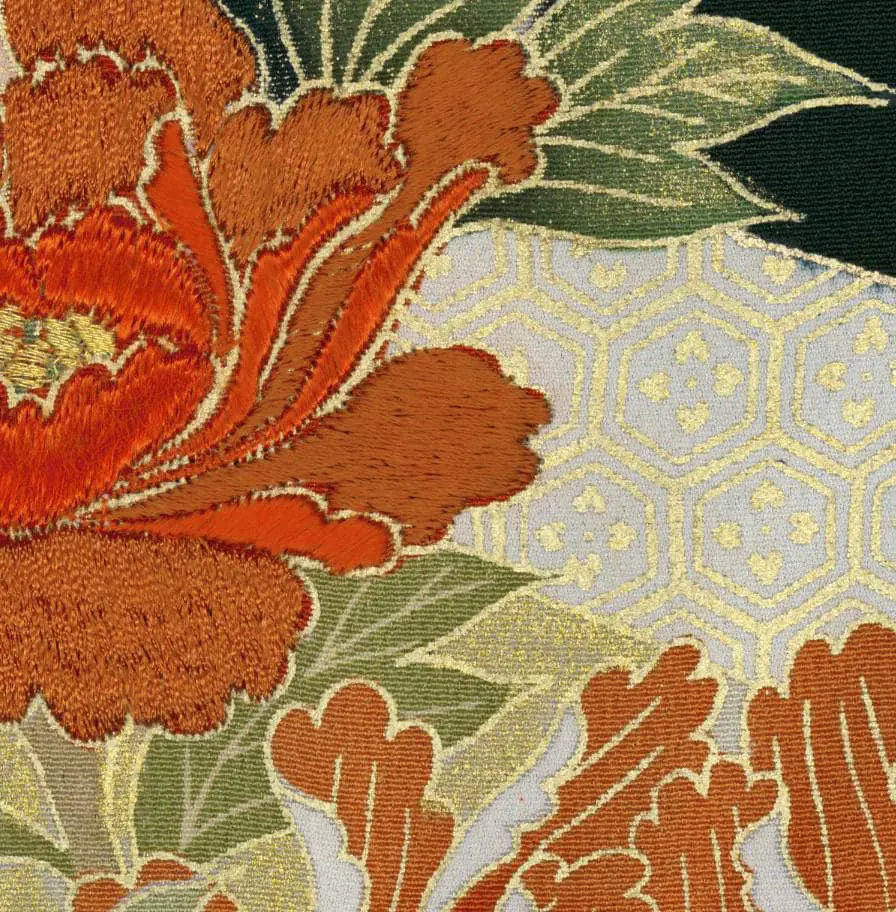
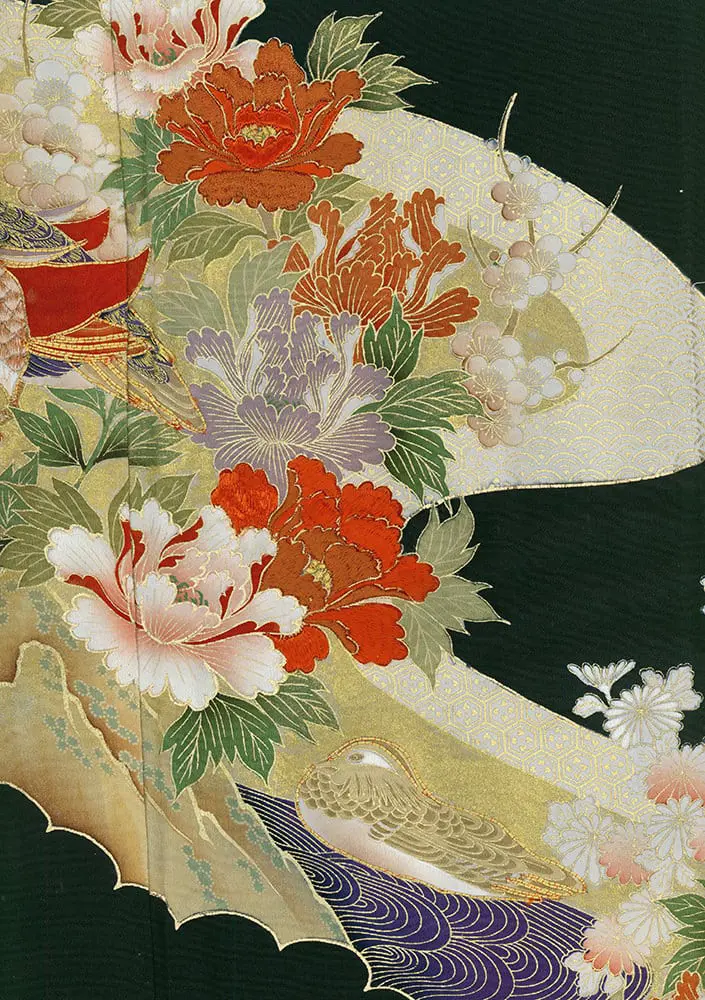
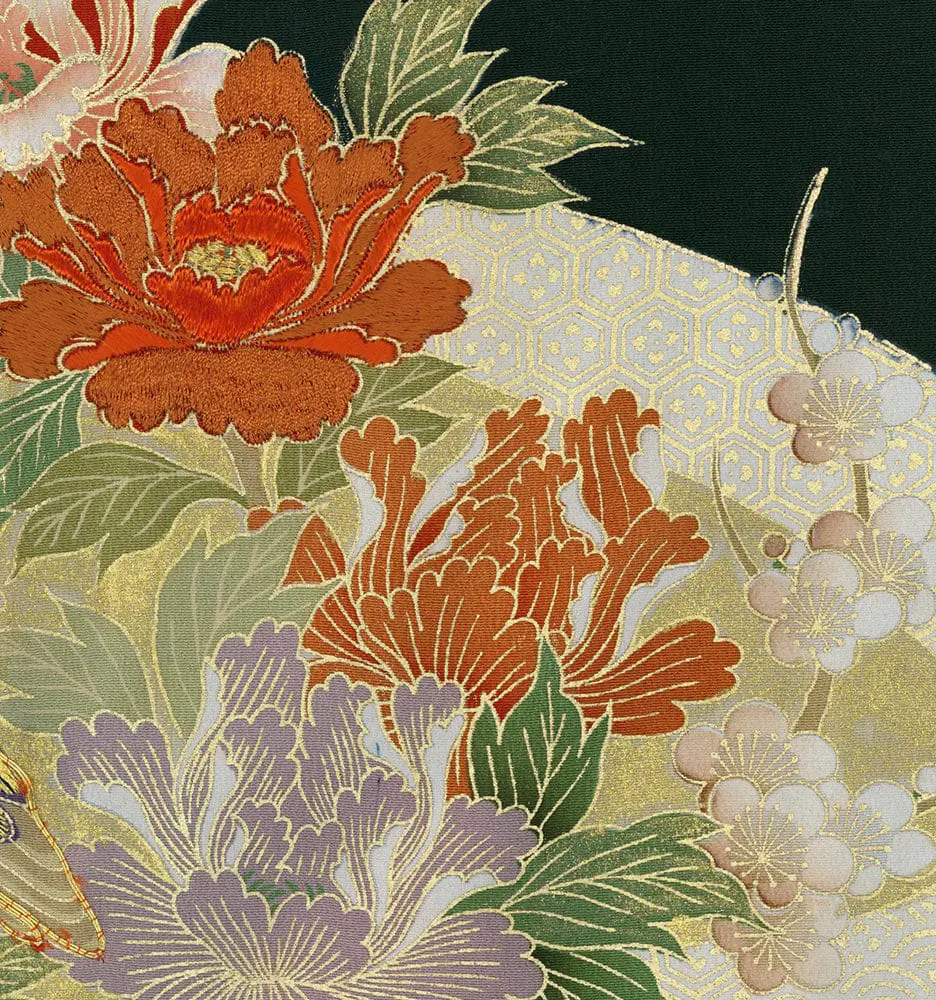
This exquisite textile originates from Japan’s late Showa period (specifically the 1960s), a decade known for producing highly detailed and luxurious formal wear. Measuring approximately 14 inches by 43 inches (36 cm x 109 cm), this piece was created by meticulously stitching together two panels from a disassembled kimono. The base fabric is a high-quality black silk that provides a deep, dramatic canvas for the intricate decorative work. The textile remains in very good condition, though it displays minor imperfections consistent with its vintage nature.
The visual narrative is a rich display of traditional auspicious symbols, centered around a pair of Mandarin ducks (oshidori). In Japanese culture, these birds are celebrated symbols of marital bliss and eternal fidelity. One duck is nestled among a lush arrangement of large, vibrant peonies (botan) and plum blossoms (ume), while the other is depicted swimming gracefully atop stylized golden waves. The composition is further elevated by extensive silk embroidery, which adds a shimmering, three-dimensional quality to the floral petals and the ducks' plumage. The use of rich oranges, creams, and greens against the dark background, accented with fine gold-colored thread, creates a scholarly and regal aesthetic.

Payment Options: We primarily accept PayPal for all transactions. Credit and debit cards are not accepted. If you prefer to pay by personal check instead of PayPal, please note this preference in the "Additional comments" field when placing your order.Ordering Process
To receive your PayPal invoice, simply fill out the form.
Shipping Details: We ship all orders to the address associated with your PayPal payment. Please ensure your PayPal shipping address is current and accurate.A phone number is required during checkout, as our shipping carrier may need to contact you regarding delivery questions.Shipping RatesUnited States and Canada: $20International destinations (air mail): $40
