Copyright © 2026 Yorke Antique Textiles
.avif)

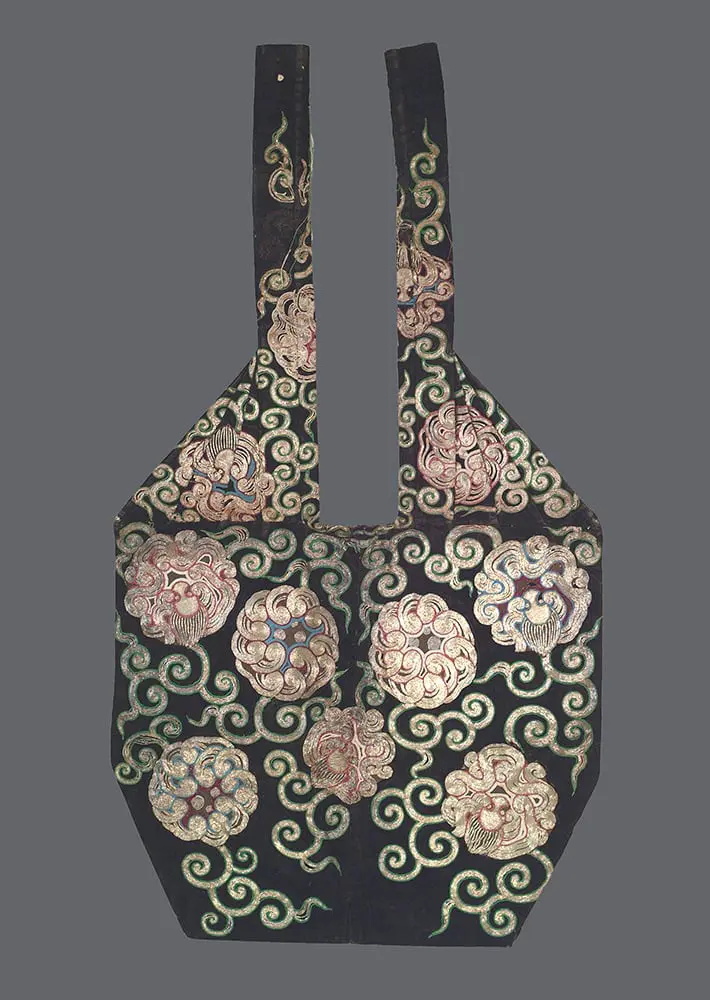
This unique and visually striking theatrical garment from Japan dates to the late Meiji or Taisho period (1900–1920). Measuring approximately 34 inches by 29 inches (86 cm x 74 cm) excluding the straps, the piece is constructed from a sturdy cotton flannel base dyed a deep, dark brown or black.
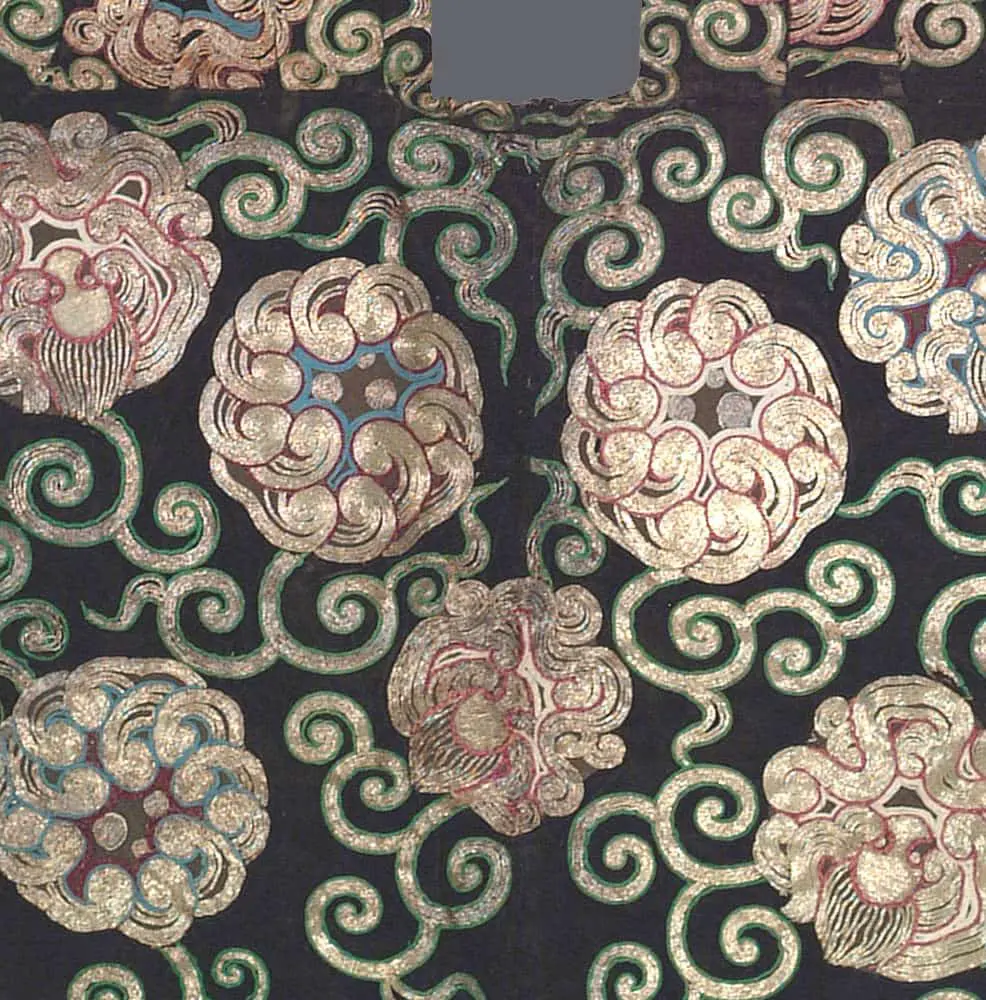
The garment is heavily adorned with metallic couching, a technique where thick metallic threads are laid on the surface of the fabric and stitched down with finer silk threads. The elaborate design features large, swirling peony or chrysanthemum blossoms interspersed with scrolling tendrils and cloud-like motifs in shades of gold, silver, pink, and pale green. The density of the embroidery and the use of metallic materials suggest this was intended for a high-impact stage performance, likely in Kabuki or Noh theater, where costumes needed to catch and reflect light for distant audiences. The piece is in good condition overall, though it exhibits various loose couching elements consistent with its age and use in performance.

Payment Options: We primarily accept PayPal for all transactions. Credit and debit cards are not accepted. If you prefer to pay by personal check instead of PayPal, please note this preference in the "Additional comments" field when placing your order.Ordering Process
To receive your PayPal invoice, simply fill out the form.
Shipping Details: We ship all orders to the address associated with your PayPal payment. Please ensure your PayPal shipping address is current and accurate.A phone number is required during checkout, as our shipping carrier may need to contact you regarding delivery questions.Shipping RatesUnited States and Canada: $20International destinations (air mail): $40
