Copyright © 2026 Yorke Antique Textiles
.avif)

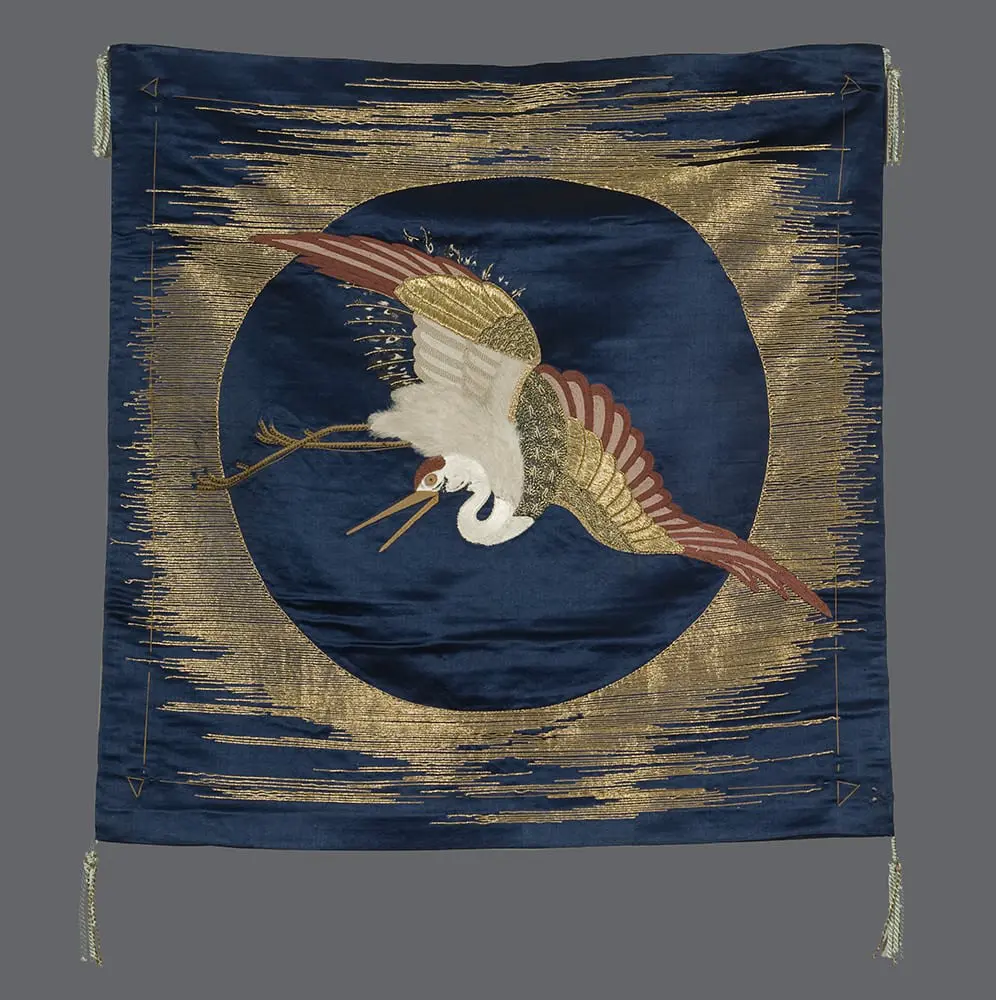

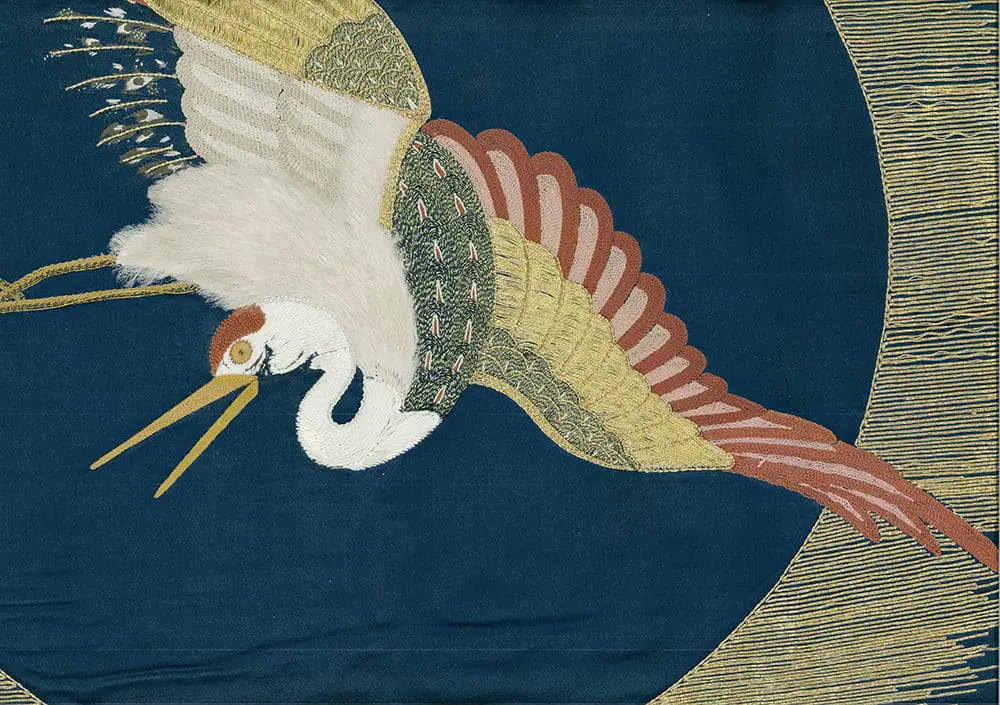
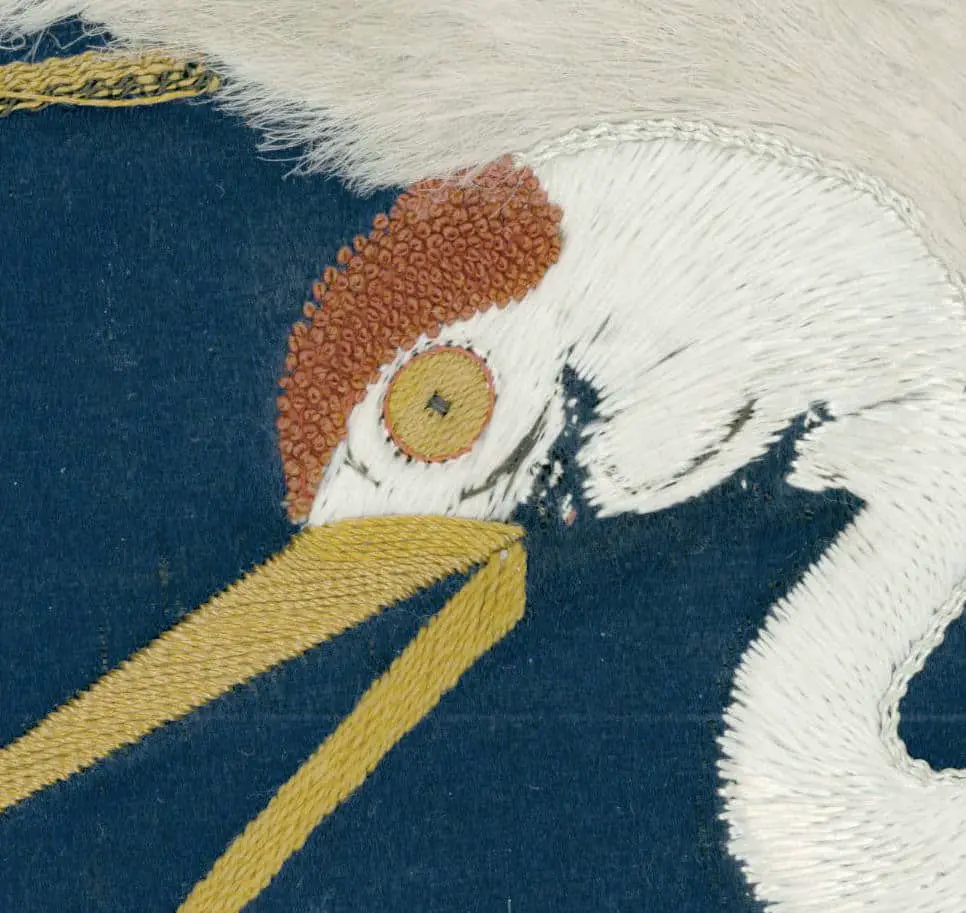
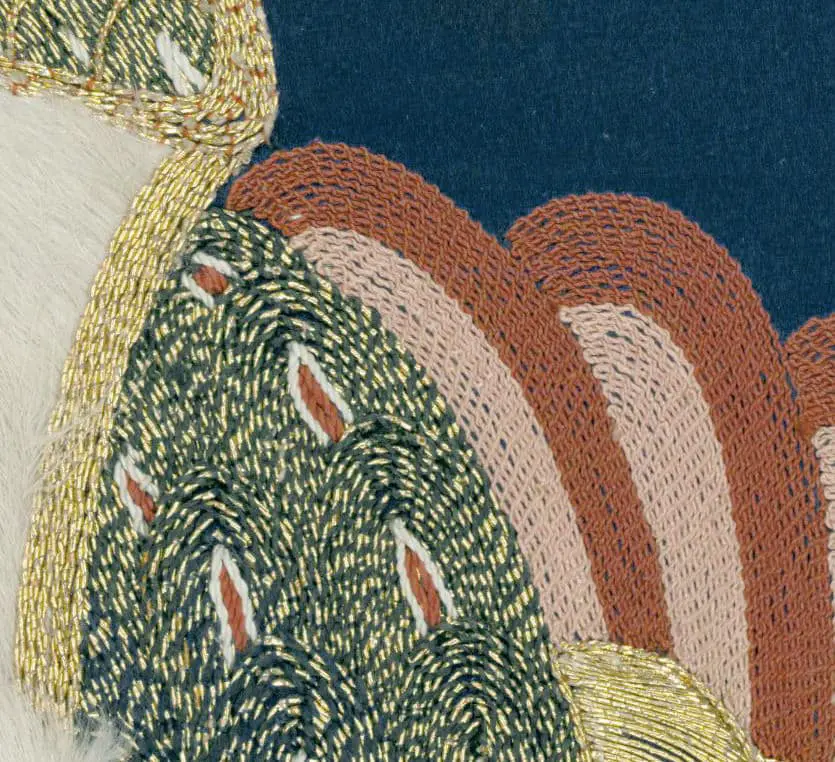
This striking silk fukusa (gift cover), originating from the mid-to late Meiji period (1880–1912), is a dramatic example of Japanese textile symbolism. Measuring 24 inches by 26 inches (61 cm x 66 cm), the piece is crafted on a deep indigo-blue satin silk ground. It portrays a majestic crane in full flight, its wings layered with intricate embroidery in shades of white, coral, and olive, positioned against a large, dark circular void surrounded by radiant golden rays.
The composition likely represents a solar eclipse or a powerful sunburst, executed with extensive metallic embroidery-couching. This technique uses gold threads laid on the surface and secured with silk to create a dense, light-reflective texture. The crane, a primary symbol of longevity and good fortune in Japanese culture, is depicted with realistic detail in its plumage. While the piece is visually arresting, it shows signs of age, specifically some corrosion and thread loss within the darker embroidered sections.
This artwork is featured on page 132 of Ceremonial Textiles of Japan, 18th to 20th Centuries. This book, published by Yorke Antique Textiles, can be previewed or purchased on our website here.

Payment Options: We primarily accept PayPal for all transactions. Credit and debit cards are not accepted. If you prefer to pay by personal check instead of PayPal, please note this preference in the "Additional comments" field when placing your order.Ordering Process
To receive your PayPal invoice, simply fill out the form.
Shipping Details: We ship all orders to the address associated with your PayPal payment. Please ensure your PayPal shipping address is current and accurate.A phone number is required during checkout, as our shipping carrier may need to contact you regarding delivery questions.Shipping RatesUnited States and Canada: $20International destinations (air mail): $40
