Copyright © 2026 Yorke Antique Textiles
.avif)

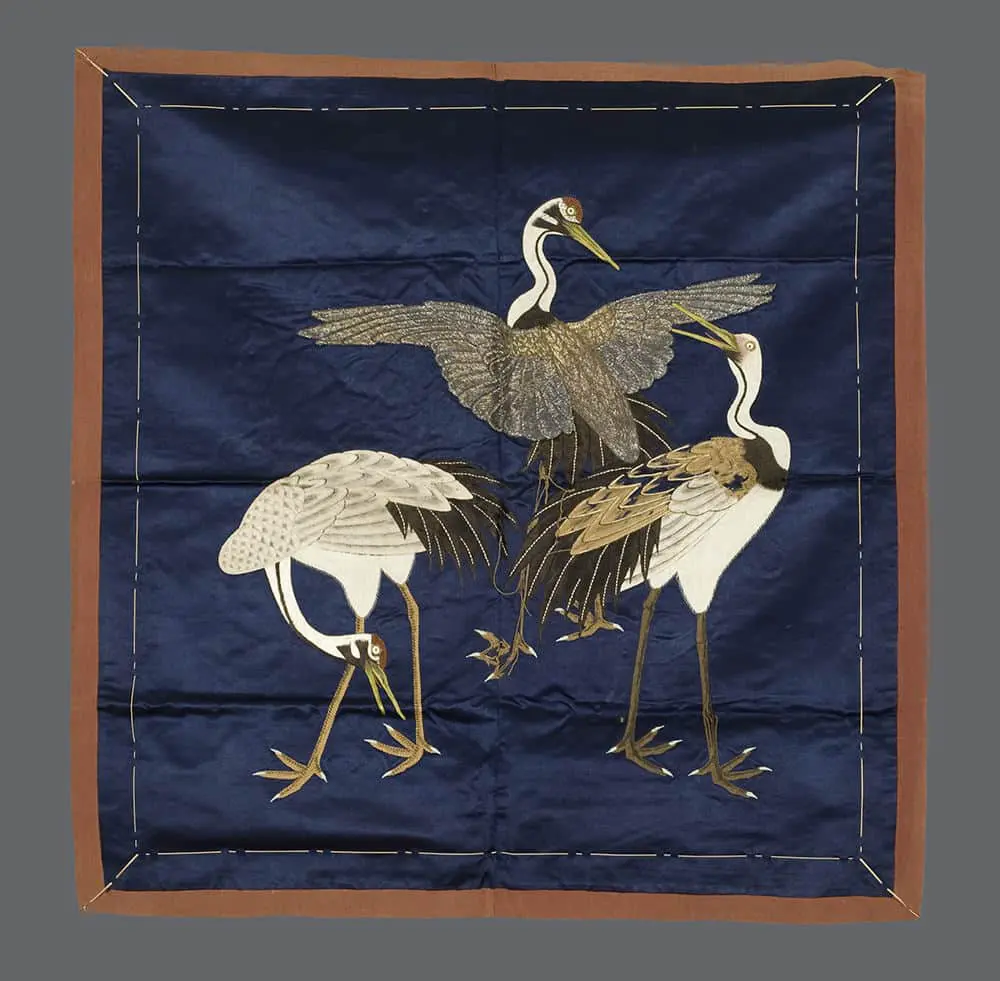

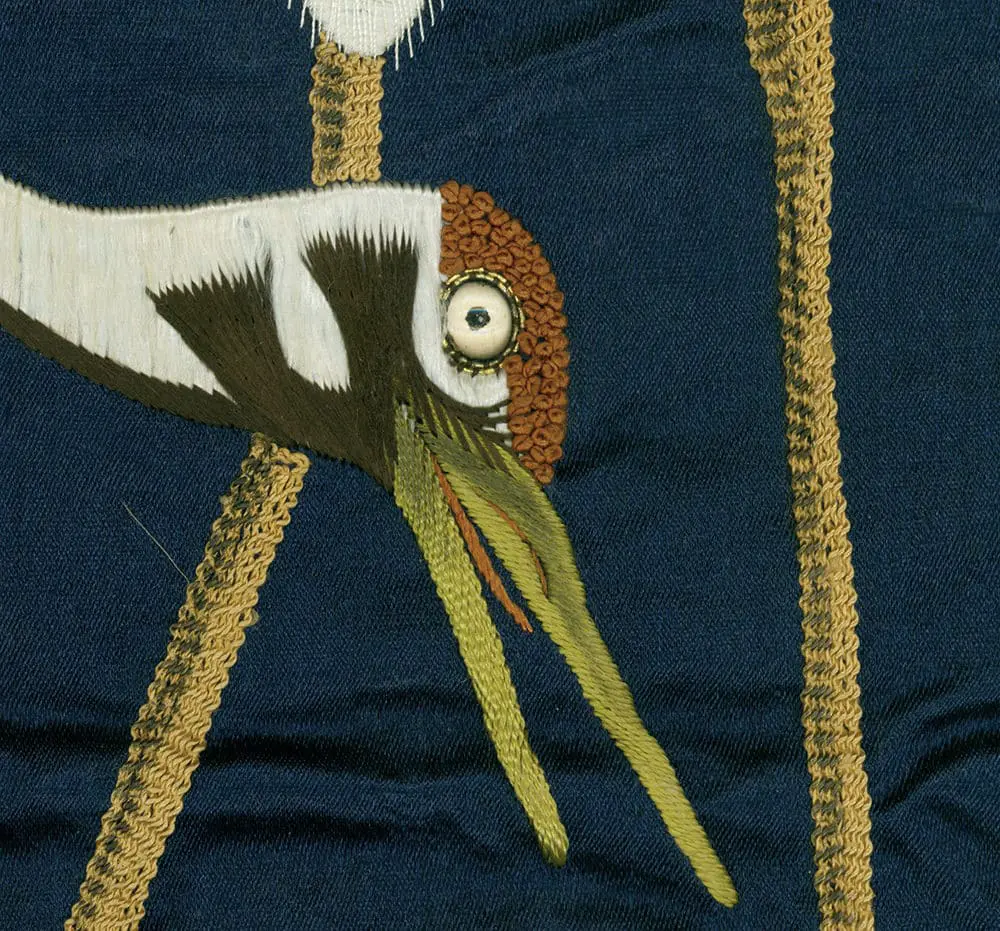
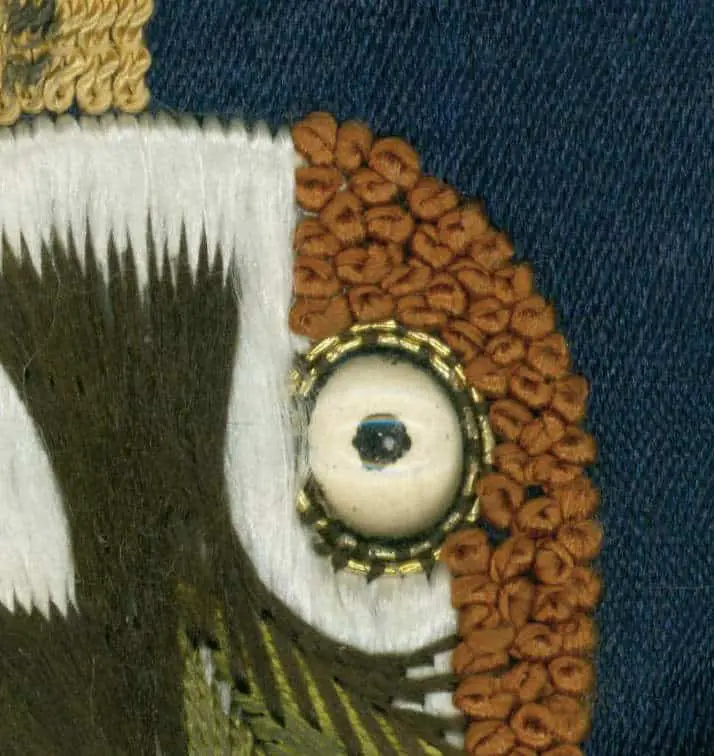
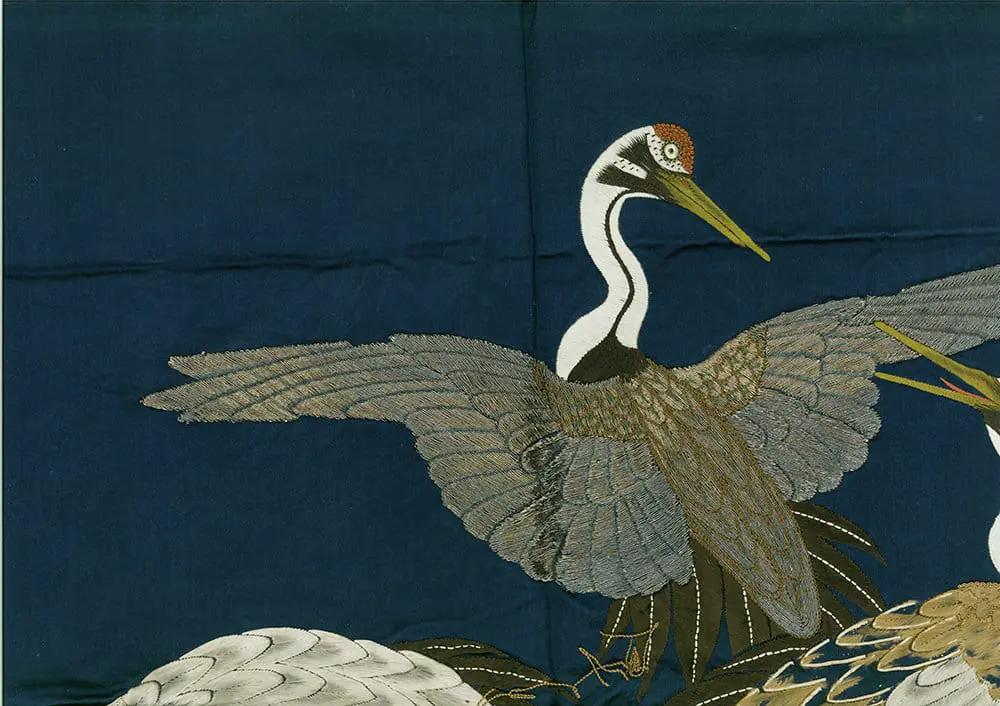
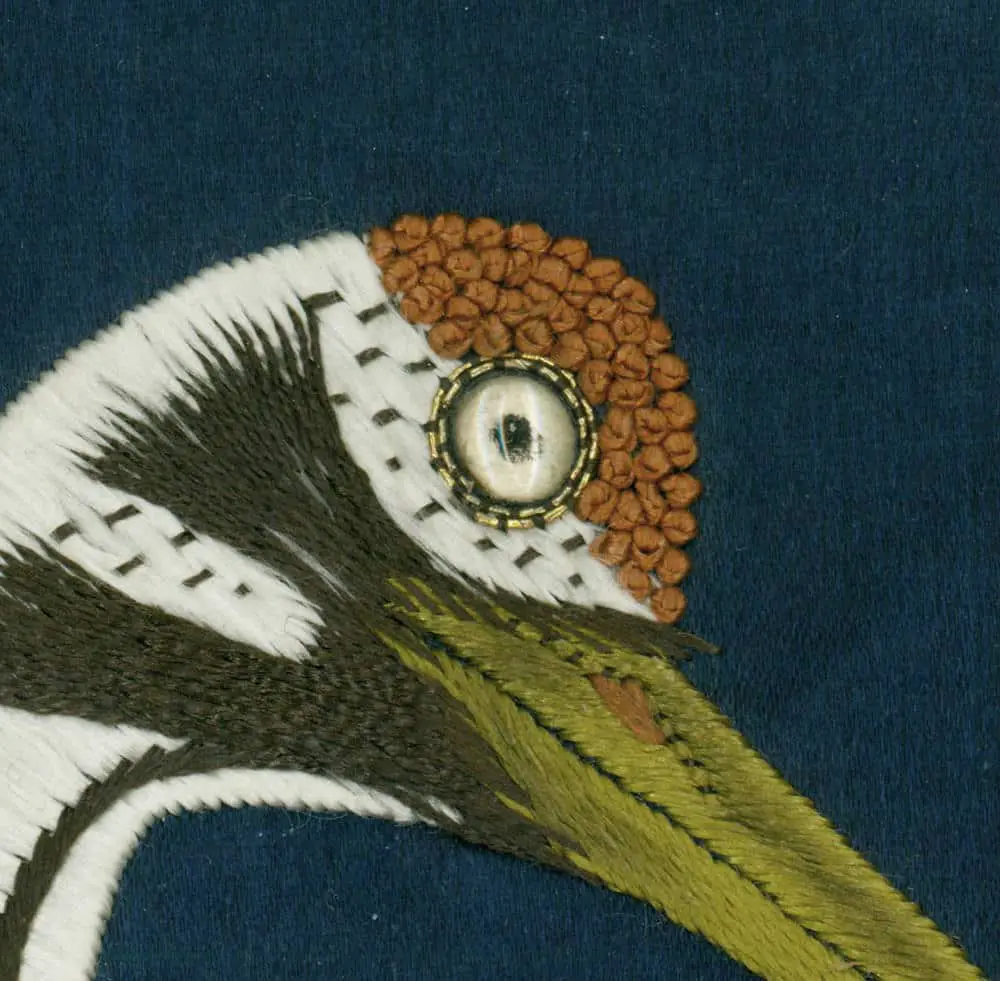
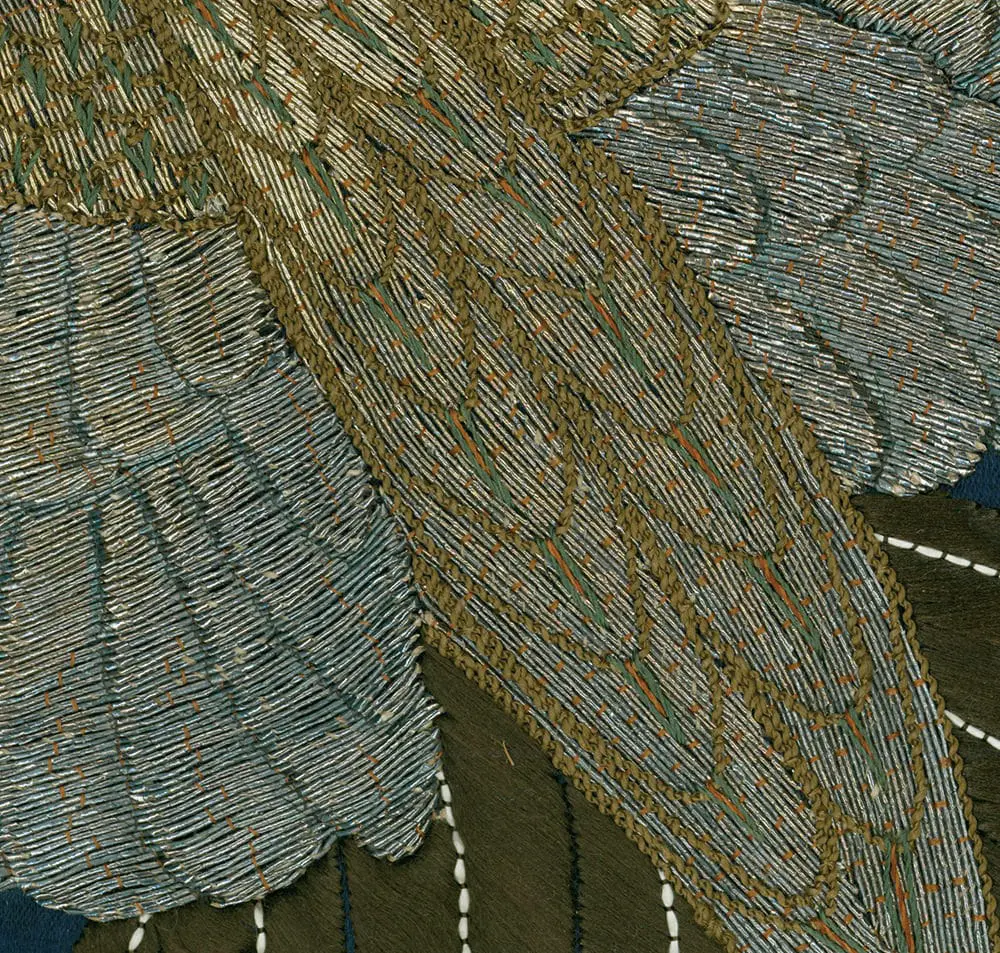

This elegant silk fukusa (gift cover), dating to the latter Edo period (1800–1850), is a beautiful example of the symbolic well-wishes traditional in Japanese gift-giving. Measuring 28 inches by 29 inches (71 cm x 74 cm), the cloth is crafted from a deep indigo-navy silk ground that serves as a rich, nocturnal stage for its subjects.
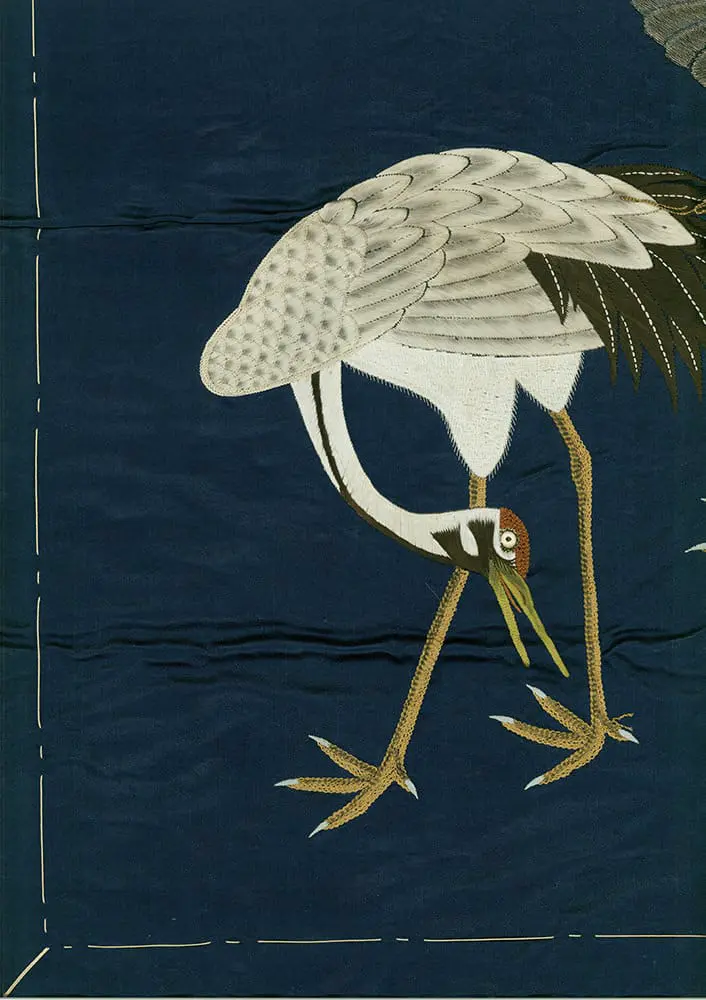
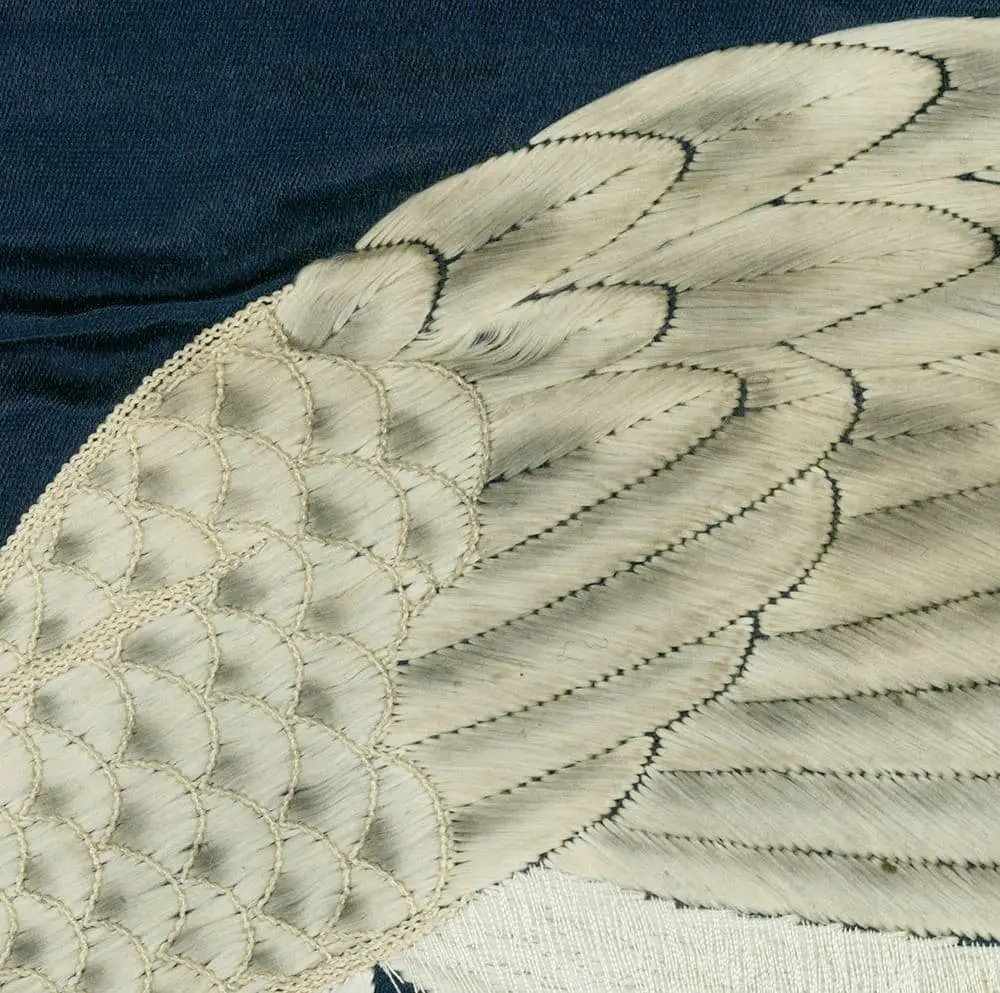
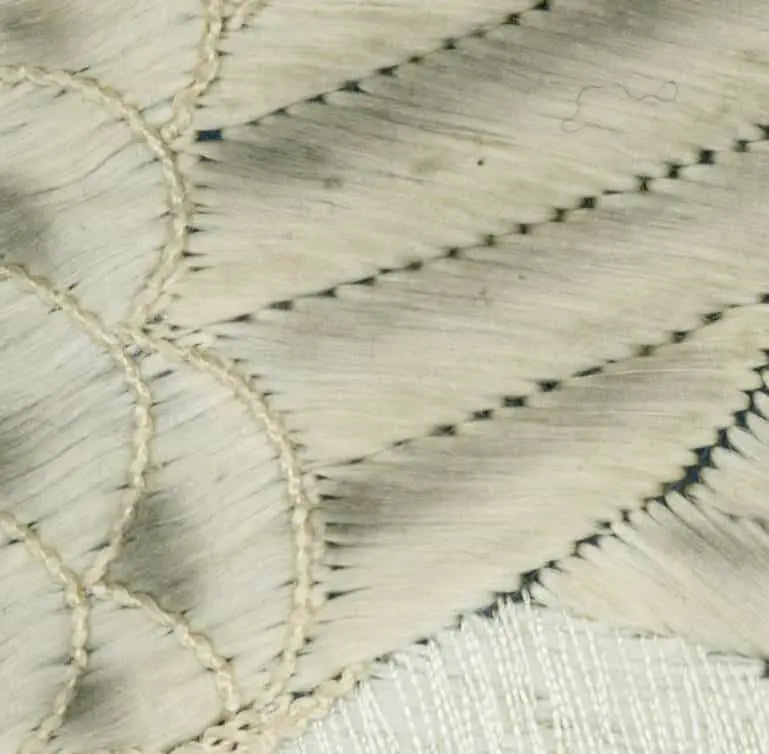
The central imagery features three cranes (tsuru), rendered with intricate embroidery that combines white silk thread with golden metallic accents. In Japanese culture, the crane is a premier symbol of good fortune, fidelity, and longevity, famously said to live for a thousand years. The trio is depicted in various expressive poses: one with wings outspread in a dramatic display, another bowing its head, and a third standing tall with its beak open in a call. While the piece is in good condition, it bears the marks of its nearly two-century history, including an area of abrasion in the center-right that has led to some loss of embroidery on the feathers and feet of two cranes.

Payment Options: We primarily accept PayPal for all transactions. Credit and debit cards are not accepted. If you prefer to pay by personal check instead of PayPal, please note this preference in the "Additional comments" field when placing your order.Ordering Process
To receive your PayPal invoice, simply fill out the form.
Shipping Details: We ship all orders to the address associated with your PayPal payment. Please ensure your PayPal shipping address is current and accurate.A phone number is required during checkout, as our shipping carrier may need to contact you regarding delivery questions.Shipping RatesUnited States and Canada: $20International destinations (air mail): $40
