Copyright © 2026 Yorke Antique Textiles
.avif)


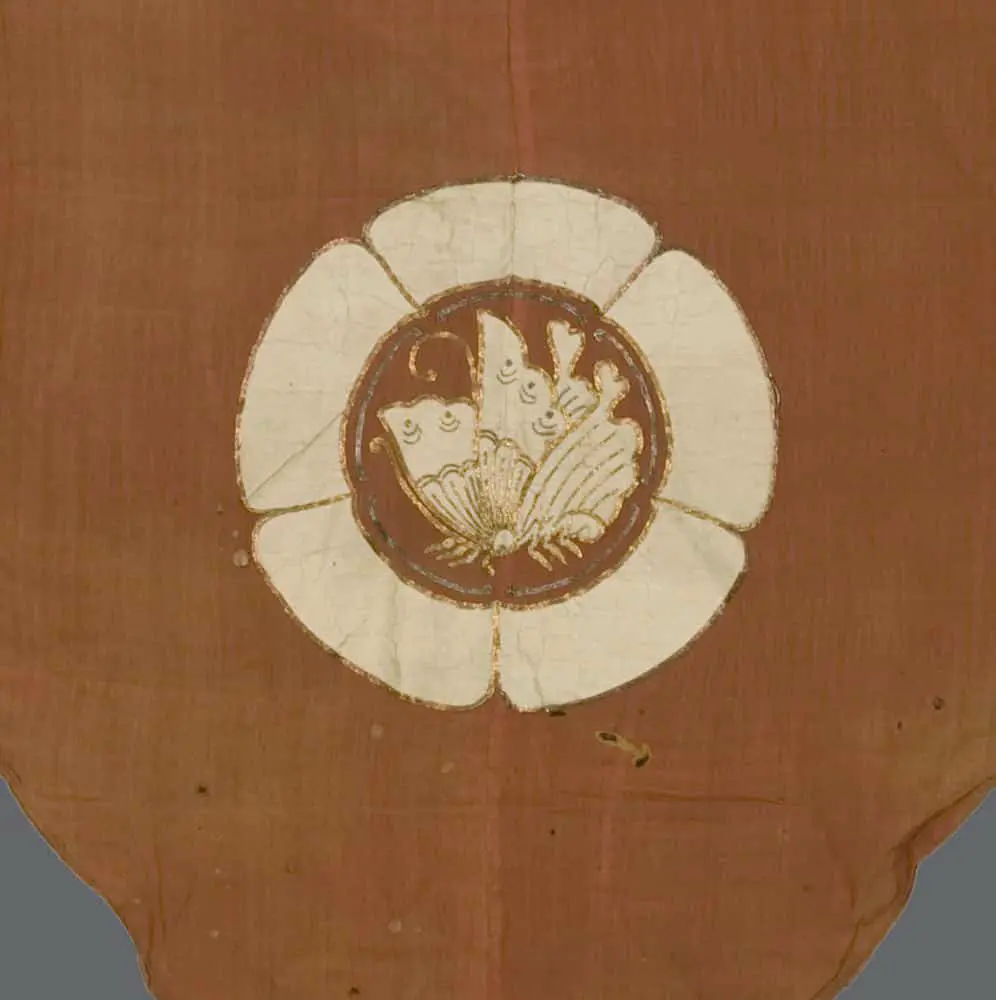
This large, triangular uchishiki (Buddhist altar cloth) is a significant historical textile, precisely dated to 1804 by kanji script inscribed on its reverse side. This date places it in the early 19th century, during the mid-Edo period. The cloth measures an impressive 60 inches by 41 inches (152 cm x 104 cm) and is crafted from a warm, terracotta-colored silk with a contrasting white silk band along the upper edge.
The focal point of the piece is a large central butterfly crest (cho-mon), skillfully realized through a combination of appliqué and embroidery. The butterfly is enclosed within a white circular border, its wings featuring detailed white and brown patterns. In Japanese culture, the butterfly is a deeply symbolic motif representing transformation and the spirits of the departed, while also serving as a joyous emblem of spring. Despite its age, the textile remains a striking example of early 19th-century ritual craftsmanship, though it does exhibit some small stains and holes consistent with its historical use.

Payment Options: We primarily accept PayPal for all transactions. Credit and debit cards are not accepted. If you prefer to pay by personal check instead of PayPal, please note this preference in the "Additional comments" field when placing your order.Ordering Process
To receive your PayPal invoice, simply fill out the form.
Shipping Details: We ship all orders to the address associated with your PayPal payment. Please ensure your PayPal shipping address is current and accurate.A phone number is required during checkout, as our shipping carrier may need to contact you regarding delivery questions.Shipping RatesUnited States and Canada: $20International destinations (air mail): $40
