Copyright © 2026 Yorke Antique Textiles
.avif)

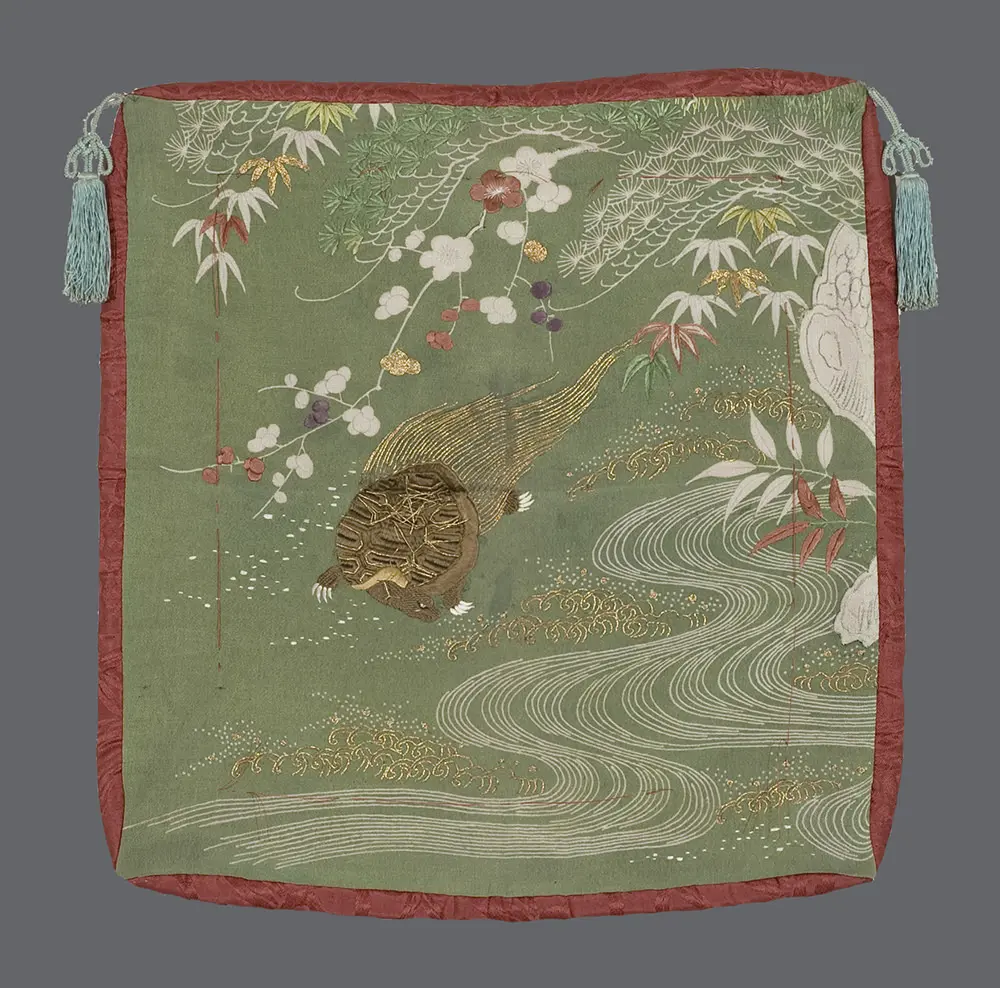
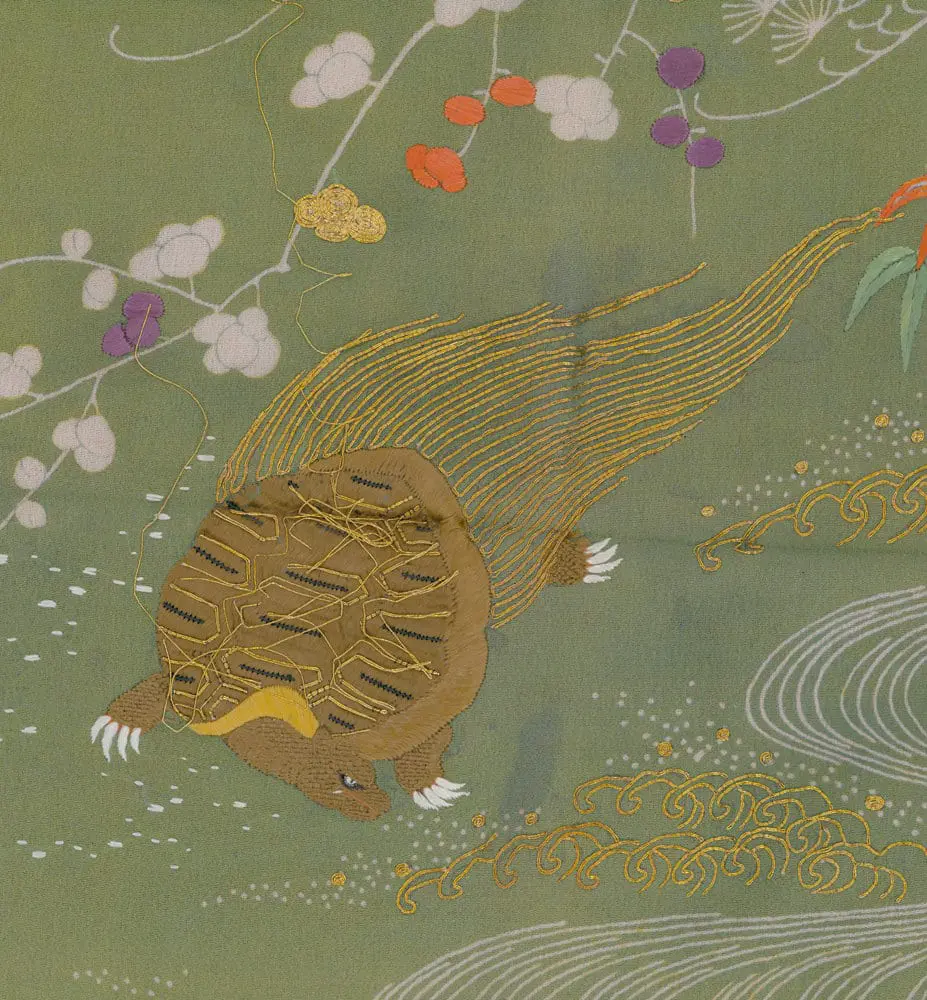


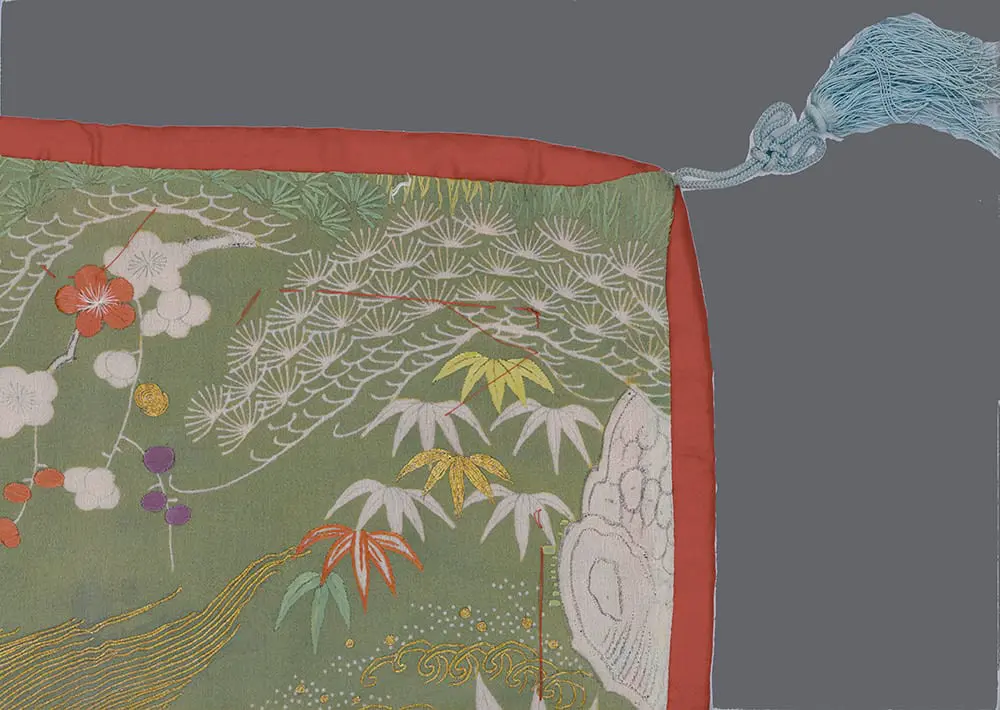
This fine late Edo period (1775–1820) silk fukusa (gift cover) is a masterful marriage of texture and symbolic depth. Measuring 20 inches by 22 inches (51 cm x 56 cm), the cloth is crafted from a sage-green chirimen (silk crepe), a fabric prized for its matte, slightly puckered surface that provides an organic backdrop for detailed artistry. The central focus is a large minogame, or long-tailed tortoise, which is rendered swimming through a stylized river of white and gold-couched waves. In Japanese folklore, the minogame is a powerful symbol of ten thousand years of life, its "tail" actually representing a trail of ancient seaweed and algae gathered over centuries.
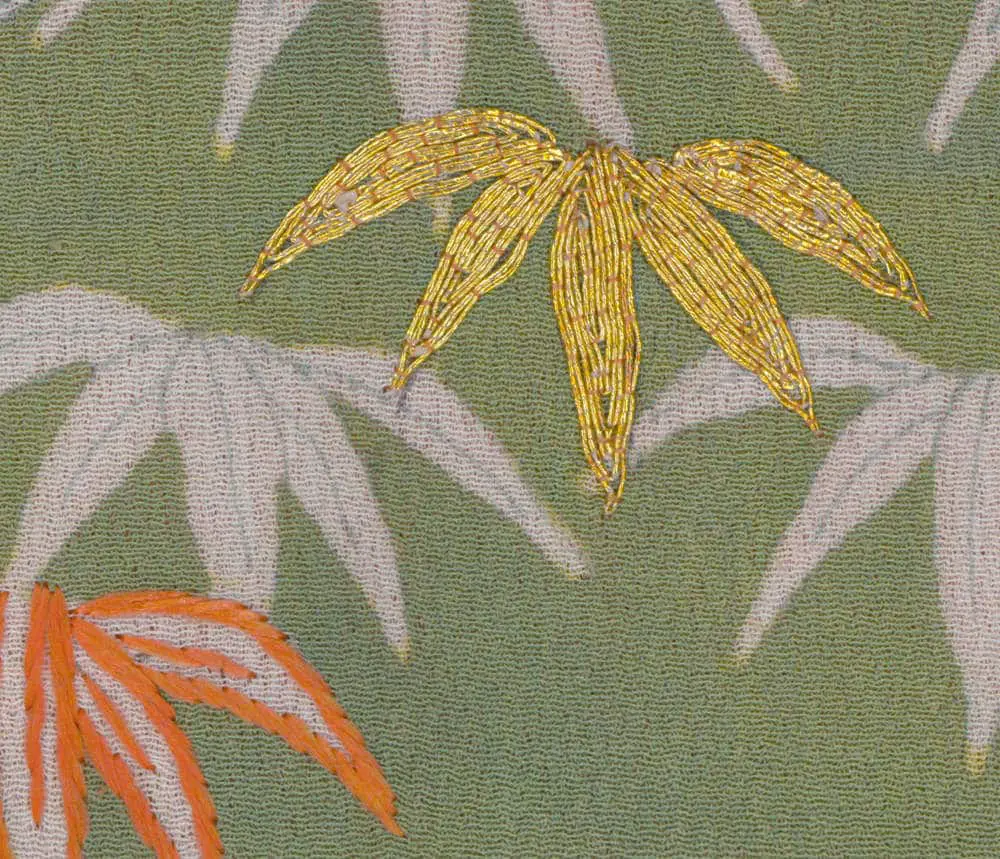
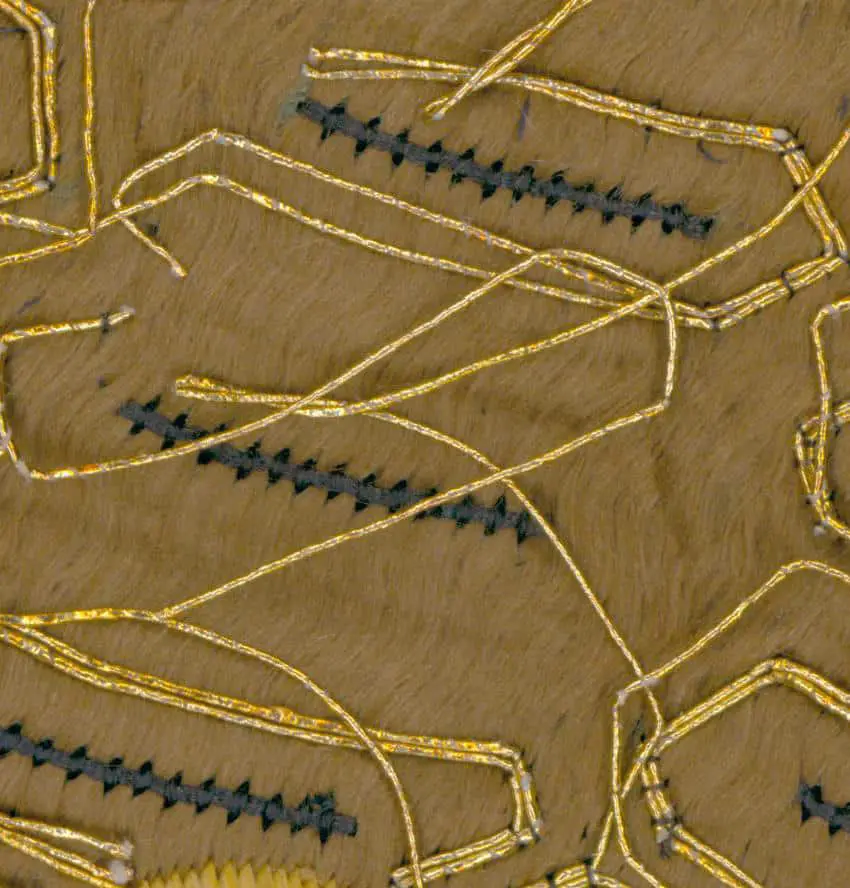
The composition is framed by the auspicious shou-chiku-bai (Three Friends of Winter) motif, which combines pine (matsu), bamboo (take), and plum (ume). These elements, executed through a blend of yuzen-dyeing and fine embroidery, represent steadfastness, flexibility, and renewal in the face of adversity. The piece is backed with a vibrant red silk damask lining and finished with delicate light-blue tassels at the top corners. While the fukusa remains in good condition, it displays slight staining and characteristic wear for its age, most notably the loosening of the fine gold metallic couching that details the tortoise’s hexagonal shell.

Payment Options: We primarily accept PayPal for all transactions. Credit and debit cards are not accepted. If you prefer to pay by personal check instead of PayPal, please note this preference in the "Additional comments" field when placing your order.Ordering Process
To receive your PayPal invoice, simply fill out the form.
Shipping Details: We ship all orders to the address associated with your PayPal payment. Please ensure your PayPal shipping address is current and accurate.A phone number is required during checkout, as our shipping carrier may need to contact you regarding delivery questions.Shipping RatesUnited States and Canada: $20International destinations (air mail): $40
