Copyright © 2026 Yorke Antique Textiles
.avif)

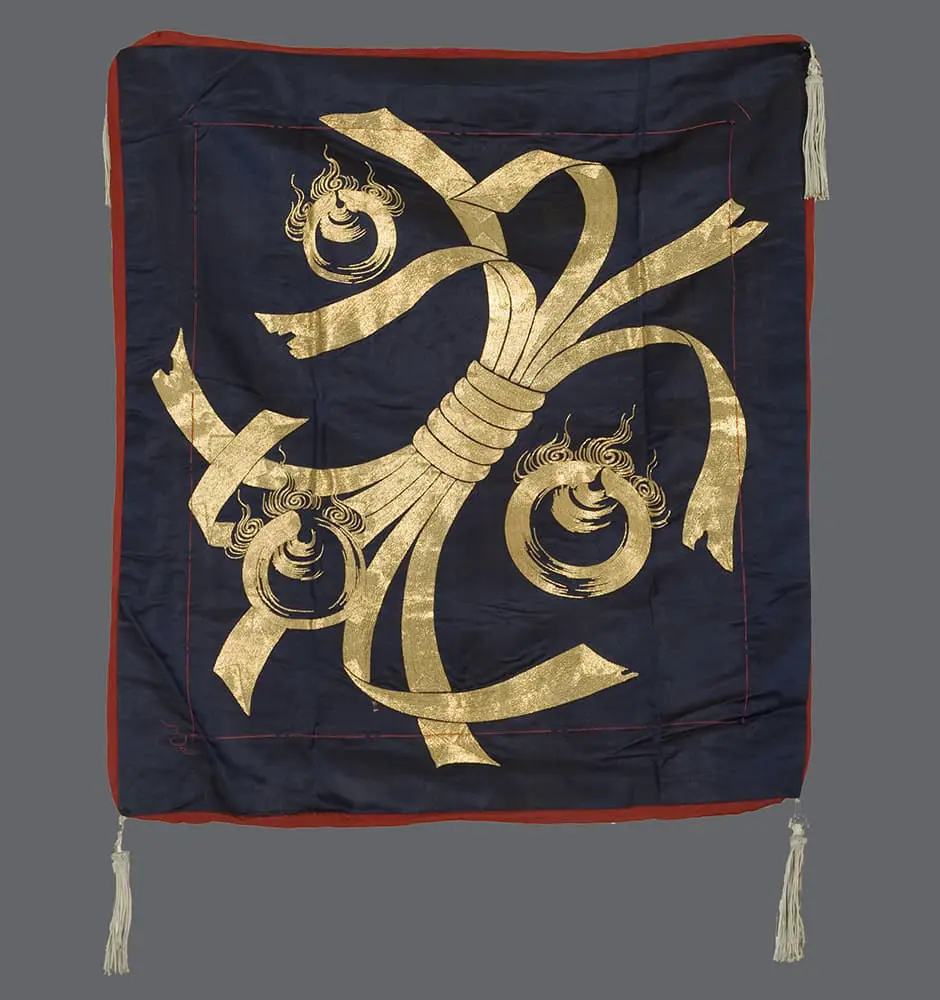
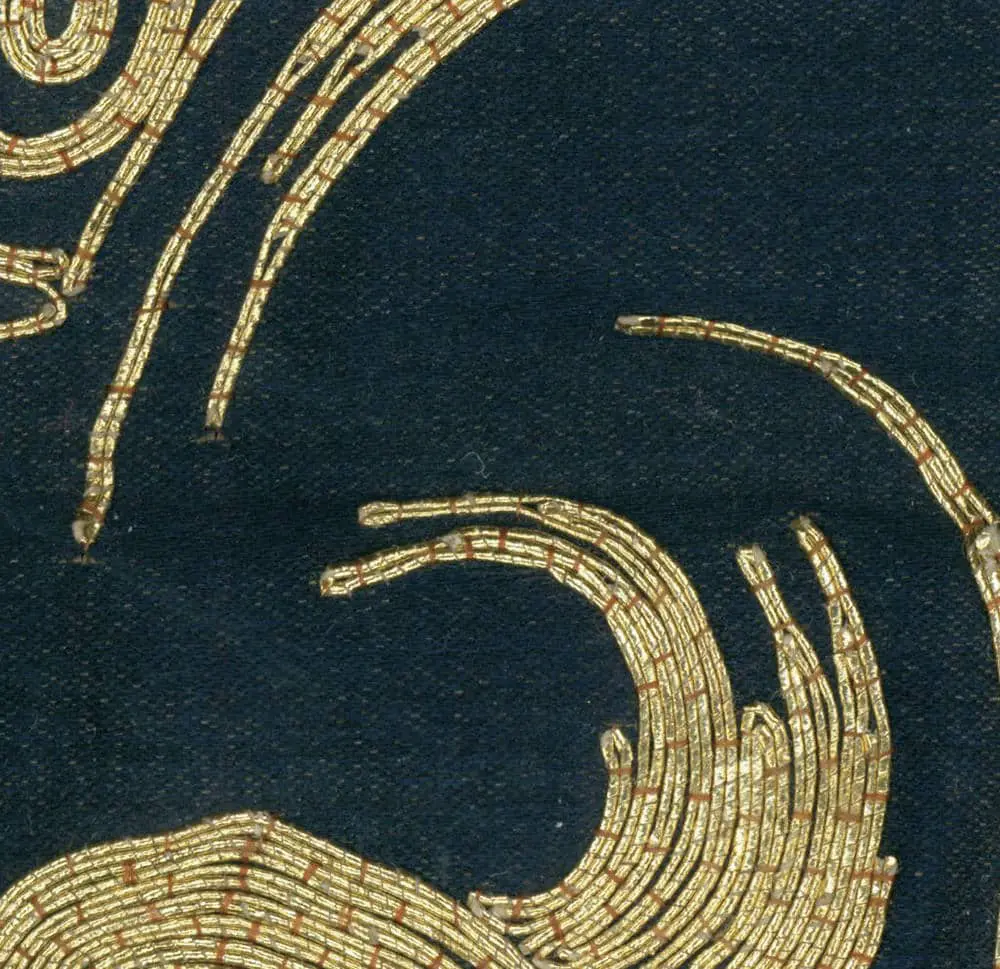
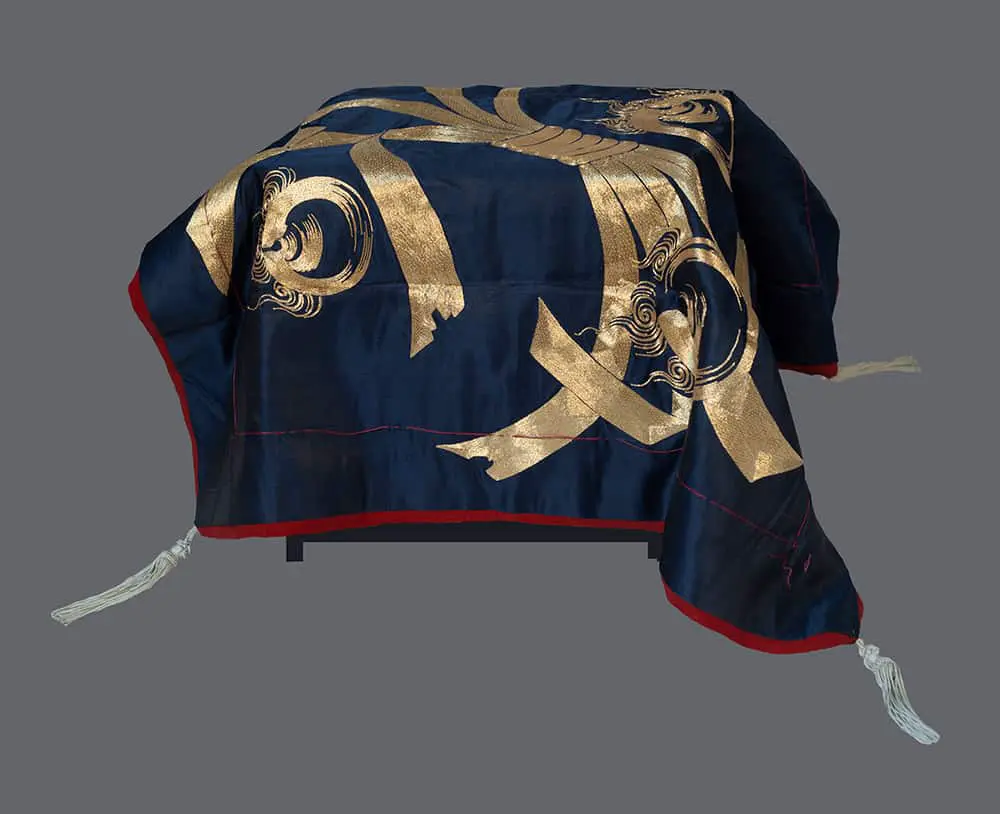
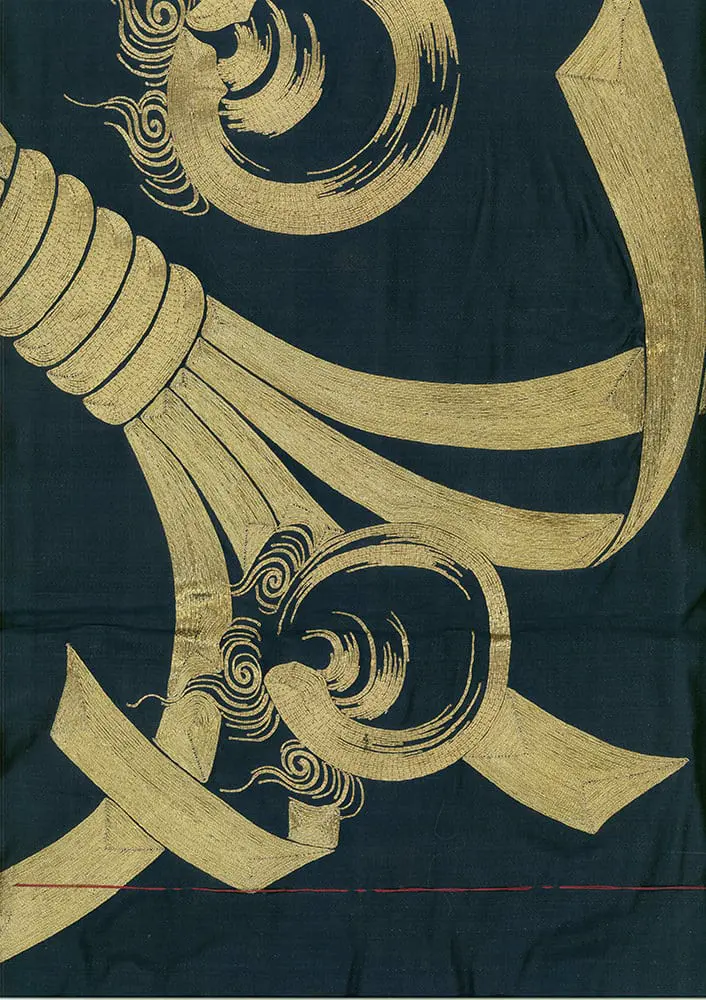
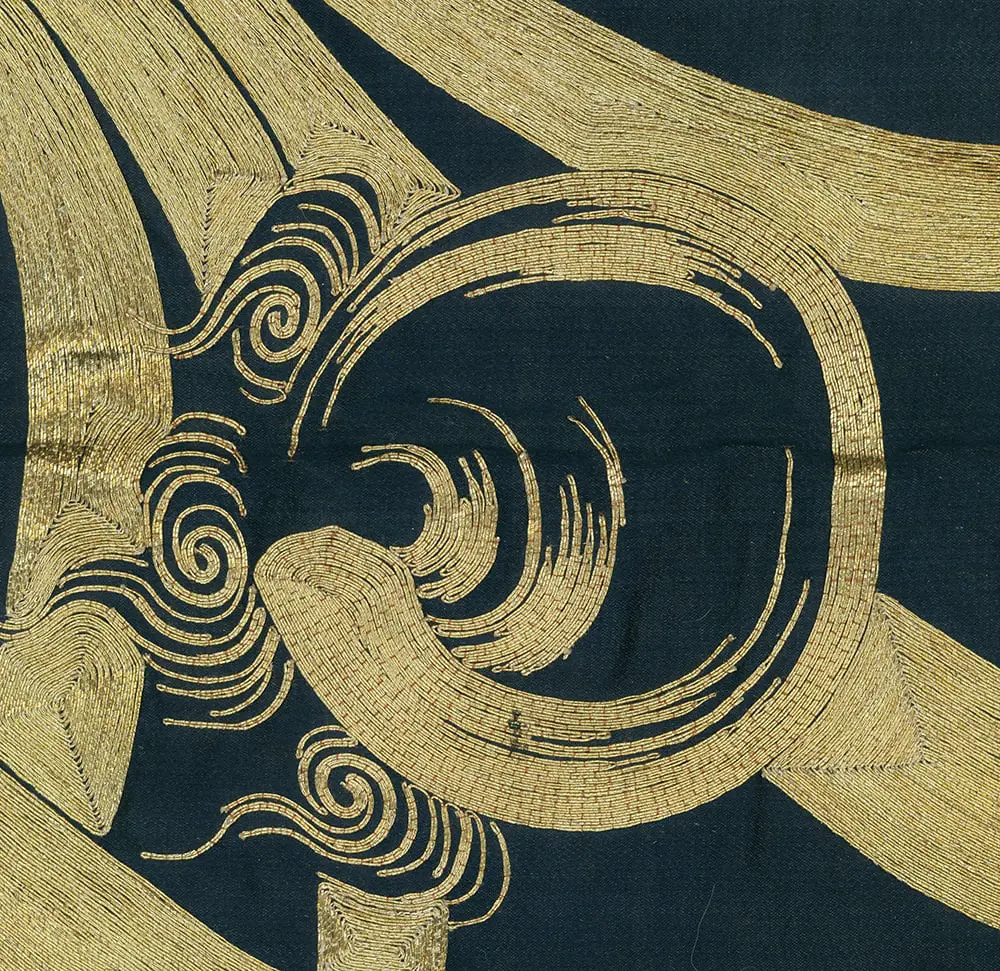
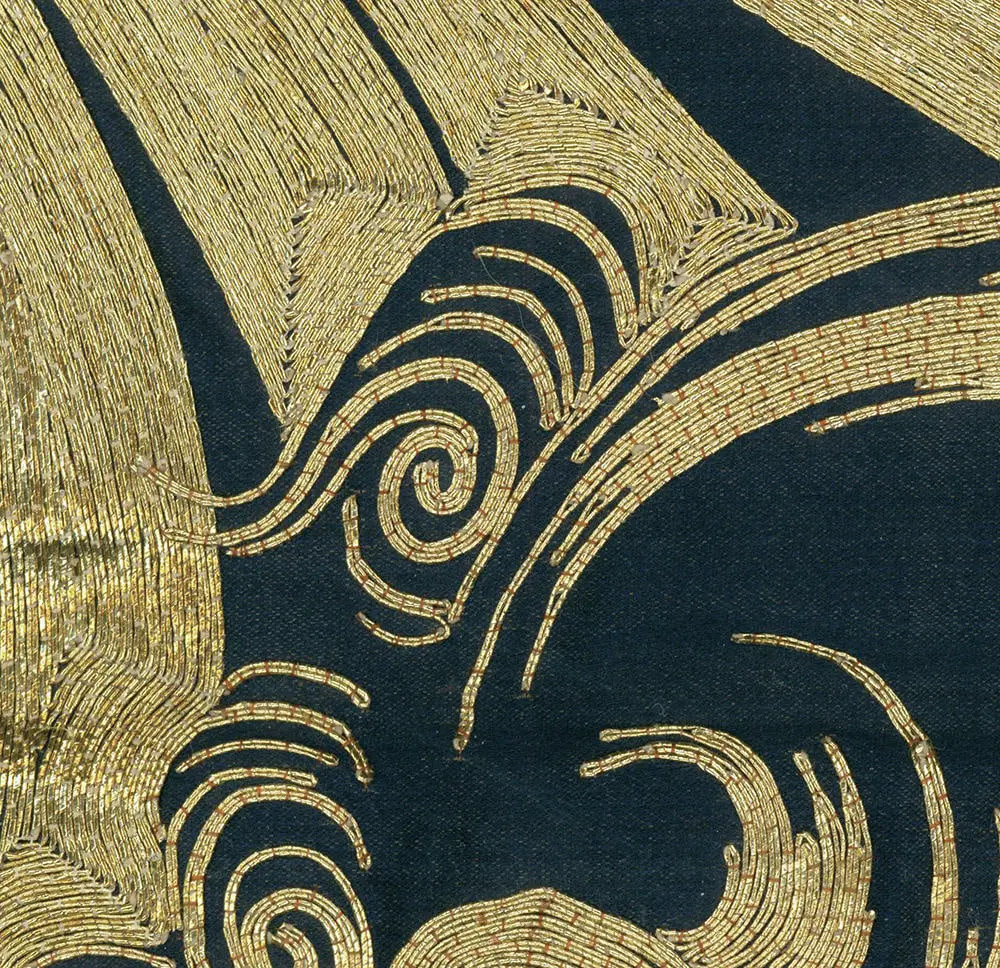
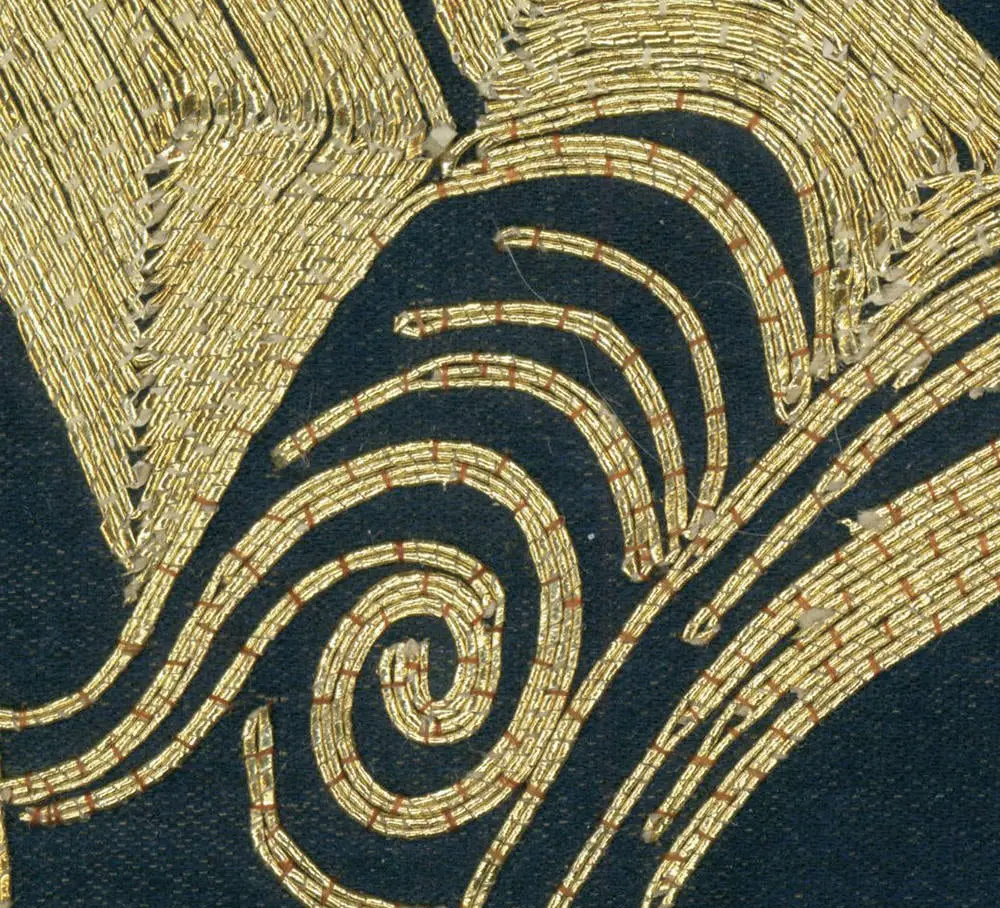
This prestigious silk fukusa (gift cover), dating to the latter Edo period (1800–1850), is a magnificent display of technical skill and symbolic depth. Measuring 25 inches by 28 inches (64 cm x 71 cm), the textile is crafted from a deep navy-blue shuso (satin-weave) silk, which provides a lustrous, smooth surface for the heavy ornamentation.
The central imagery features the tabane noshi (bundled gift strips) and houju (sacred treasure balls), rendered entirely in golden metallic threads through the koma-nui (couching) technique. The noshi motif originally represented strips of dried abalone offered to the gods, but over time it became a powerful emblem of progress and the auspicious expansion of a family line. Interspersed among the flowing ribbons are three flaming houju, or Buddhist treasure balls, which signify the granting of wishes and the expulsion of evil. While the piece remains in good condition, there is visible wear and minor thread loss along the historical fold lines, typical for a silk textile of this age.
This artwork is featured on pages 190-193 of Ceremonial Textiles of Japan, 18th to 20th Centuries. This book, published by Yorke Antique Textiles, can be previewed or purchased on our website here.

Payment Options: We primarily accept PayPal for all transactions. Credit and debit cards are not accepted. If you prefer to pay by personal check instead of PayPal, please note this preference in the "Additional comments" field when placing your order.Ordering Process
To receive your PayPal invoice, simply fill out the form.
Shipping Details: We ship all orders to the address associated with your PayPal payment. Please ensure your PayPal shipping address is current and accurate.A phone number is required during checkout, as our shipping carrier may need to contact you regarding delivery questions.Shipping RatesUnited States and Canada: $20International destinations (air mail): $40
