Copyright © 2026 Yorke Antique Textiles
.avif)


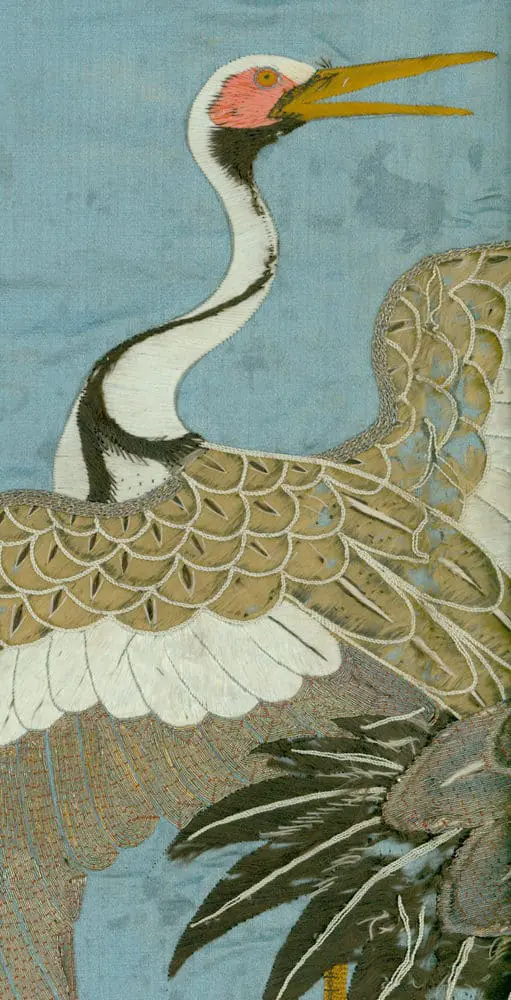
This late Edo period (1800–1868) silk fukusa (gift cover) serves as a profound assembly of longevity and prosperity symbols. Measuring 26 inches by 27 inches (66 cm x 69 cm), the textile is rendered on a serene aqua-blue silk ground. The central focus is a pair of majestic red-crowned cranes, depicted with intricate embroidery that captures the varied textures of their plumage through the use of white, grey, and metallic threads. In Japanese culture, the crane is a revered icon of good fortune and is said to live for a thousand years.
The composition is further enriched by three smaller cranes scattered at the bottom, creating a sense of familial continuity and life. The embroidery work is particularly detailed on the wings and tails, utilizing layered stitching to create depth and a tactile quality. Currently, the piece is in fair condition, lacking its original back lining and showing evidence of its long history through numerous water-like stains and some abrasion to the delicate embroidery threads. Despite these signs of age, the vibrancy of the blue silk and the skilled needlework remain clearly visible.

Payment Options: We primarily accept PayPal for all transactions. Credit and debit cards are not accepted. If you prefer to pay by personal check instead of PayPal, please note this preference in the "Additional comments" field when placing your order.Ordering Process
To receive your PayPal invoice, simply fill out the form.
Shipping Details: We ship all orders to the address associated with your PayPal payment. Please ensure your PayPal shipping address is current and accurate.A phone number is required during checkout, as our shipping carrier may need to contact you regarding delivery questions.Shipping RatesUnited States and Canada: $20International destinations (air mail): $40
