Copyright © 2026 Yorke Antique Textiles
.avif)

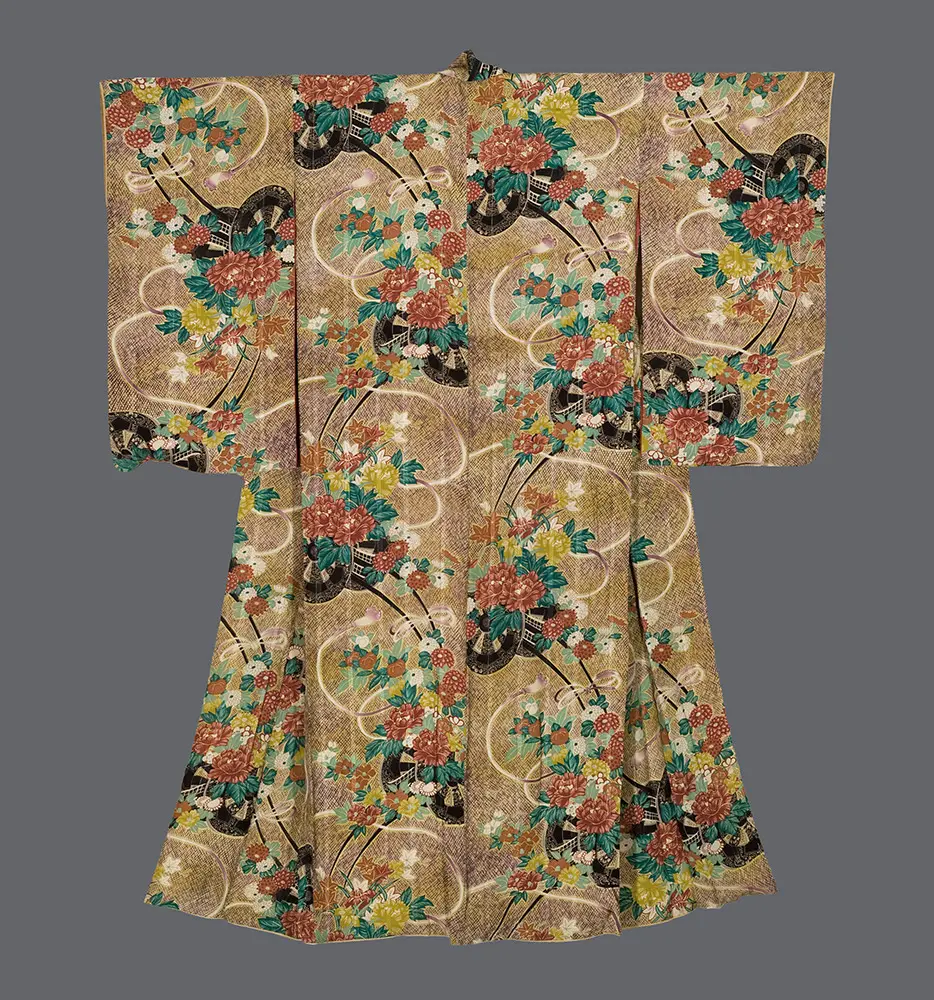
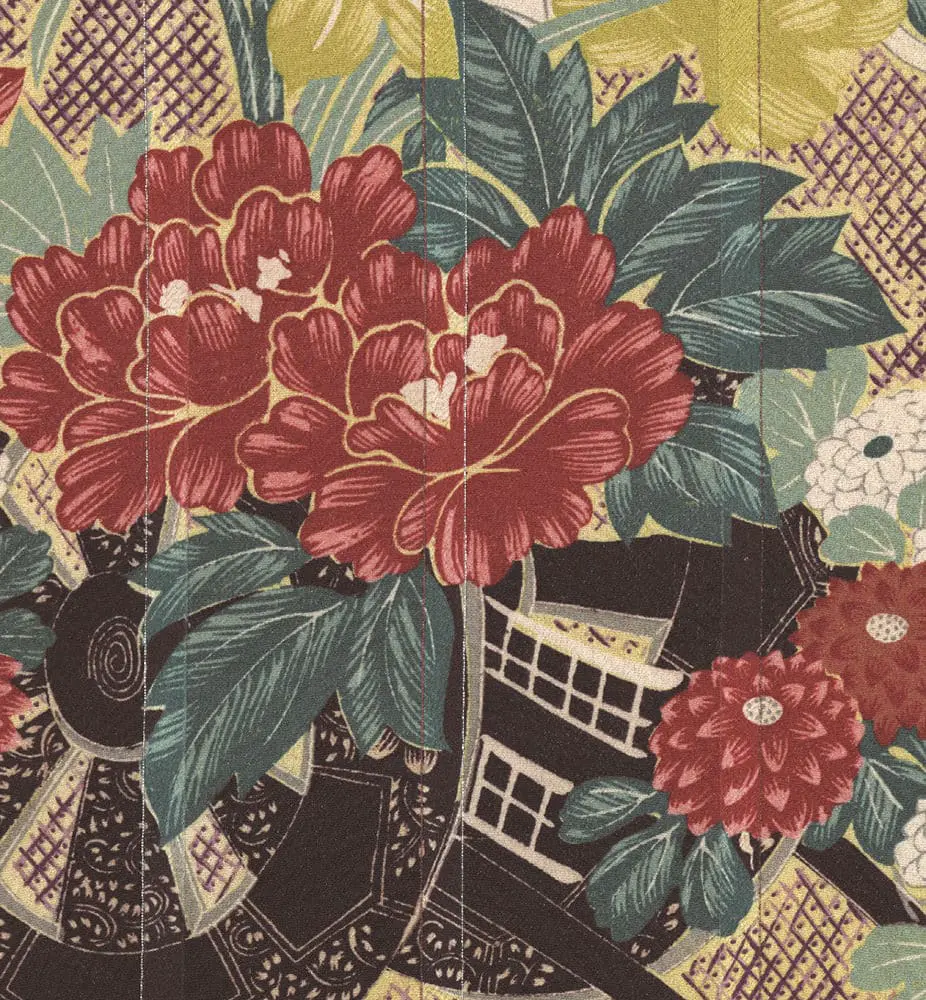
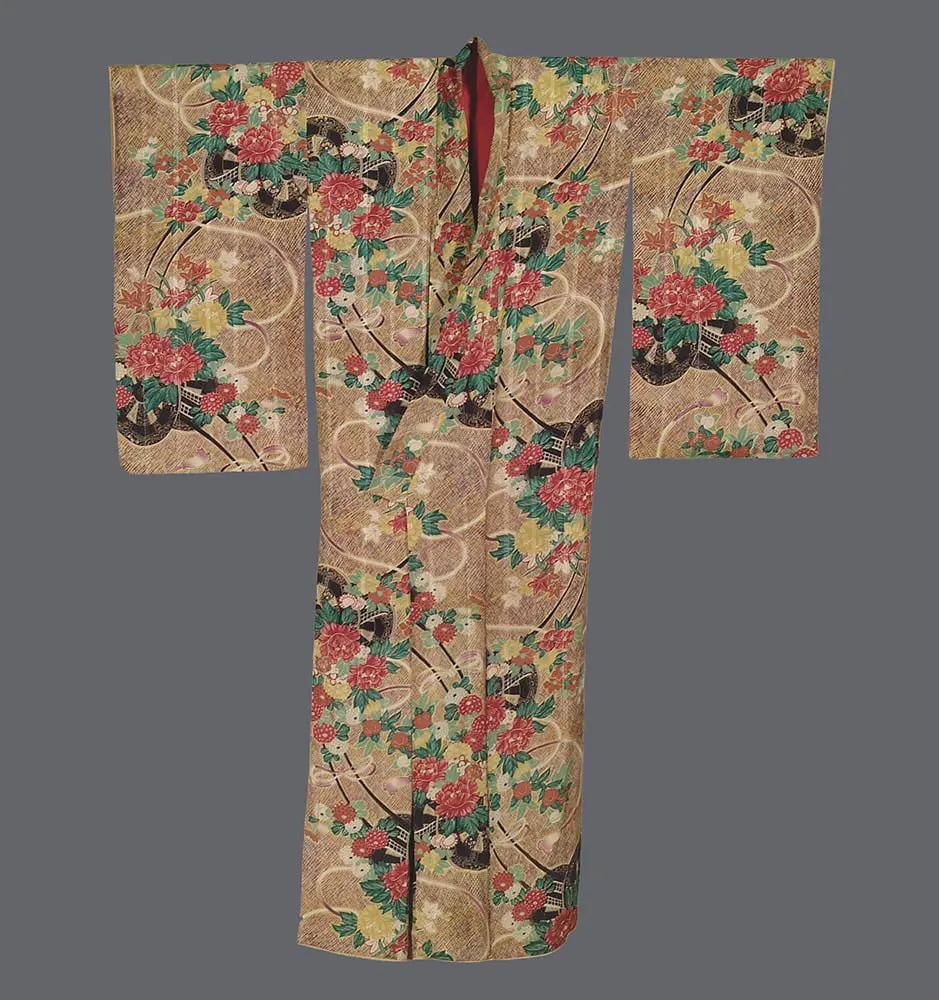
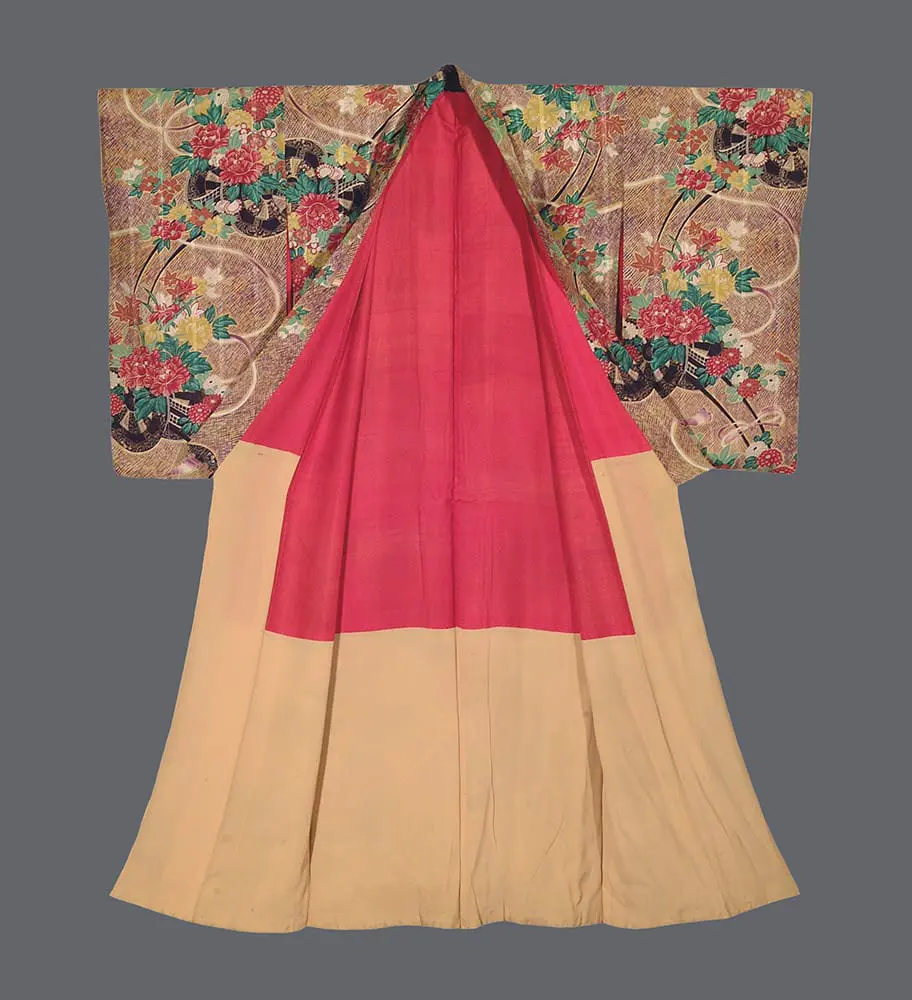

This silk kimono is a lavish example of mid-century textile artistry, featuring an intricate, all-over silkscreened pattern on a finely textured base. The design centers on the hanaguruma (flower cart) motif, a classical symbol of abundance, celebration, and the refined aesthetics of the Heian court. These ornate carts are overflowing with a vibrant seasonal bounty, including deep red peonies and golden-yellow chrysanthemums, intertwined with flowing ribbons (noshi) that weave throughout the composition to create a sense of continuous grace.
The background is defined by a dense, monochromatic mesh or "cracked ice" pattern, which provides a neutral, textural stage for the highly saturated floral elements. This juxtaposition of a complex, geometric ground with the fluid, painterly quality of the flower carts is a hallmark of the early to mid-Showa era, where industrial silkscreening allowed for a richer, more layered use of color than traditional hand-dyeing. Symbolically, the combination of peonies and chrysanthemums represents royal beauty and longevity, making this garment a wearable wish for prosperity and enduring happiness.
It measures 49 inches (124 cm) from sleeve-end to sleeve-end and stands at 58 inches (147 cm) in height.

Payment Options: We primarily accept PayPal for all transactions. Credit and debit cards are not accepted. If you prefer to pay by personal check instead of PayPal, please note this preference in the "Additional comments" field when placing your order.Ordering Process
To receive your PayPal invoice, simply fill out the form.
Shipping Details: We ship all orders to the address associated with your PayPal payment. Please ensure your PayPal shipping address is current and accurate.A phone number is required during checkout, as our shipping carrier may need to contact you regarding delivery questions.Shipping RatesUnited States and Canada: $20International destinations (air mail): $40
