Copyright © 2026 Yorke Antique Textiles
.avif)

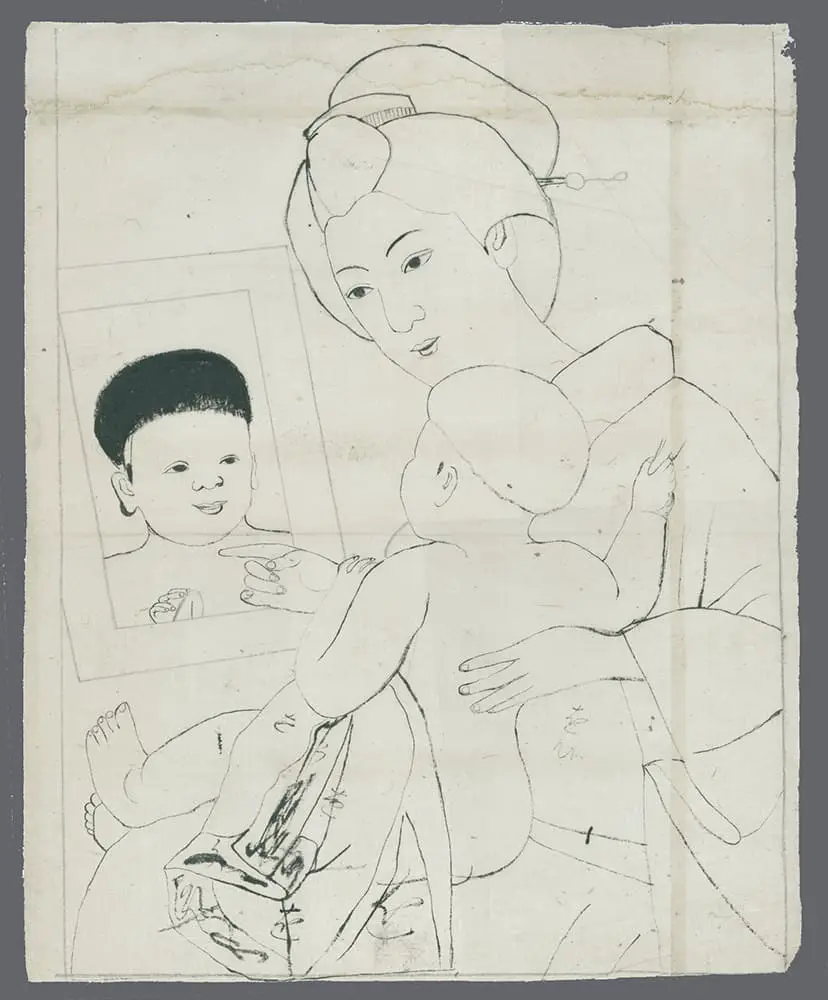
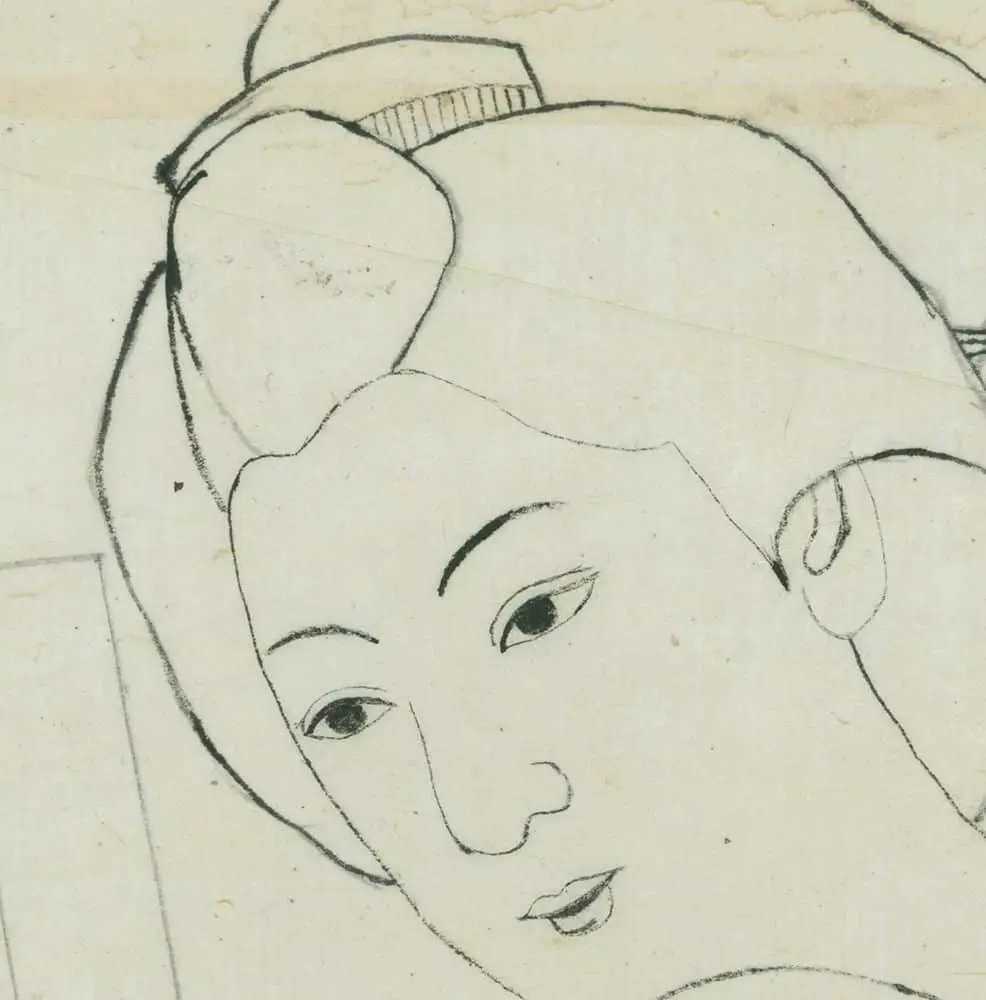
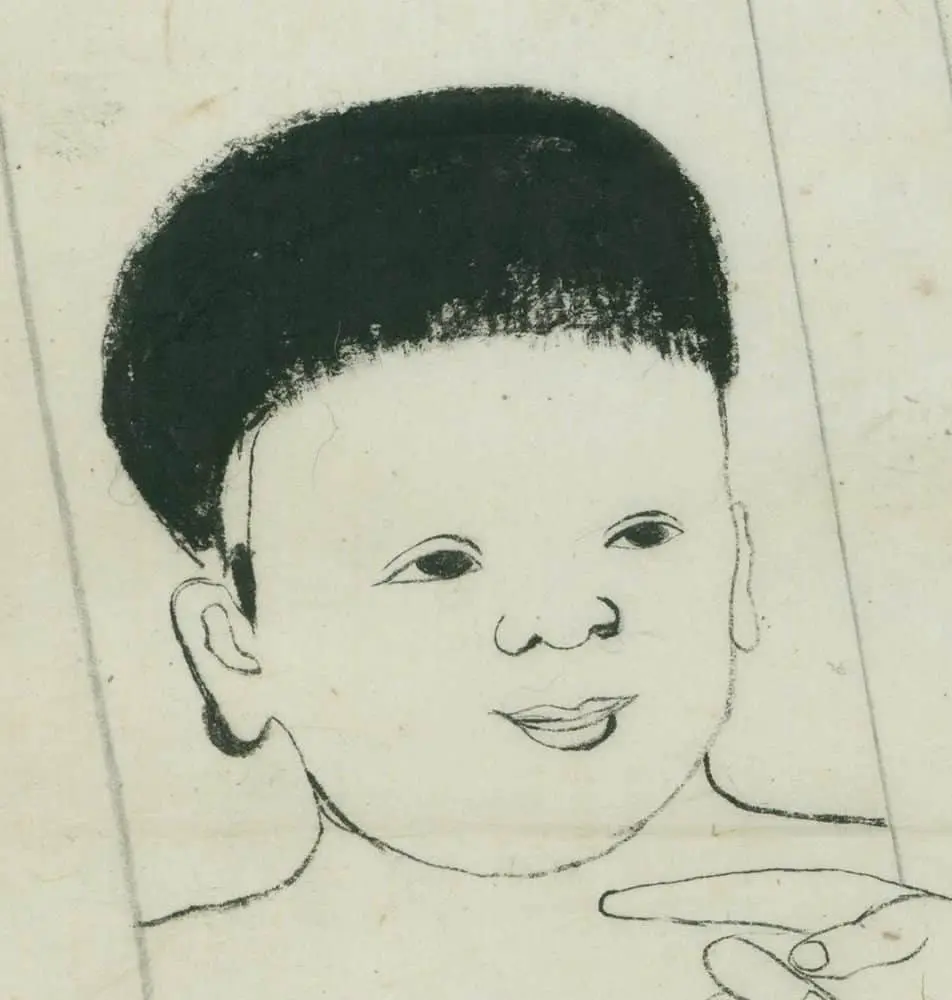
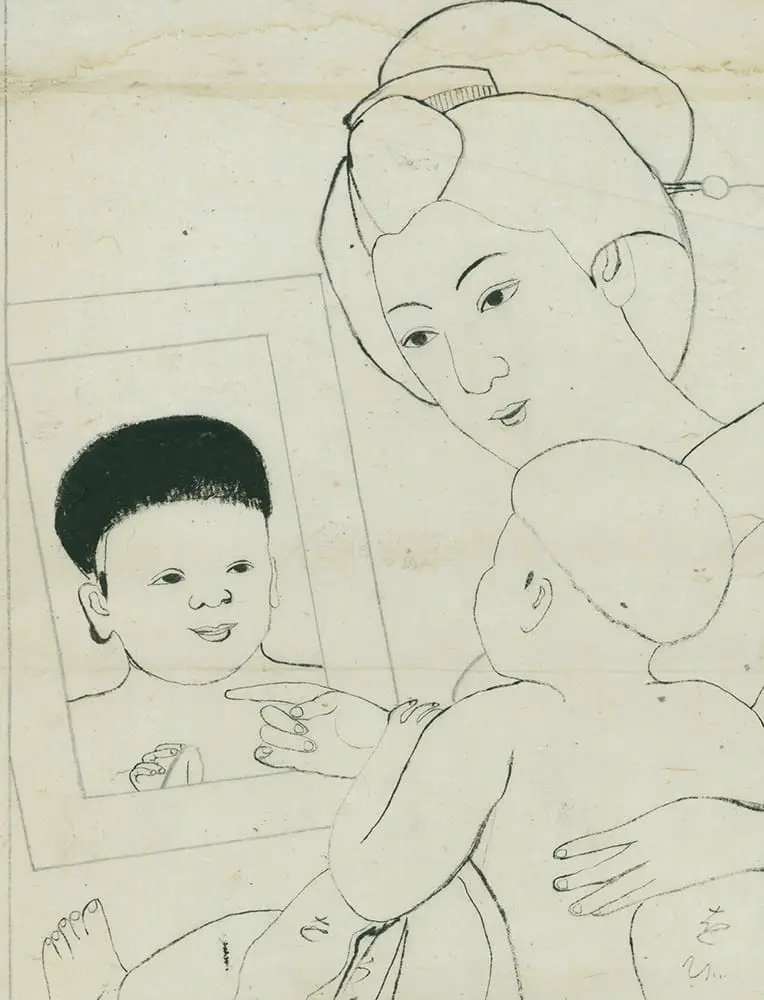
This tender hand-painted artwork is an original drawing from Japan, dating to the Taisho or early Showa period (1912–1940). Sourced from a kimono dyer's factory, this piece functioned as a technical blueprint for textile artisans. The drawing is rendered on extremely thin, translucent paper, measuring approximately 15 inches by 11 inches (38 cm x 28 cm). Despite its utilitarian history, the piece remains in good condition, featuring visible folds and light age-related foxing that highlight its authentic provenance within a traditional workshop.
The composition depicts an intimate moment between a mother and her infant. The woman, styled with a traditional coiffure and hairpins, holds her child toward a rectangular mirror, into which the baby gazes and points with curiosity. The artwork is executed primarily in delicate black ink outlines, utilizing a minimalist approach that relies on clean, expressive strokes. Subtle charcoal washes provide depth to the baby's hair, while faint handwritten notations on the mother's garment likely indicate color specifications or pattern placement for the dyer.

Payment Options: We primarily accept PayPal for all transactions. Credit and debit cards are not accepted. If you prefer to pay by personal check instead of PayPal, please note this preference in the "Additional comments" field when placing your order.Ordering Process
To receive your PayPal invoice, simply fill out the form.
Shipping Details: We ship all orders to the address associated with your PayPal payment. Please ensure your PayPal shipping address is current and accurate.A phone number is required during checkout, as our shipping carrier may need to contact you regarding delivery questions.Shipping RatesUnited States and Canada: $20International destinations (air mail): $40
