Copyright © 2026 Yorke Antique Textiles
.avif)

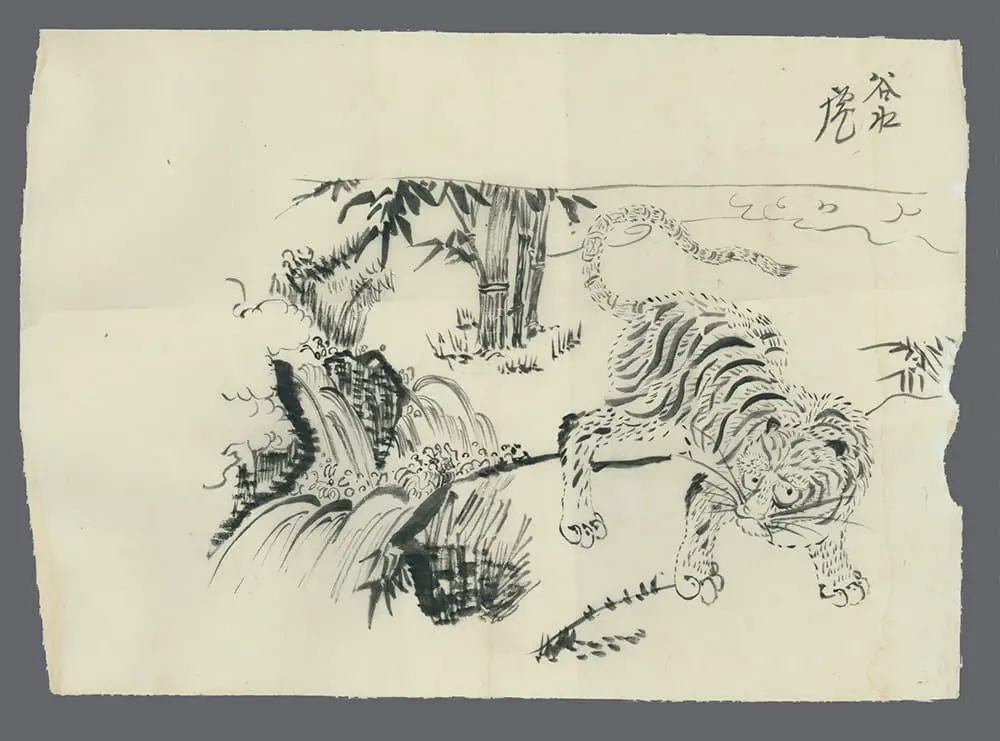
This evocative ink drawing originates from Japan, dating to the Taisho or Early Showa period (1912–1940), and serves as a fascinating glimpse into the preparatory stages of Japanese textile artistry. Measuring 15 inches by 11 inches (38 cm x 28 cm), the work is rendered on exceptionally fine rice paper. Such pieces were often created as practice exercises within kimono dyeing workshops, allowing artisans to refine their brushwork and composition before committing a design to expensive silk or cotton. The paper shows natural signs of age and handled edges, consistent with its history as a functional studio reference.
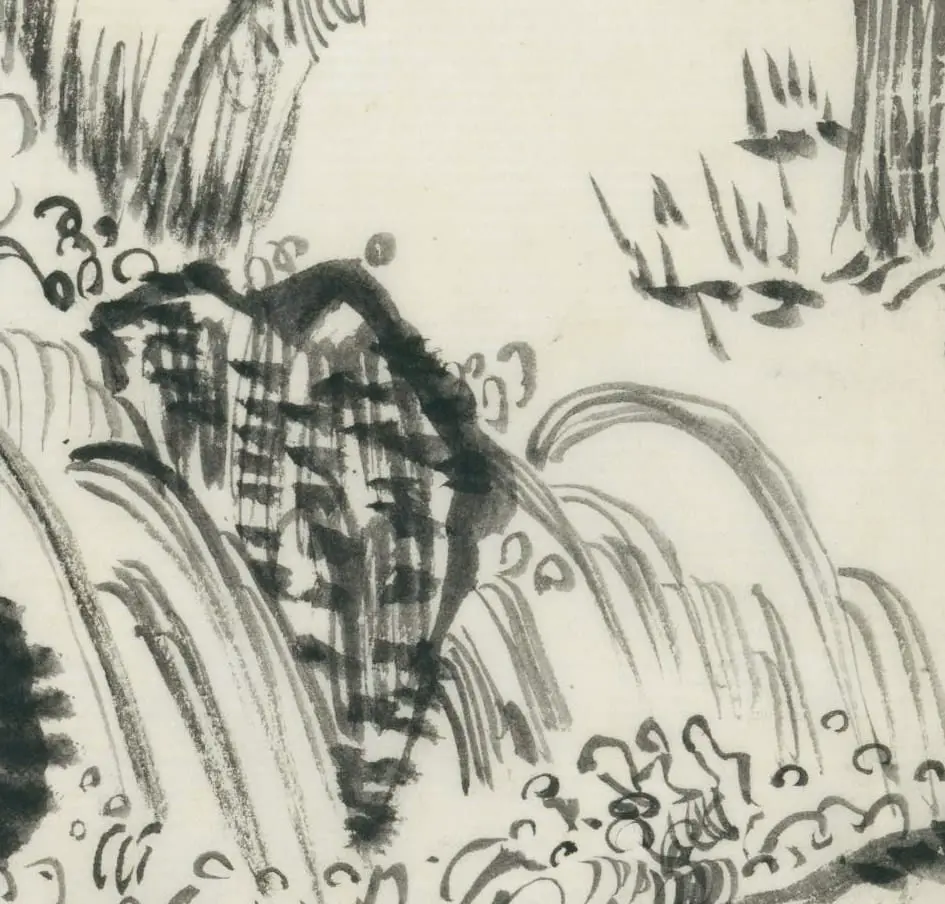
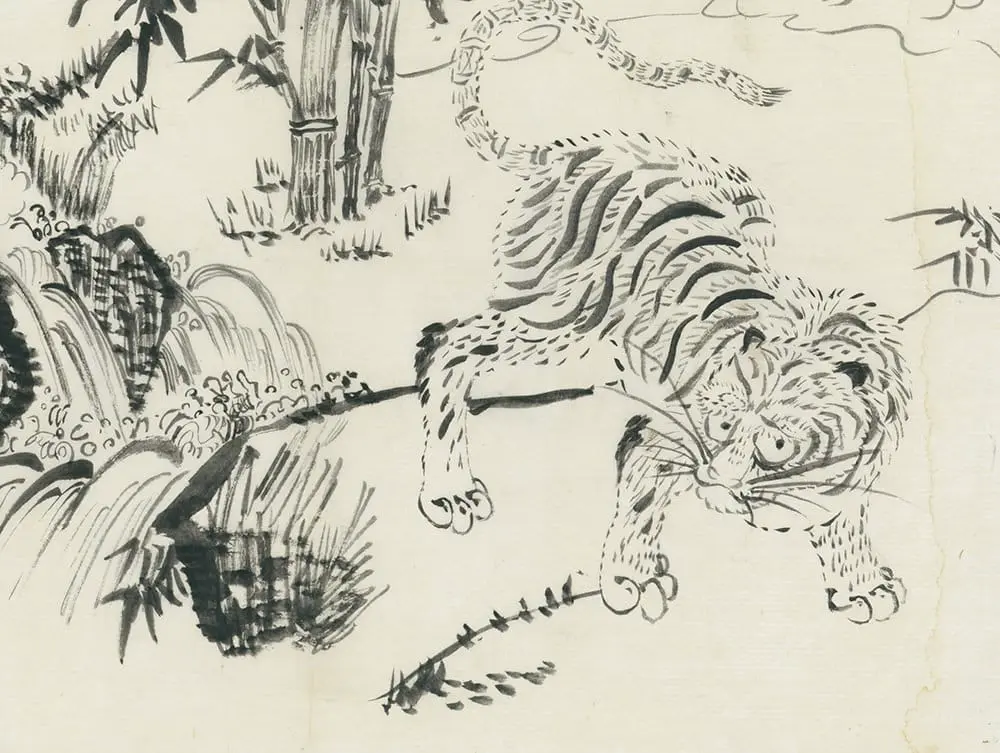
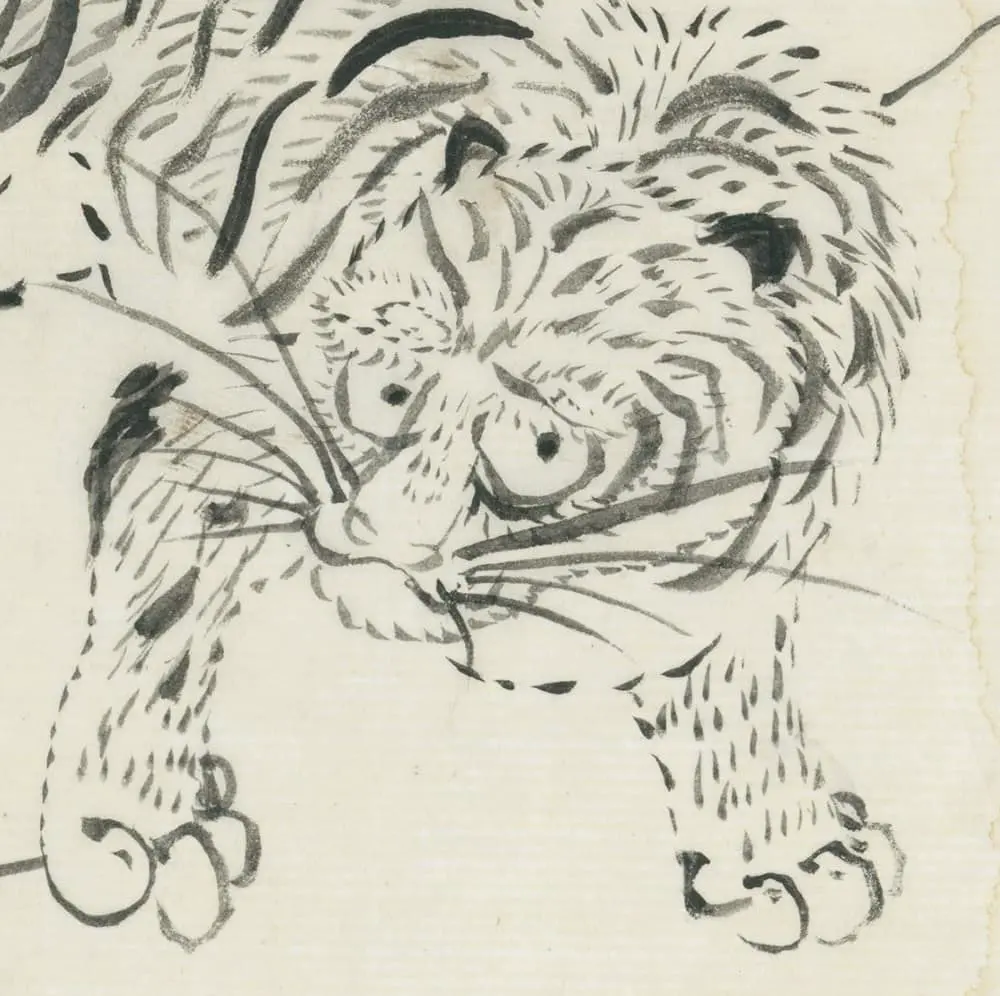
The visual narrative features a powerful, stylized tiger prowling through a landscape of bamboo and rushing water. The tiger is rendered with expressive, calligraphic line work that captures the tension in its muscles and the intensity of its gaze, while the surrounding bamboo grove is suggested with bold, swift brushstrokes. To the left, a waterfall cascades over jagged rocks, adding a sense of wild, natural energy to the scene. Two kanji characters grace the upper right corner, likely identifying the subject or the artisan's signature. This composition reflects the traditional "Tiger in a Bamboo Grove" motif, symbolizing strength and protection in Japanese iconography.

Payment Options: We primarily accept PayPal for all transactions. Credit and debit cards are not accepted. If you prefer to pay by personal check instead of PayPal, please note this preference in the "Additional comments" field when placing your order.Ordering Process
To receive your PayPal invoice, simply fill out the form.
Shipping Details: We ship all orders to the address associated with your PayPal payment. Please ensure your PayPal shipping address is current and accurate.A phone number is required during checkout, as our shipping carrier may need to contact you regarding delivery questions.Shipping RatesUnited States and Canada: $20International destinations (air mail): $40
