Copyright © 2026 Yorke Antique Textiles
.avif)

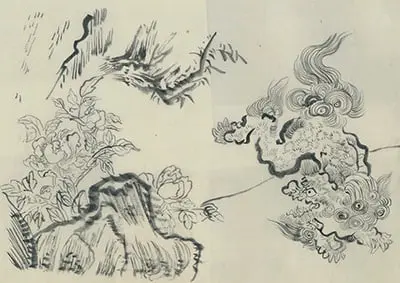
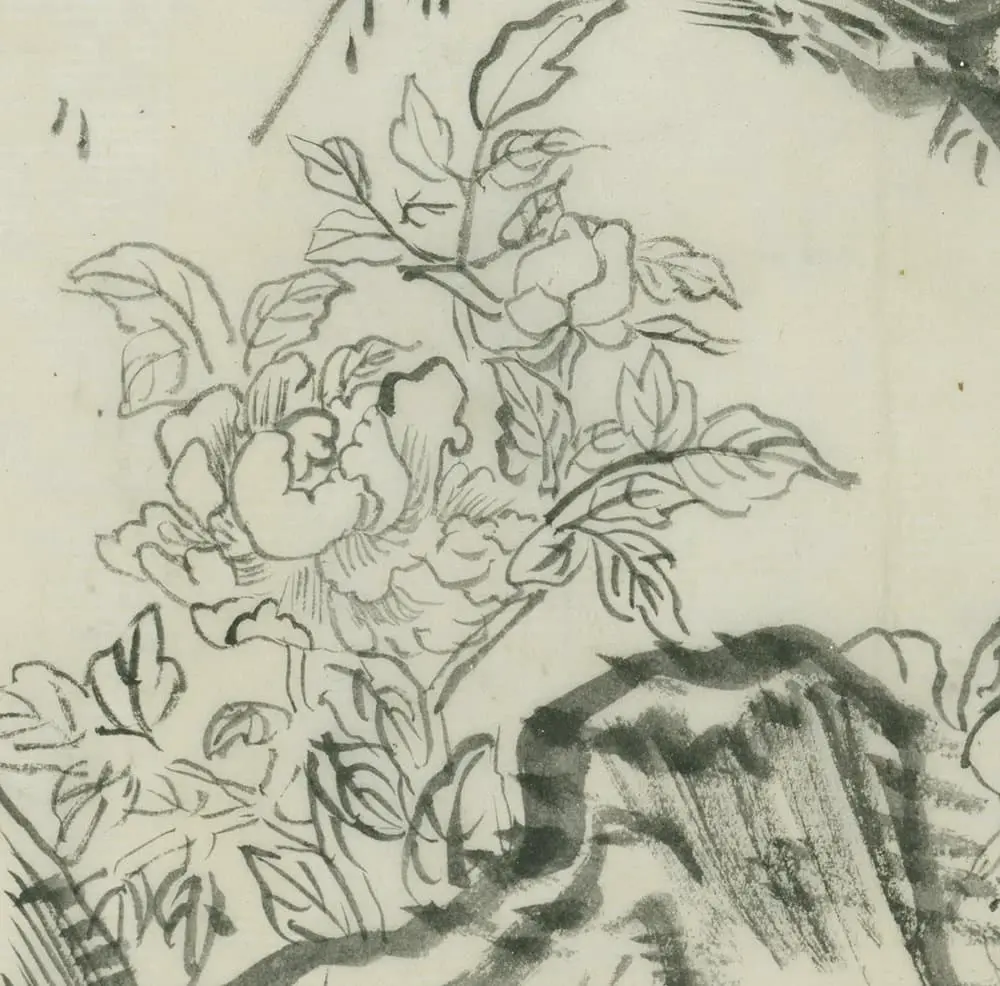

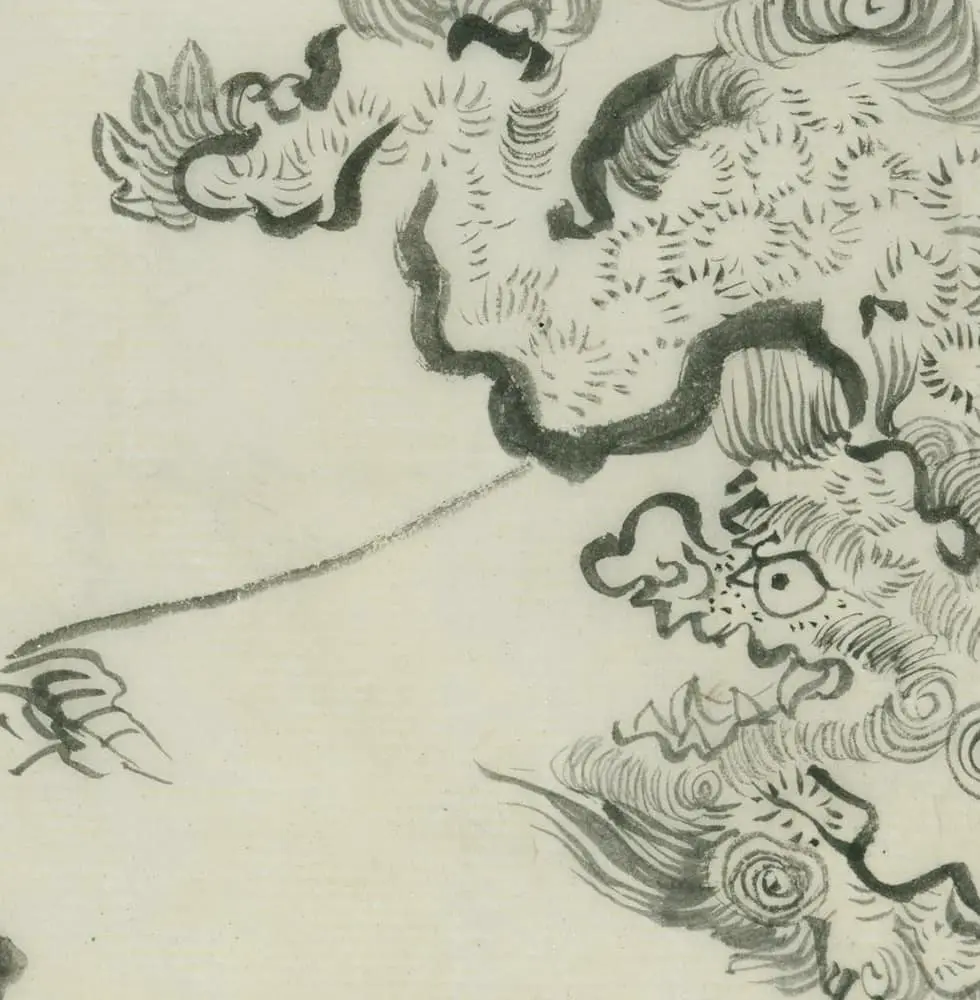
This expressive ink drawing originates from Japan, dating to the Taisho or Early Showa period (1912–1940), and represents the intricate preparatory artistry of the Japanese textile industry. Measuring 15 inches by 11 inches (38 cm x 28 cm), the work is rendered on exceptionally fine rice paper. These drawings typically served as essential practice pieces within kimono dyeing workshops, providing artisans a medium to master complex mythological and botanical motifs before applying them to final garments. The paper displays the soft texture and subtle aging characteristic of authentic studio sketches from the early 20th century.
The visual narrative depicts a dynamic encounter between a Shishi (mythological lion-dog) and lush peonies (botan). On the right, the Shishi is captured with swirling, calligraphic lines that define its curly mane and muscular, energetic stance. To the left, a large peony bush grows from behind a jagged rock formation, its heavy blossoms and layered leaves rendered with varying ink densities to suggest volume and life. This classic "King of Animals" and "King of Flowers" pairing is a cornerstone of Japanese iconography, symbolizing both power and nobility. The composition is balanced by swift, vertical strokes in the upper left that suggest a mountain cliff or falling water, grounding the scene in a traditional landscape setting.

Payment Options: We primarily accept PayPal for all transactions. Credit and debit cards are not accepted. If you prefer to pay by personal check instead of PayPal, please note this preference in the "Additional comments" field when placing your order.Ordering Process
To receive your PayPal invoice, simply fill out the form.
Shipping Details: We ship all orders to the address associated with your PayPal payment. Please ensure your PayPal shipping address is current and accurate.A phone number is required during checkout, as our shipping carrier may need to contact you regarding delivery questions.Shipping RatesUnited States and Canada: $20International destinations (air mail): $40
