Copyright © 2026 Yorke Antique Textiles
.avif)

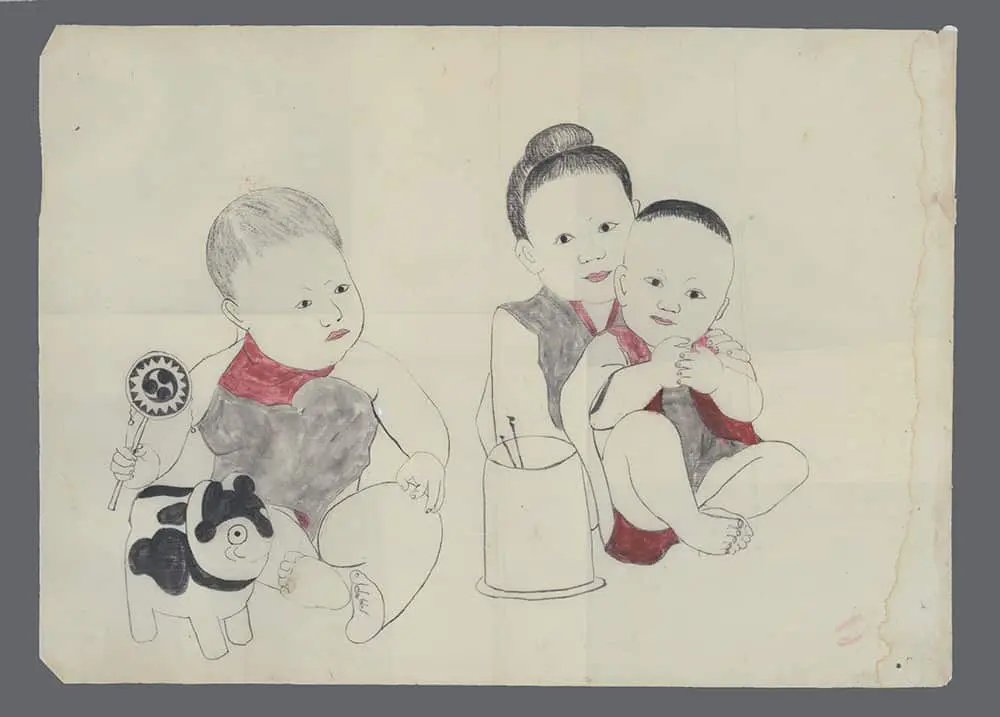
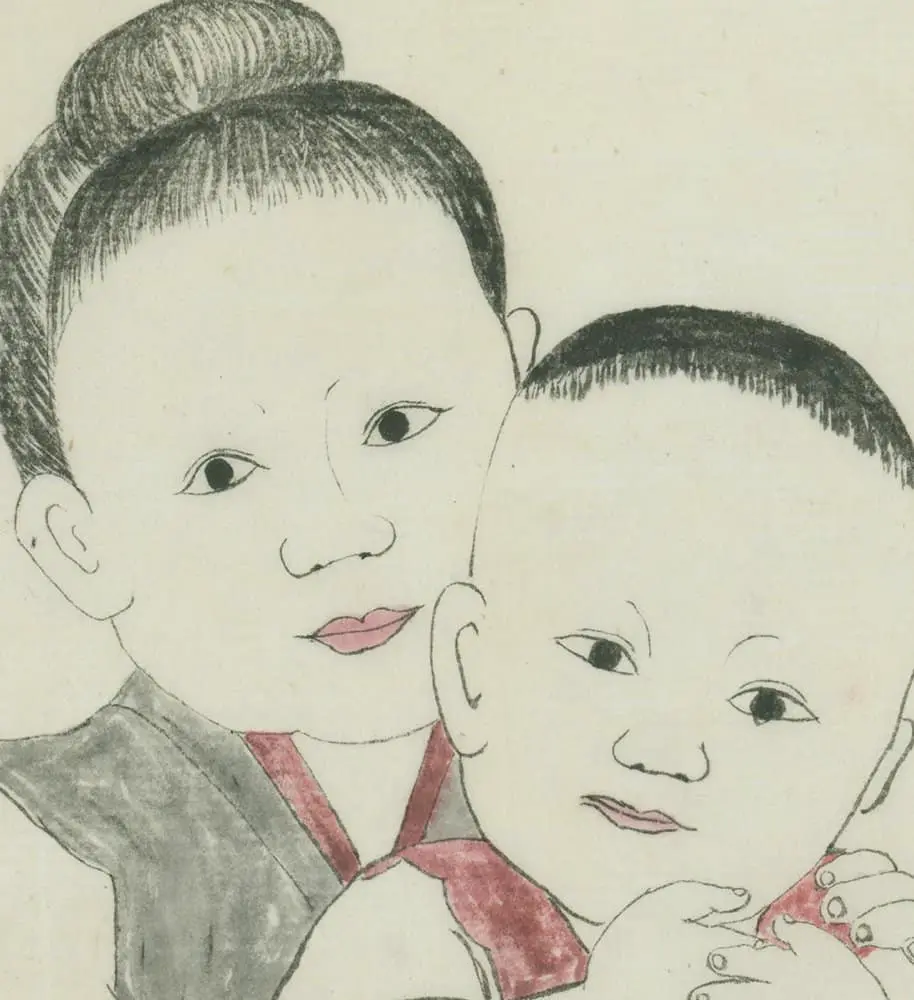
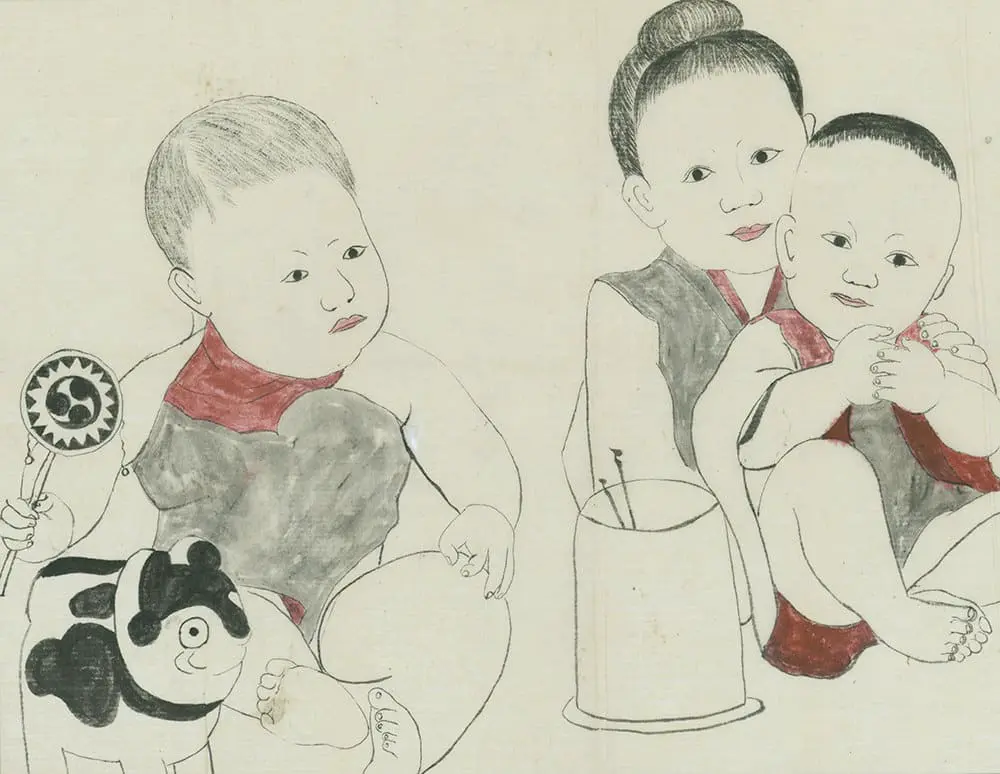
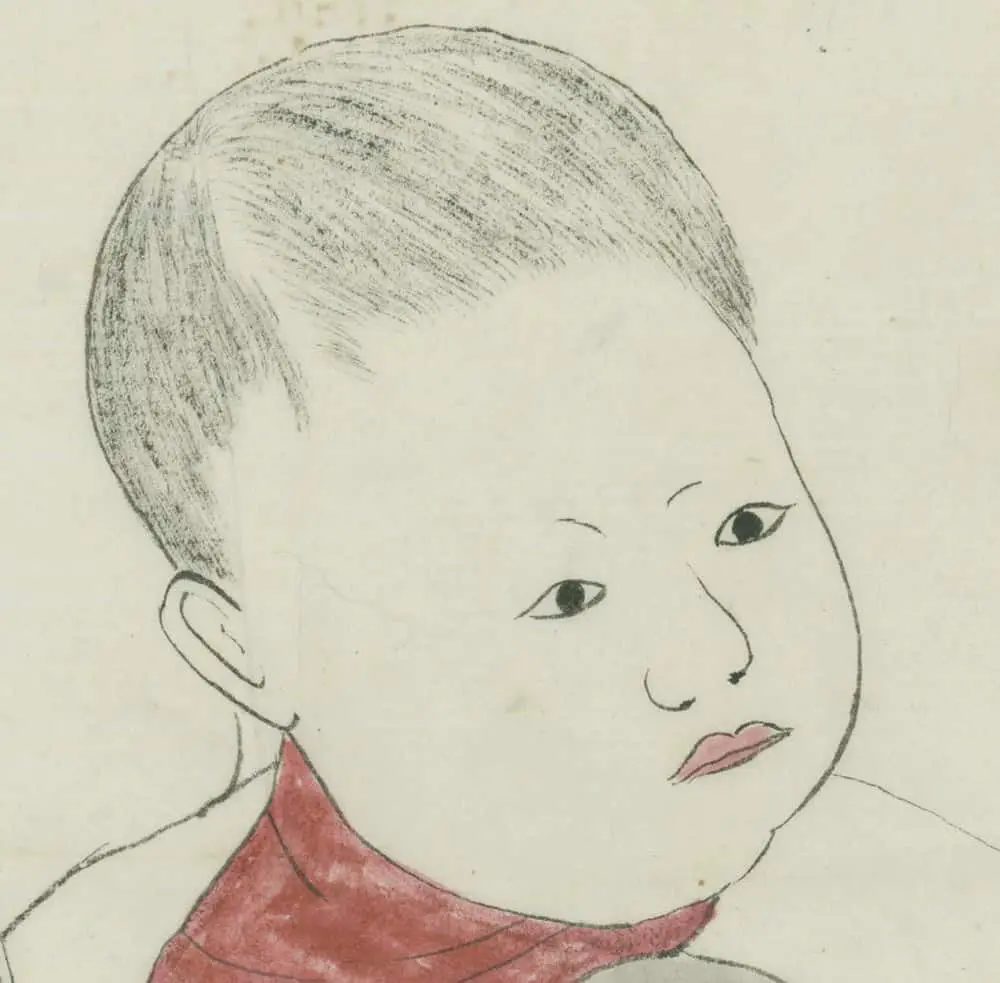
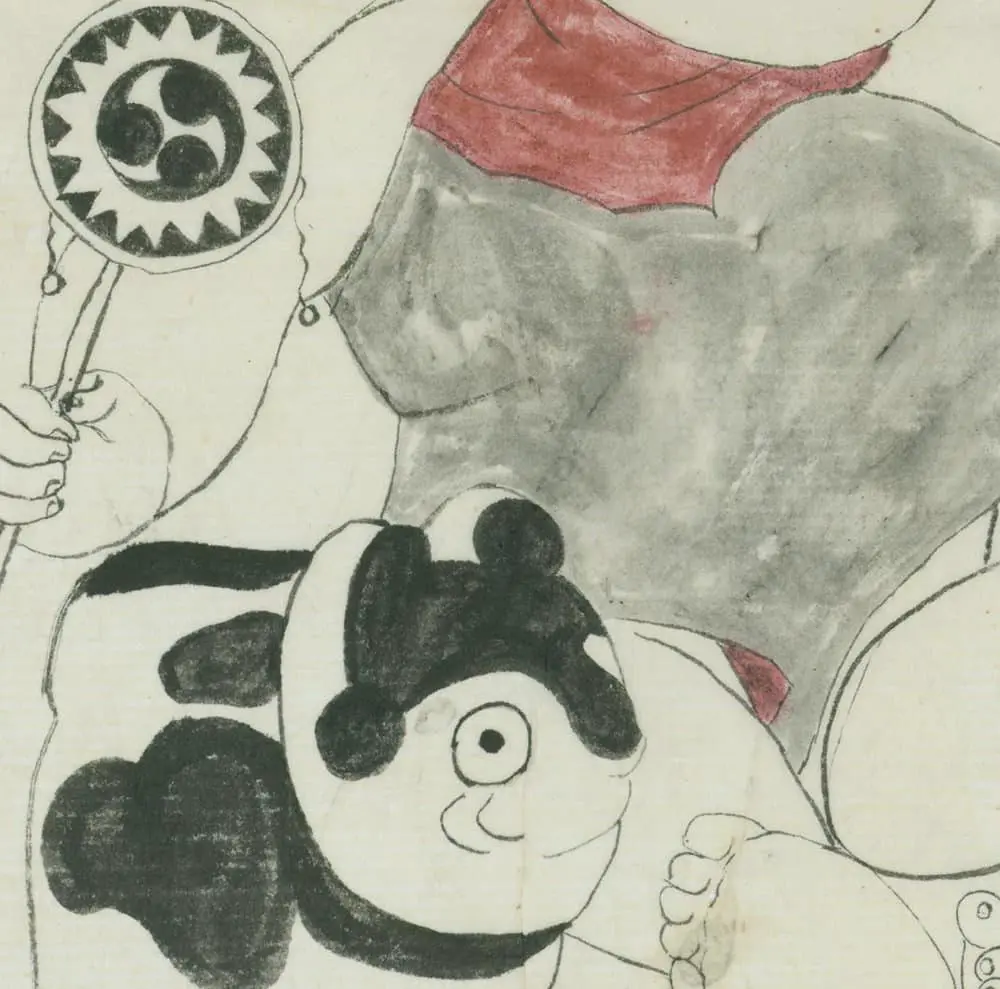
This charming hand-painted artwork is an original drawing from Japan, dating to the early Showa period (1926–1940). Obtained directly from a kimono dyer's factory, this piece served as a design template for textile artisans. The drawing is executed on extremely thin, translucent paper, measuring approximately 15 inches by 11 inches (38 cm x 28 cm). Despite its delicate substrate, the piece remains a vital record of pre-war decorative motifs, characterized by fine ink outlines and selective washes of red and grey.
The composition depicts three young children in the karako style—a traditional Japanese art motif portraying children in Chinese-style dress, often symbolizing innocence and prosperity. On the left, a seated child holds a den-den daiko (pellet drum) featuring a tomoe symbol, while playing with a black-and-white folk toy resembling a bull or dog. To the right, an older child or caregiver protectively embraces a smaller toddler. The children are dressed in simple bib-like garments (haragake) accented with bold red pigment. The sketch-like quality and visible paper seams indicate its functional history as a working blueprint used within the dyer’s studio.

Payment Options: We primarily accept PayPal for all transactions. Credit and debit cards are not accepted. If you prefer to pay by personal check instead of PayPal, please note this preference in the "Additional comments" field when placing your order.Ordering Process
To receive your PayPal invoice, simply fill out the form.
Shipping Details: We ship all orders to the address associated with your PayPal payment. Please ensure your PayPal shipping address is current and accurate.A phone number is required during checkout, as our shipping carrier may need to contact you regarding delivery questions.Shipping RatesUnited States and Canada: $20International destinations (air mail): $40
