Copyright © 2026 Yorke Antique Textiles
.avif)

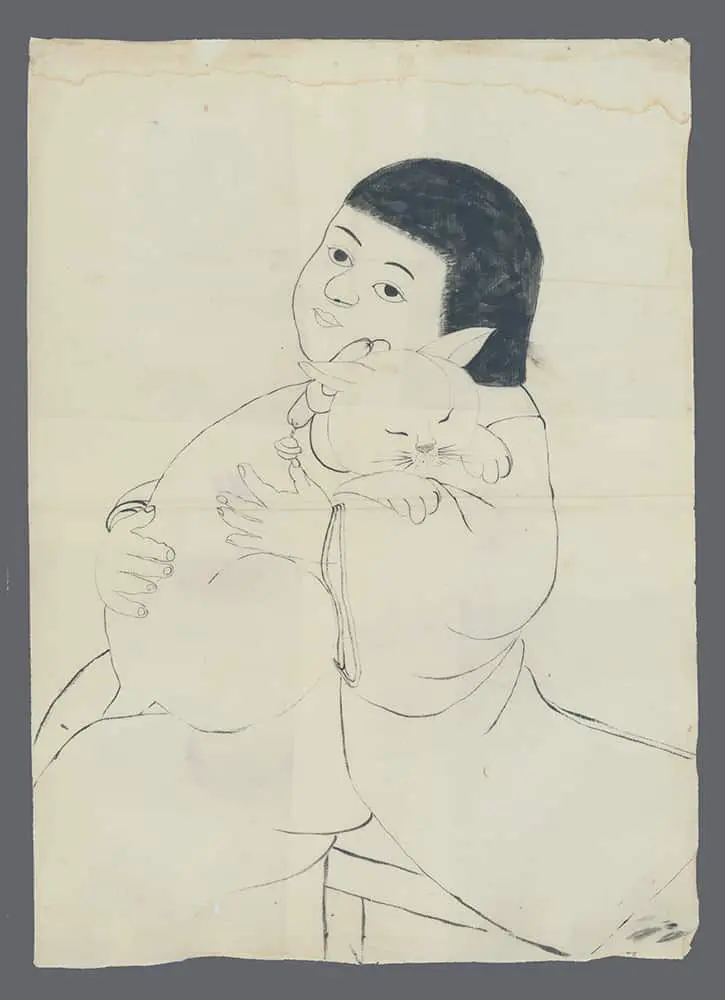
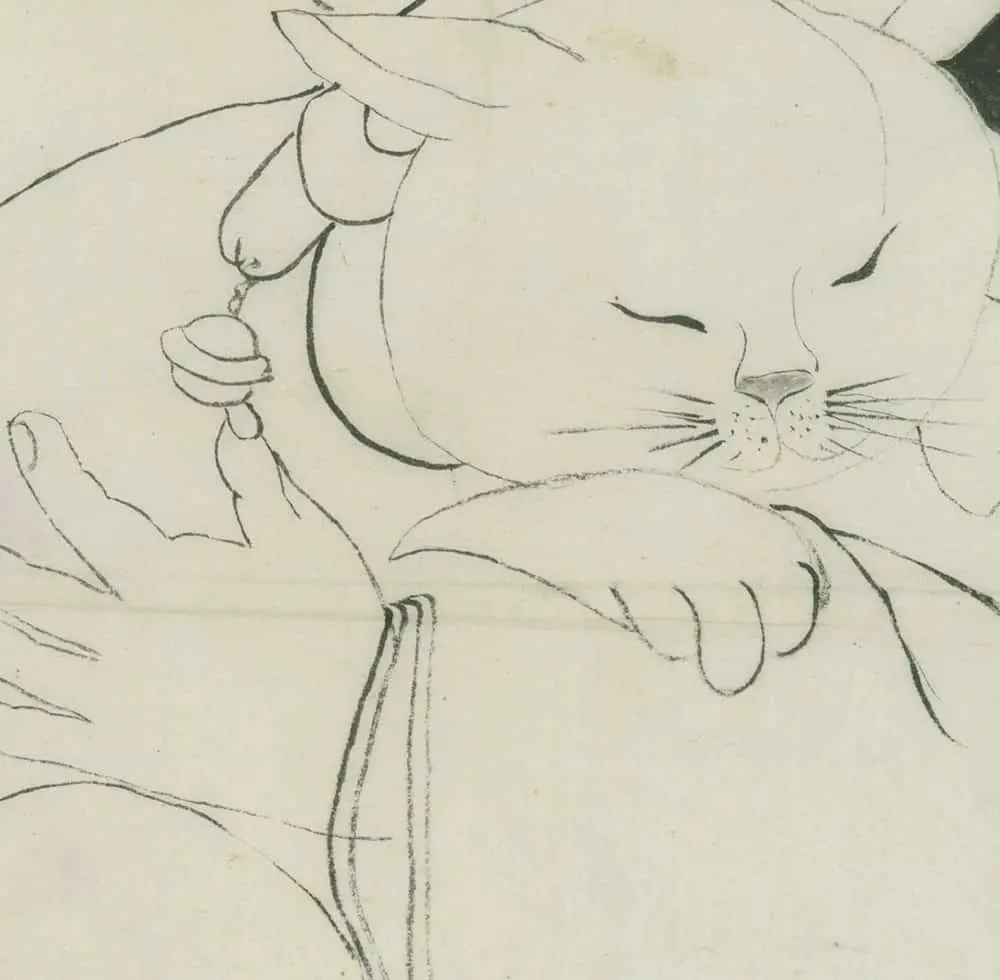
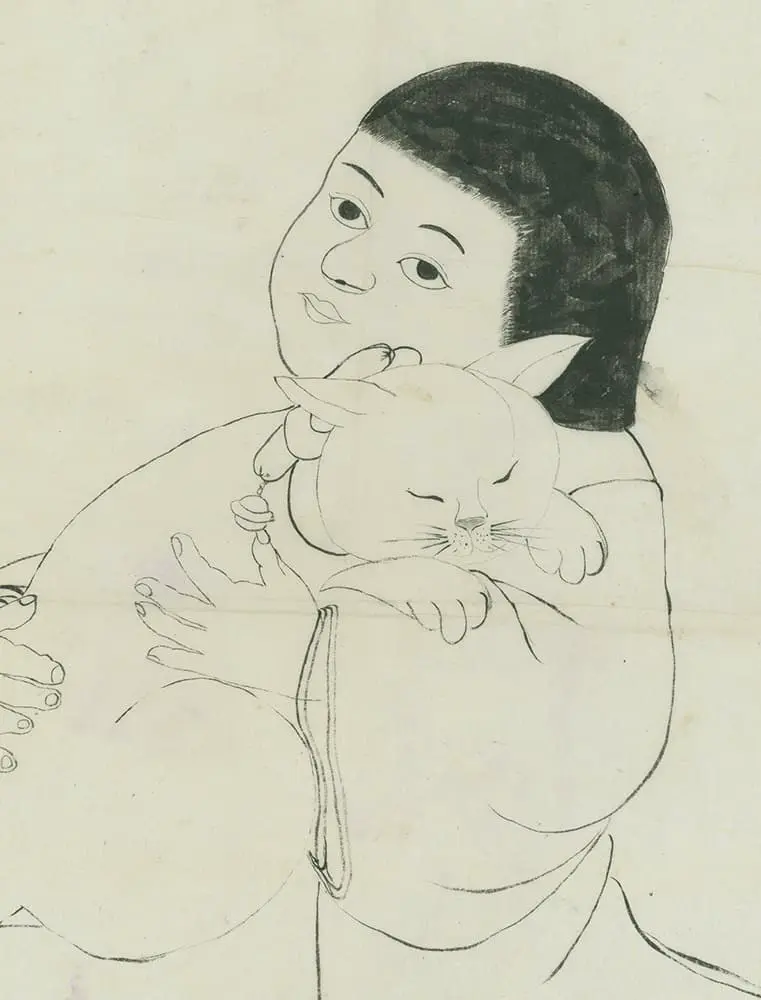
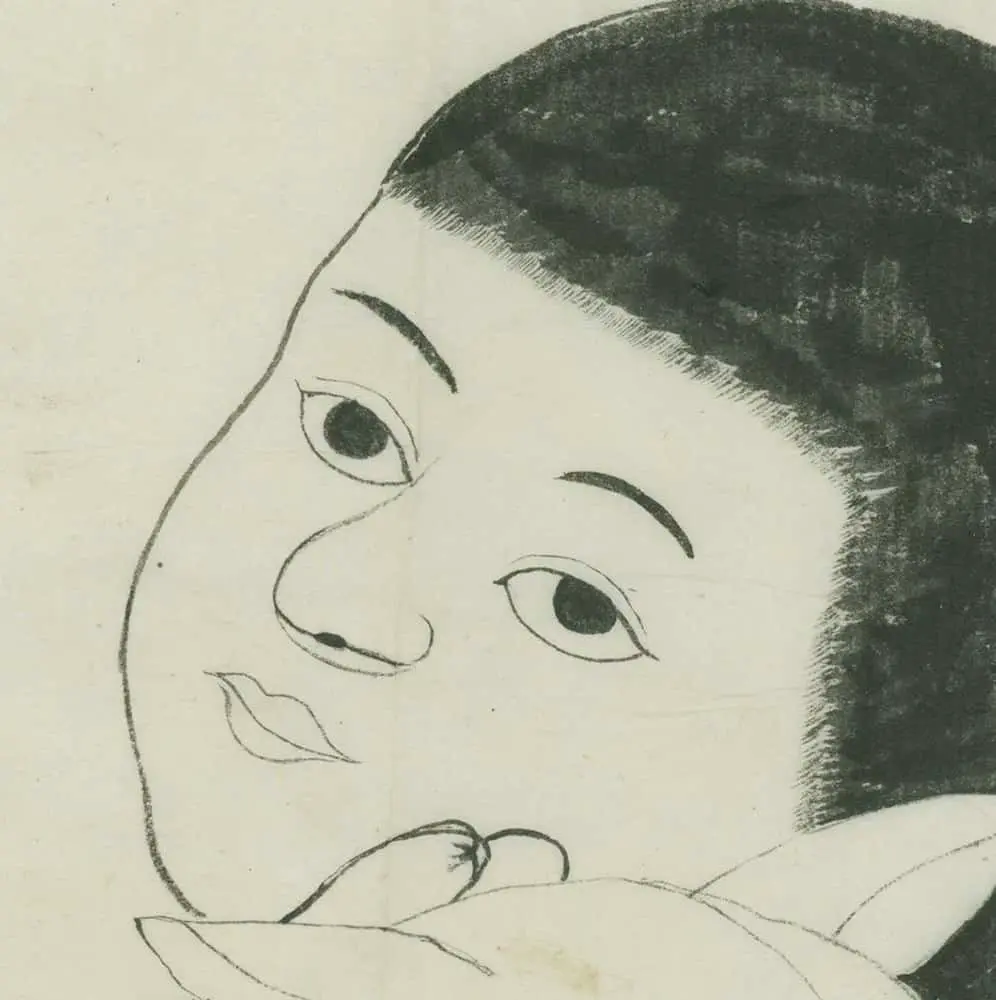
This charming hand-painted artwork is an original drawing from Japan, dating to the early Showa period (1926–1940). Obtained from a kimono dyer's factory, this piece served as a technical design template for textile artisans. The drawing is executed on exceptionally thin, translucent paper, measuring approximately 11 inches by 15 inches (28 cm x 38 cm). Despite its delicate nature, the piece remains in good condition, featuring visible paper folds and minor age-related staining that attest to its history as a functional blueprint within a busy workshop.
The composition centers on a young child in the karako style—a traditional Japanese art motif portraying children in Chinese-inspired attire, often used to symbolize innocence and domestic joy. The child is depicted with a serene expression and traditional bobbed hair, tenderly embracing a large, sleeping cat. The cat, wearing a bell collar, is tucked under the child's chin, emphasizing a theme of gentle companionship. The artwork is rendered primarily in black ink outlines with soft charcoal-like washes used to define the child's hair and the folds of their simple garment.

Payment Options: We primarily accept PayPal for all transactions. Credit and debit cards are not accepted. If you prefer to pay by personal check instead of PayPal, please note this preference in the "Additional comments" field when placing your order.Ordering Process
To receive your PayPal invoice, simply fill out the form.
Shipping Details: We ship all orders to the address associated with your PayPal payment. Please ensure your PayPal shipping address is current and accurate.A phone number is required during checkout, as our shipping carrier may need to contact you regarding delivery questions.Shipping RatesUnited States and Canada: $20International destinations (air mail): $40
