Copyright © 2026 Yorke Antique Textiles
.avif)


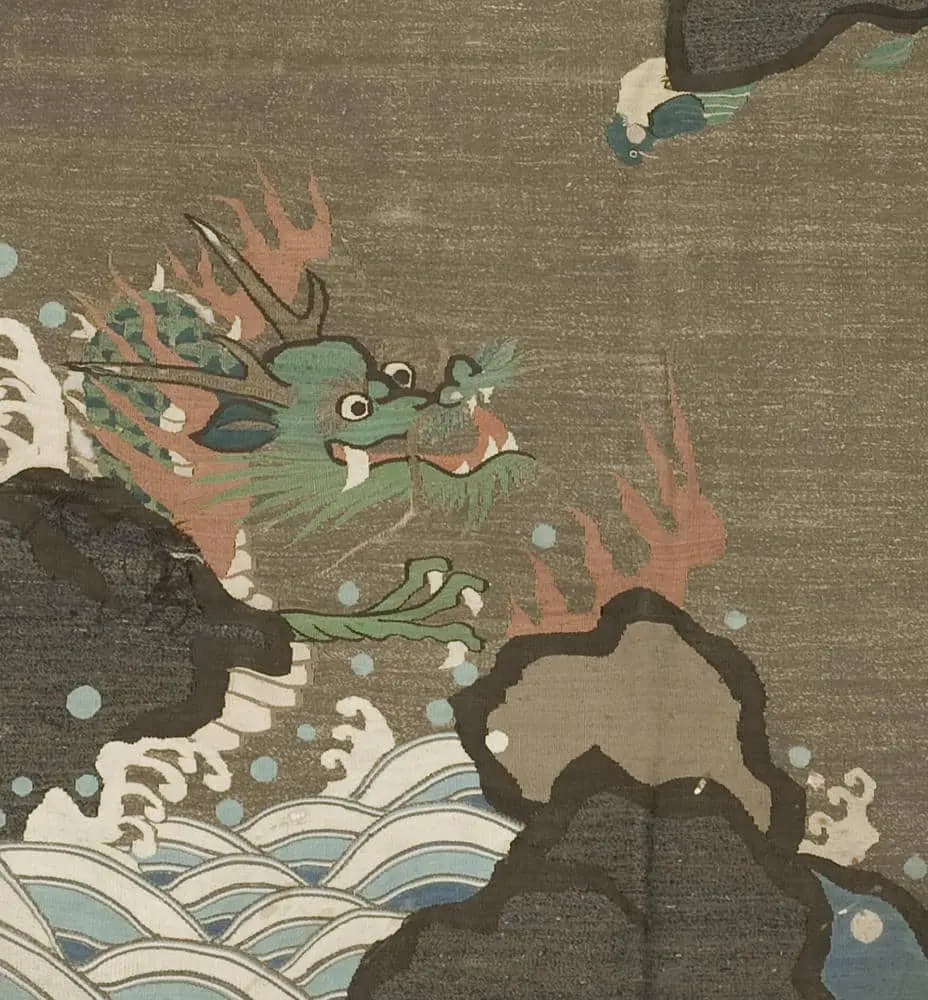
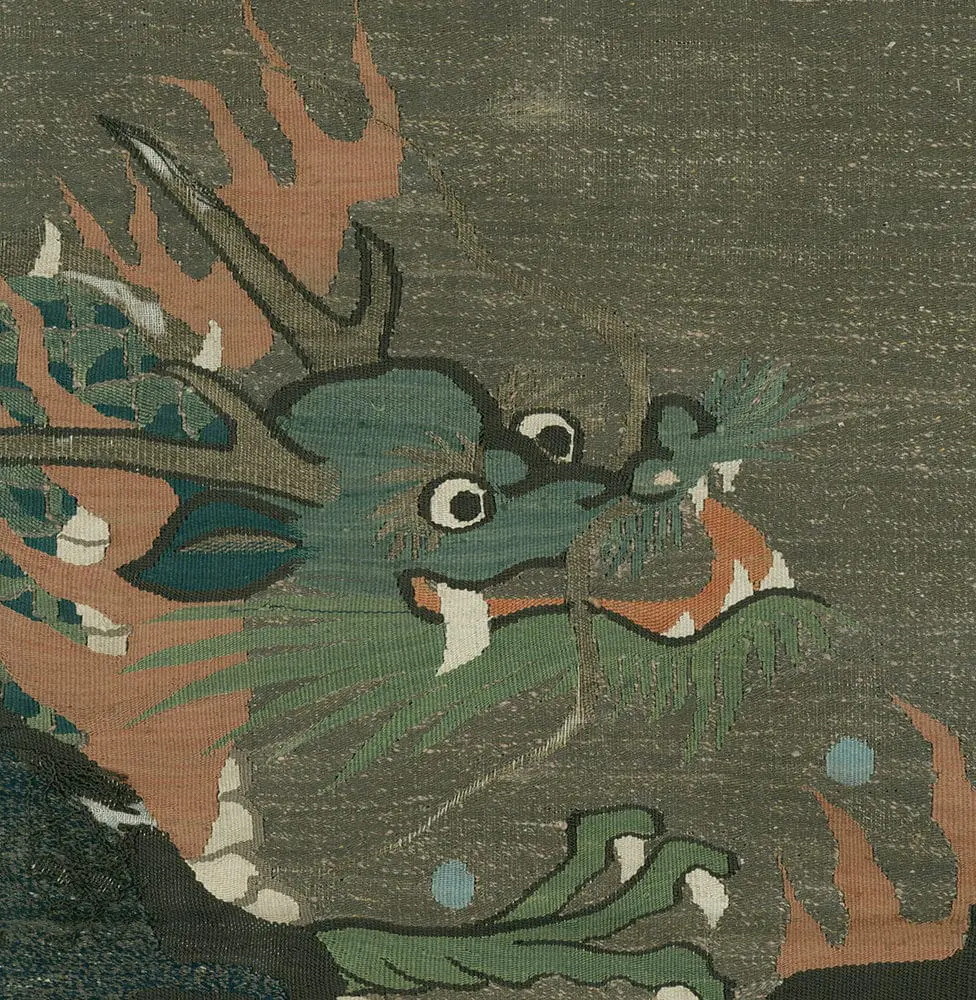

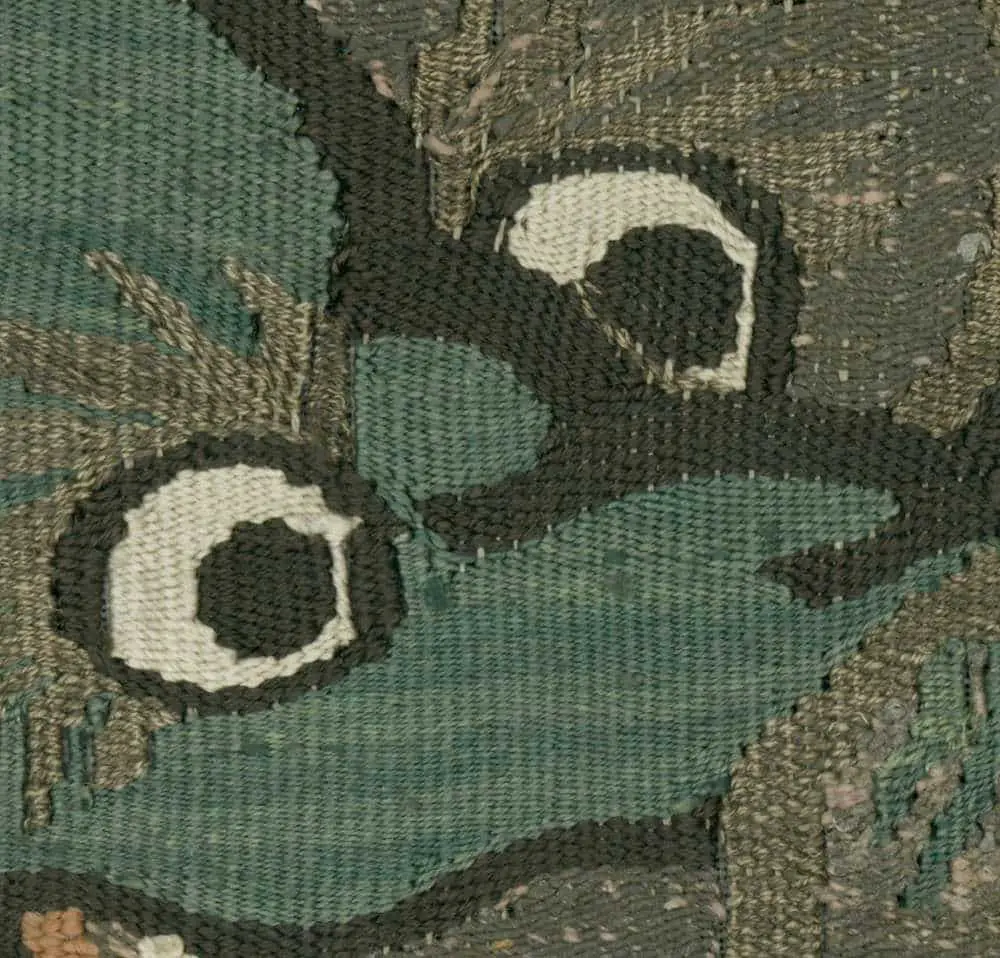
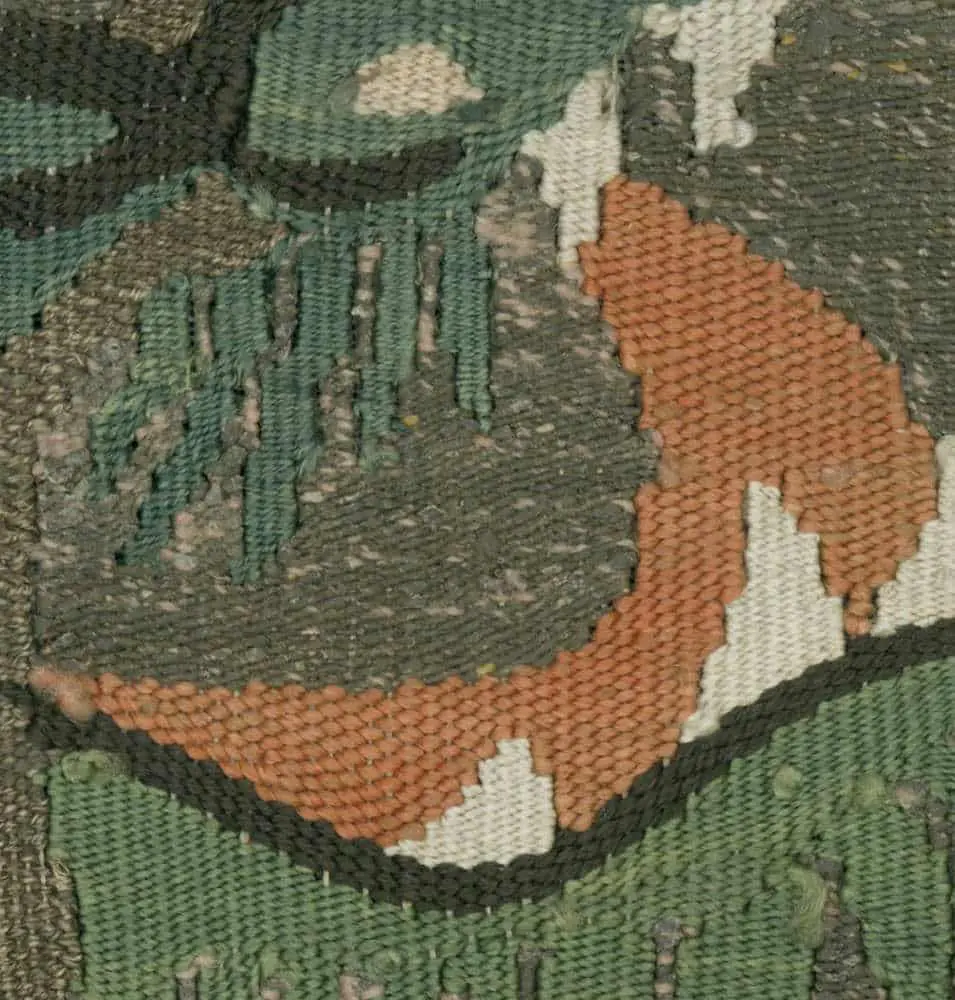
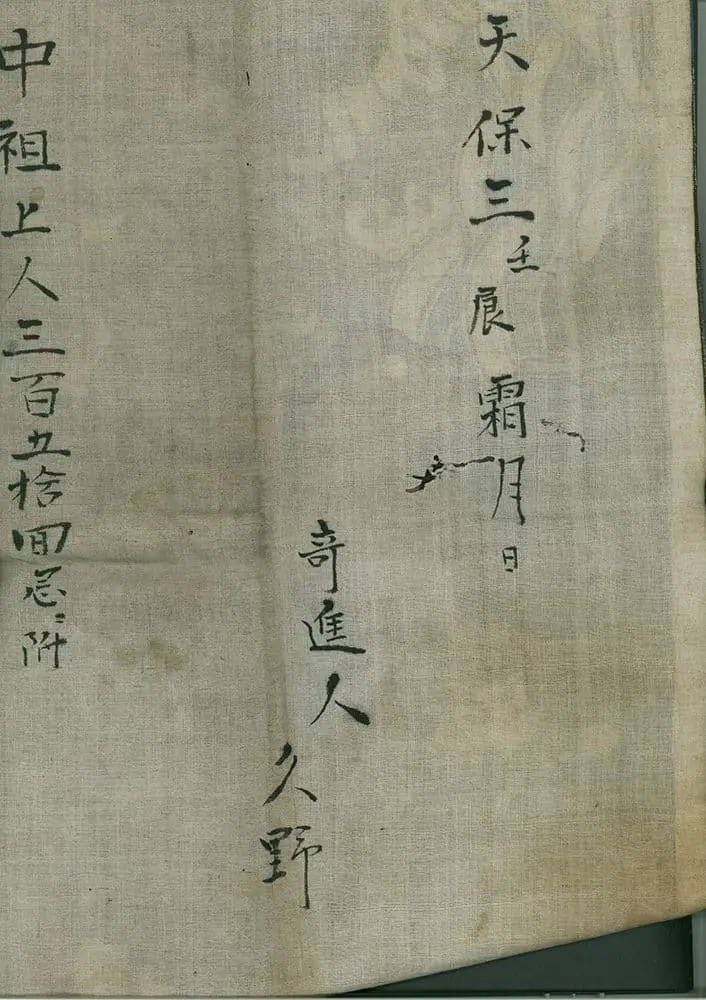
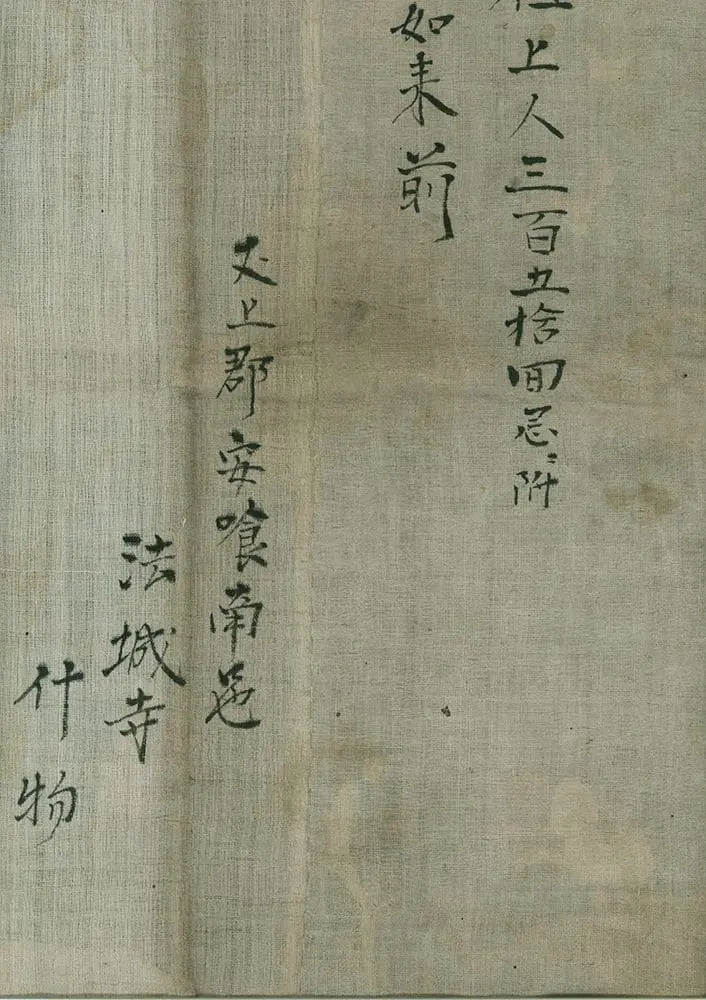


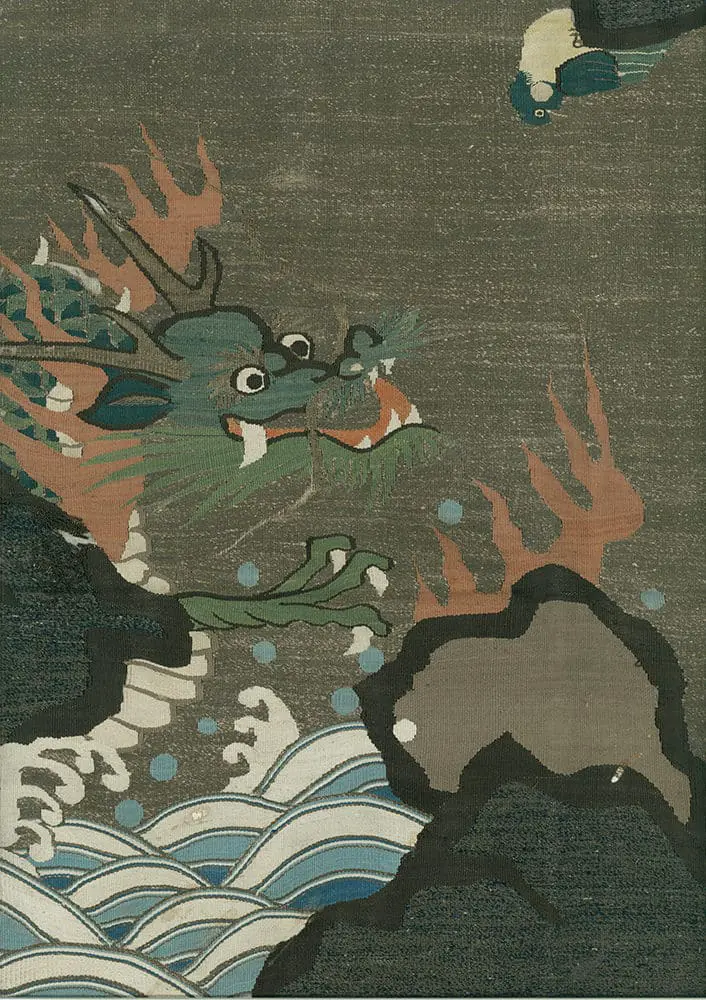
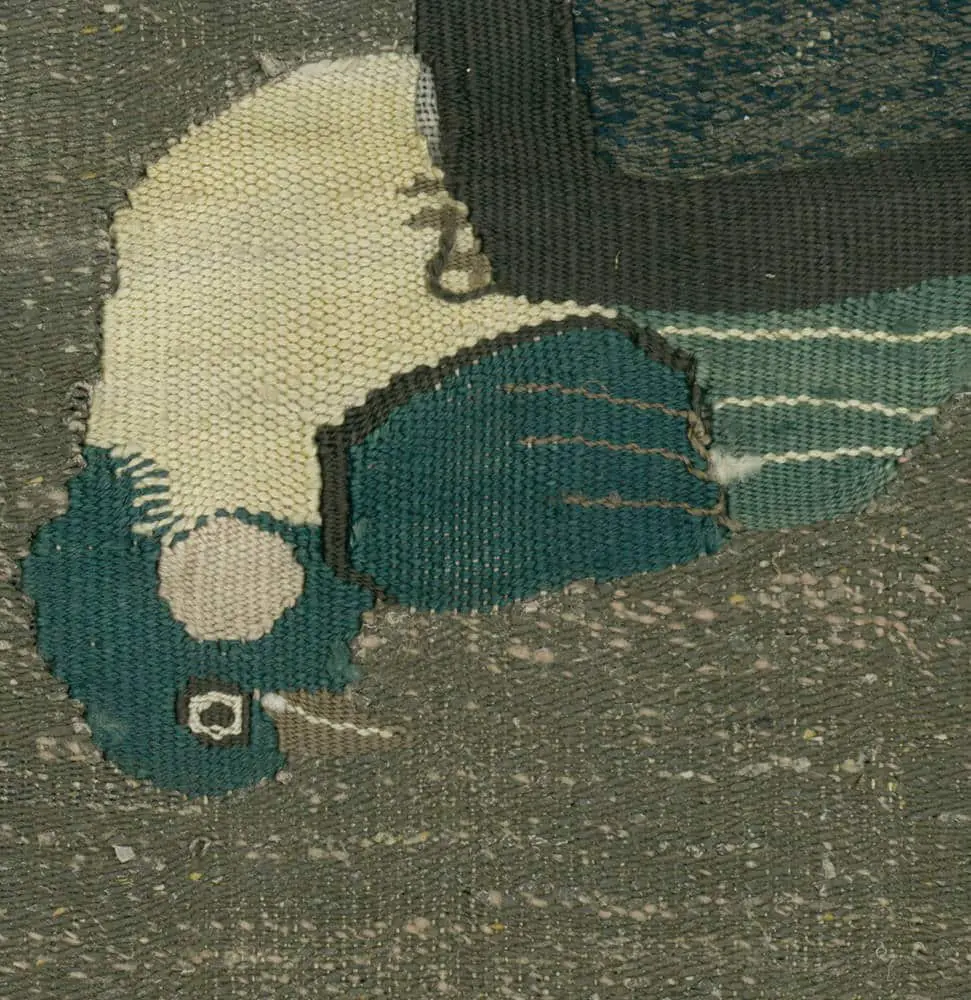
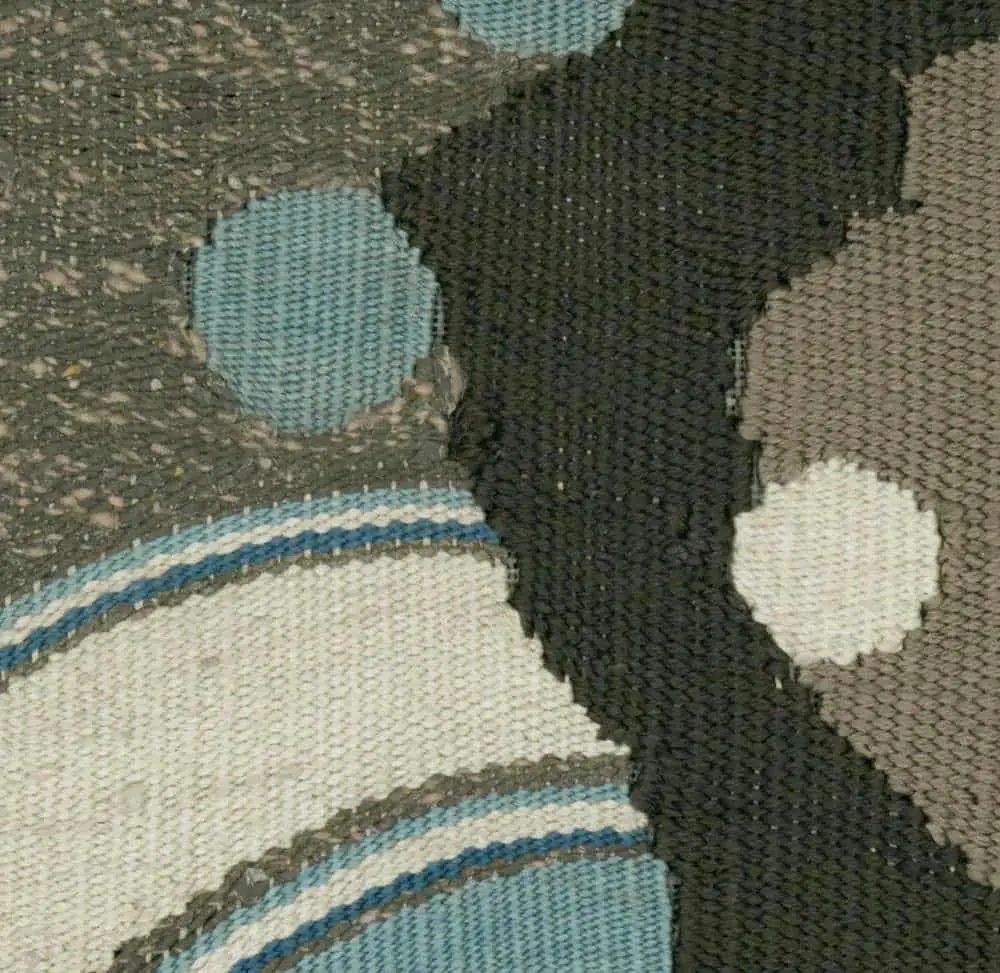
This significant slit tapestry uchishiki (altar cloth) is precisely dated to 1832 by kanji characters inscribed on its reverse, placing it firmly in the late Edo period. Measuring 25 inches by 25 inches (64 cm x 64 cm), the textile is rendered on a textured, taupe-colored silk ground.
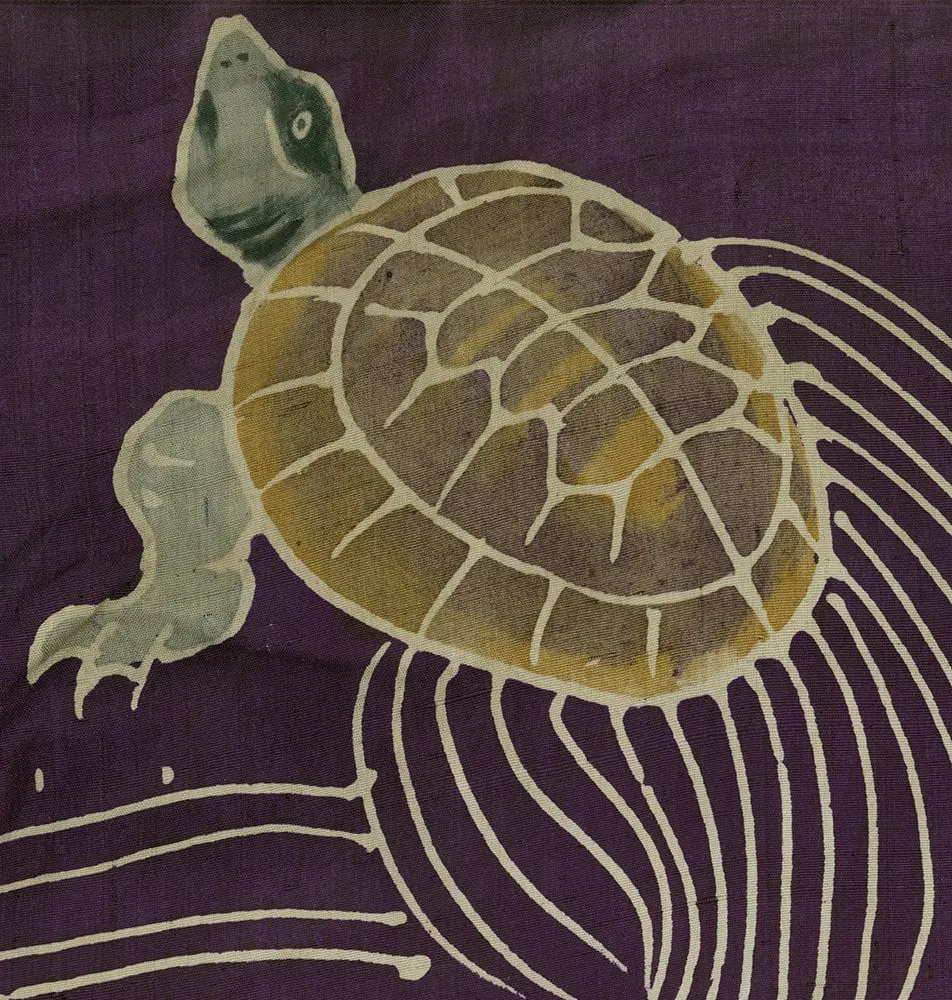
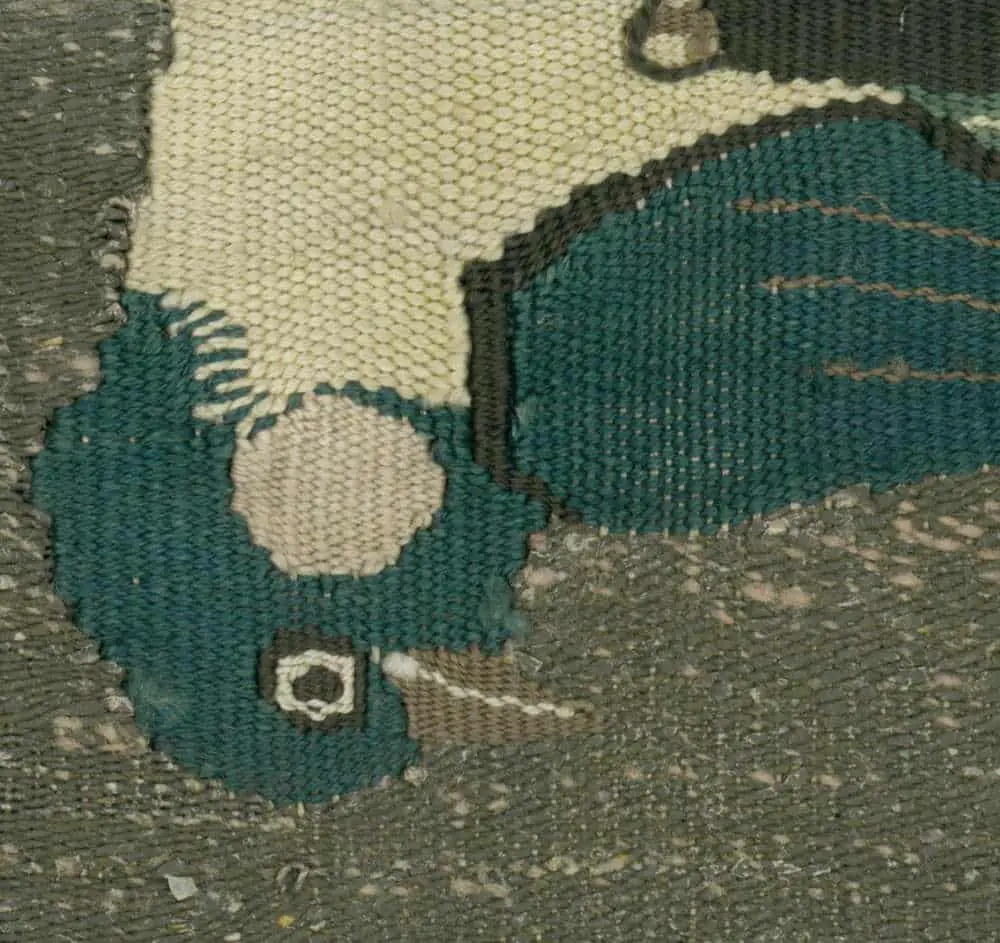
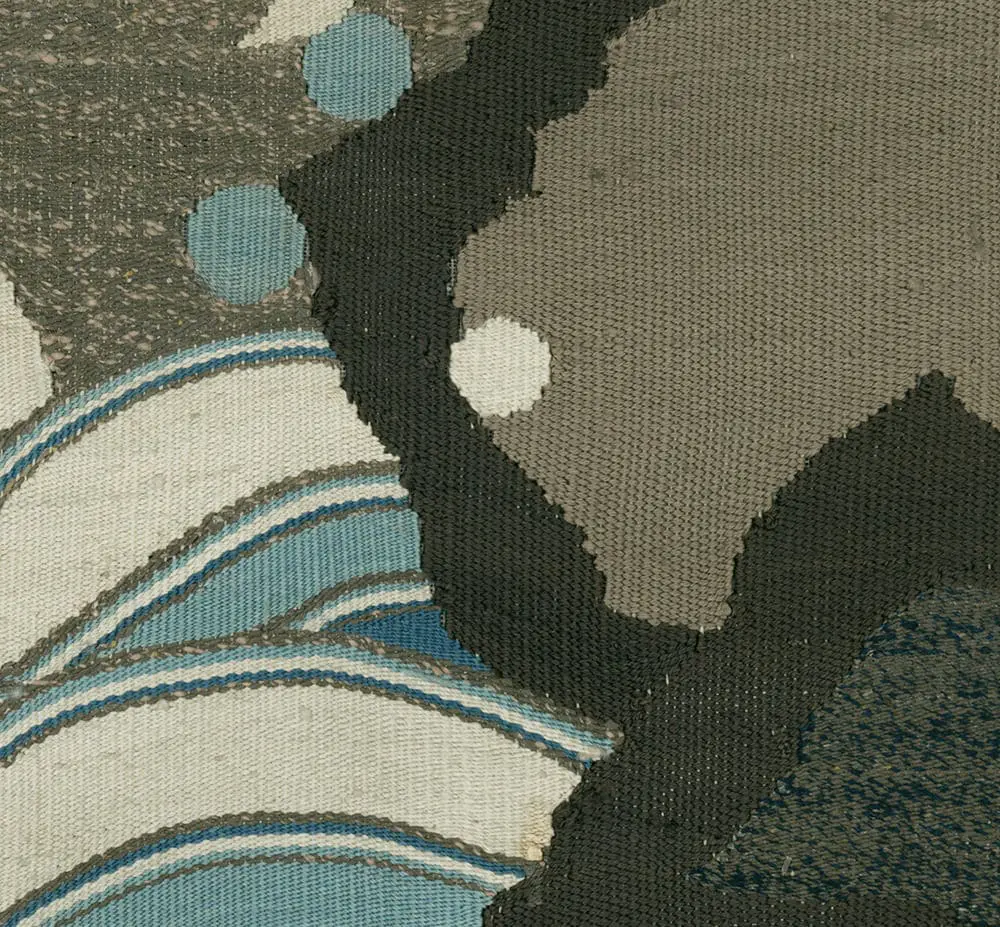
The central motif features a powerful green dragon emerging from cresting white and blue waves. In Japanese tradition, the dragon is a multifaceted symbol: a protector of Buddhist law, a guardian of the East, and a controller of rain and storms. The creature is depicted with flaming appendages and sharp claws, navigating between dark, jagged rock formations. Softening the dramatic maritime scene are delicate floral branches—likely camellia or plum—and a small bird perched in the upper right, providing a "bird-and-flower" (kacho-ga) balance to the dragon's power. The piece is in fair condition, with several damaged areas in the silk likely caused by the historical mordants used in the dyeing process.
This artwork is featured on page 78 of Ceremonial Textiles of Japan, 18th to 20th Centuries. This book, published by Yorke Antique Textiles, can be previewed or purchased on our website here.

Payment Options: We primarily accept PayPal for all transactions. Credit and debit cards are not accepted. If you prefer to pay by personal check instead of PayPal, please note this preference in the "Additional comments" field when placing your order.Ordering Process
To receive your PayPal invoice, simply fill out the form.
Shipping Details: We ship all orders to the address associated with your PayPal payment. Please ensure your PayPal shipping address is current and accurate.A phone number is required during checkout, as our shipping carrier may need to contact you regarding delivery questions.Shipping RatesUnited States and Canada: $20International destinations (air mail): $40
