Copyright © 2026 Yorke Antique Textiles
.avif)

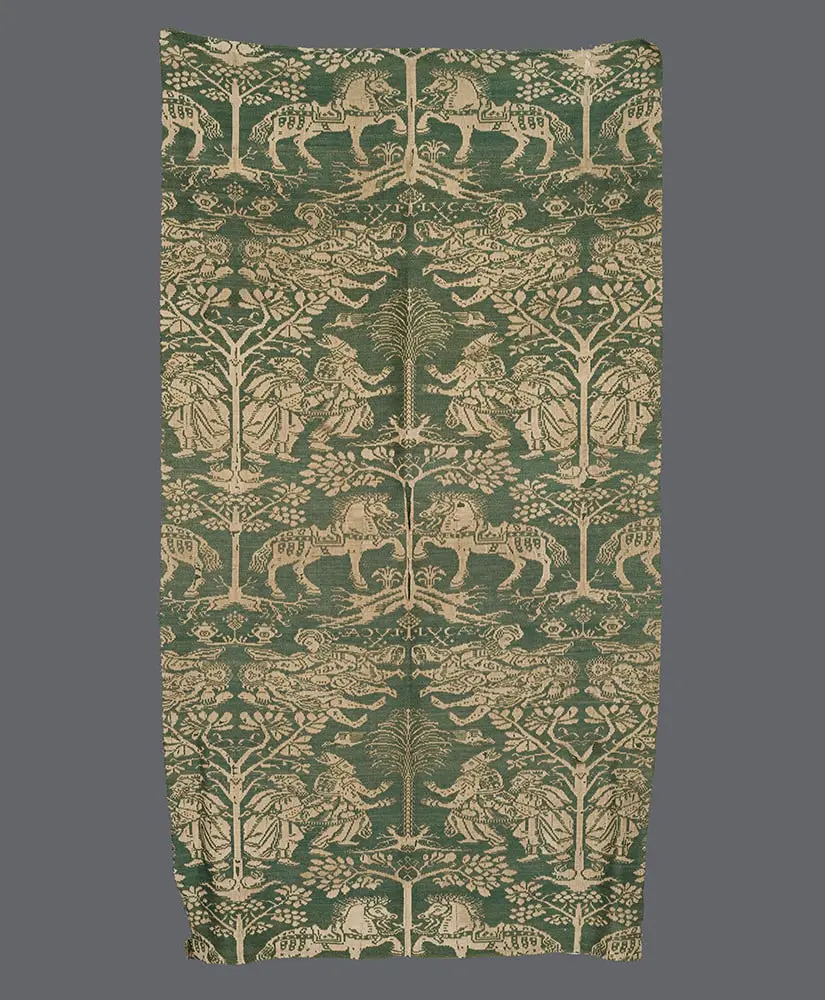


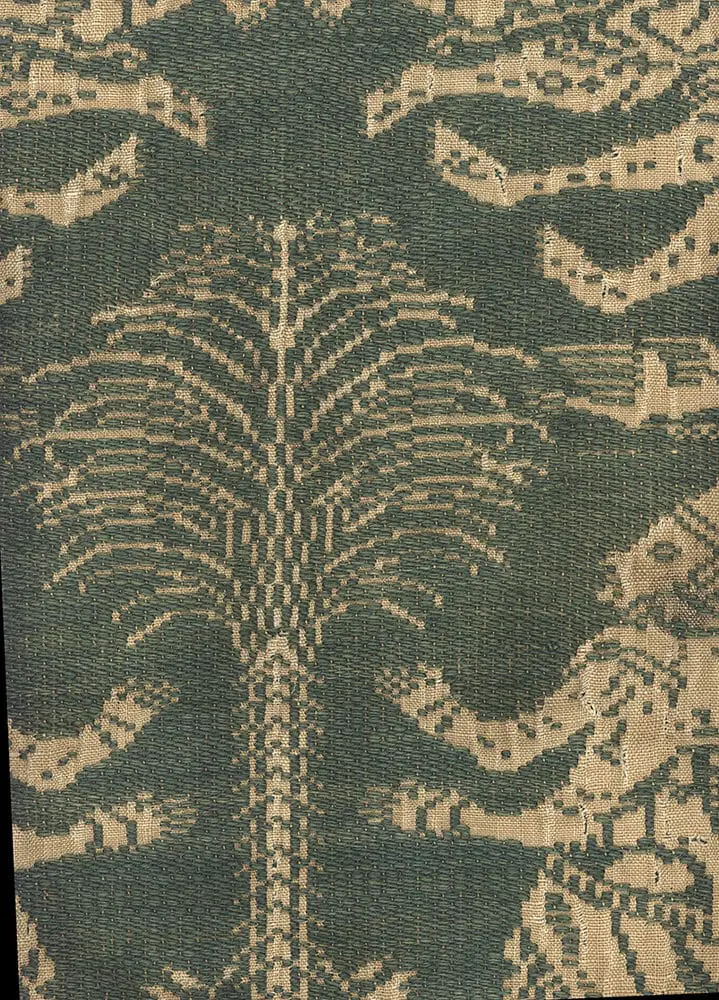
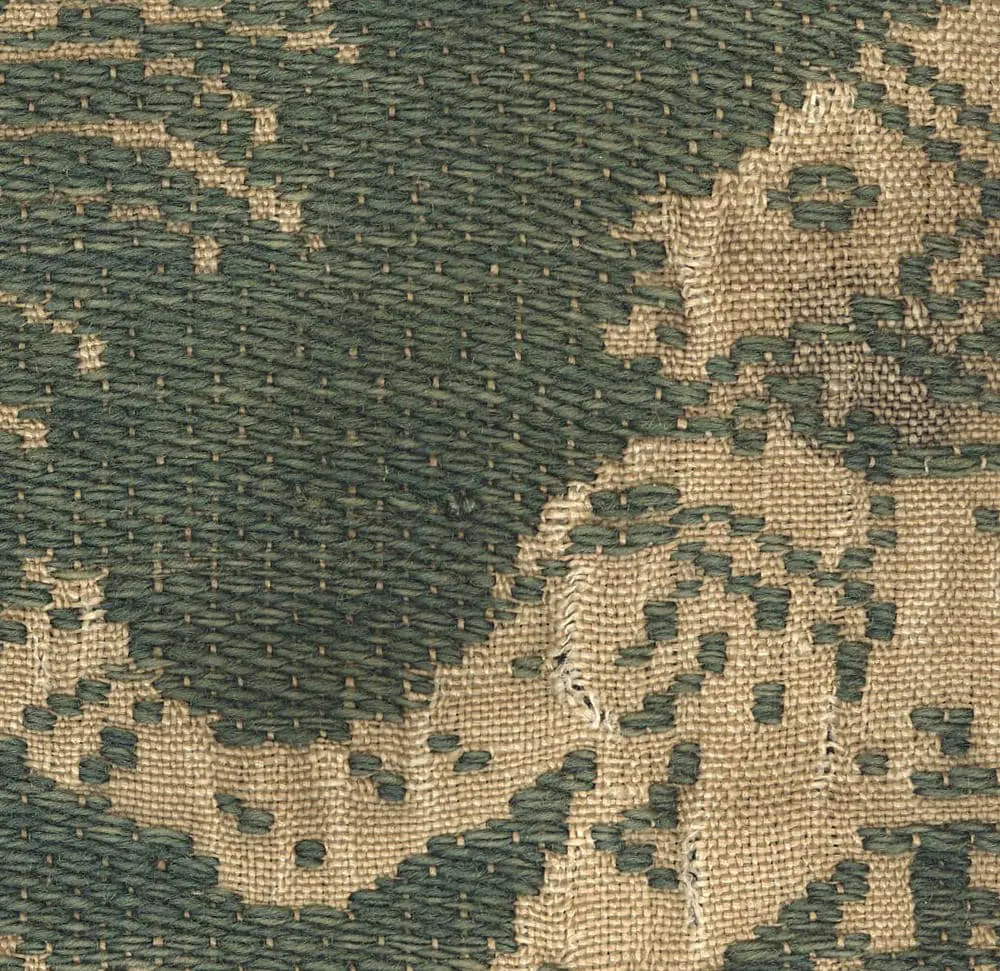
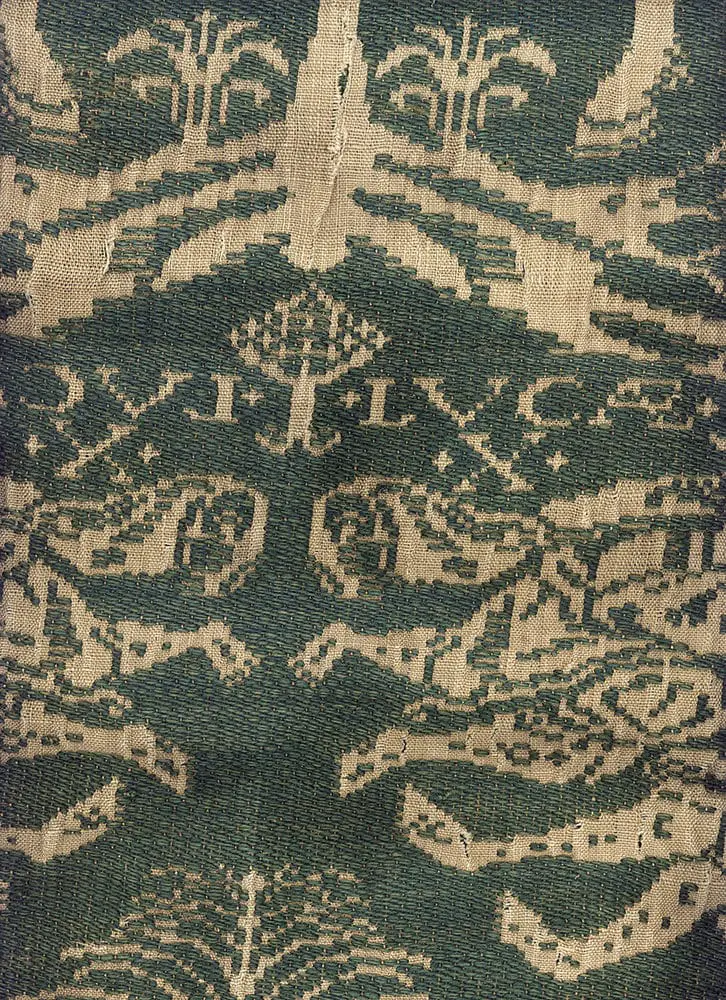
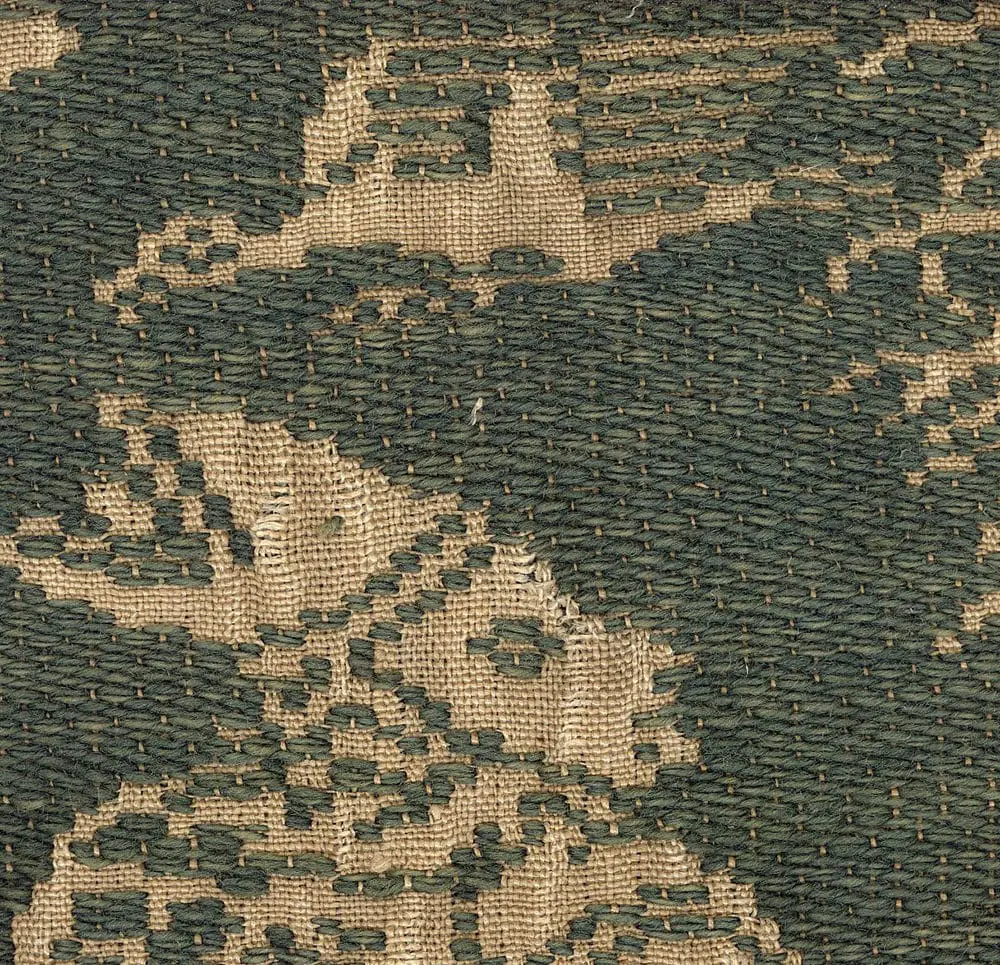
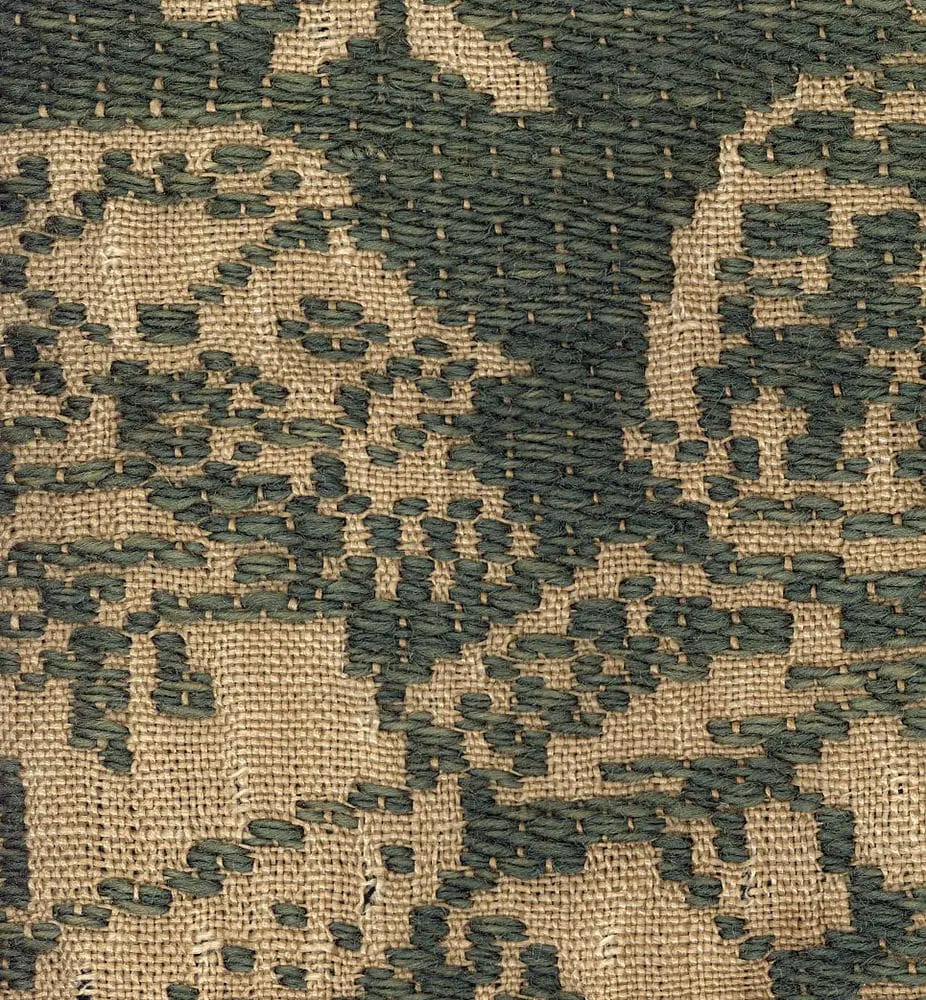


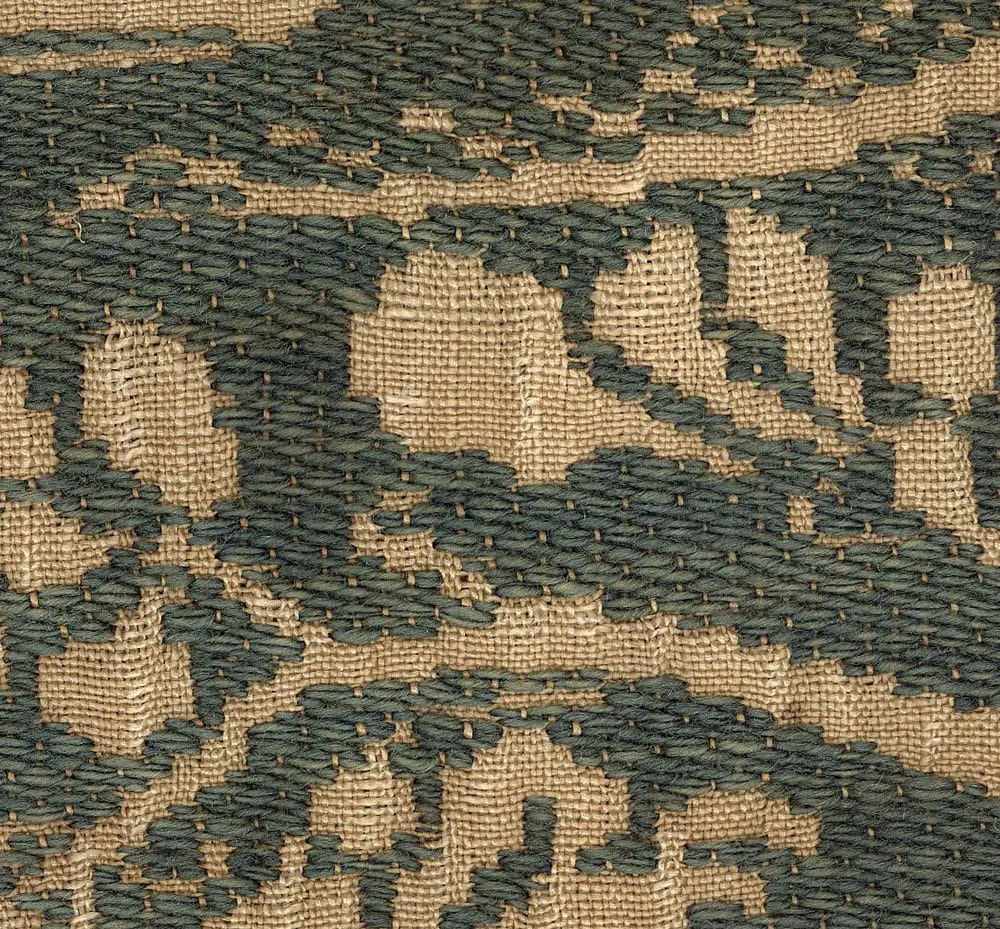
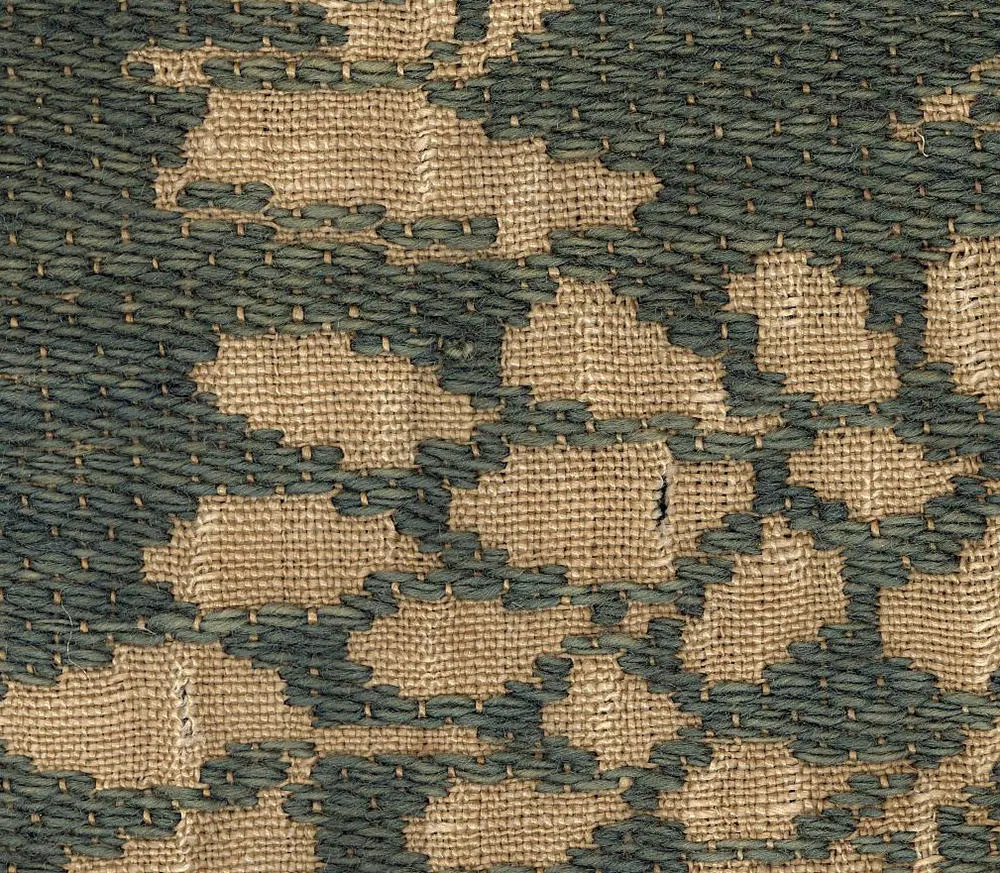
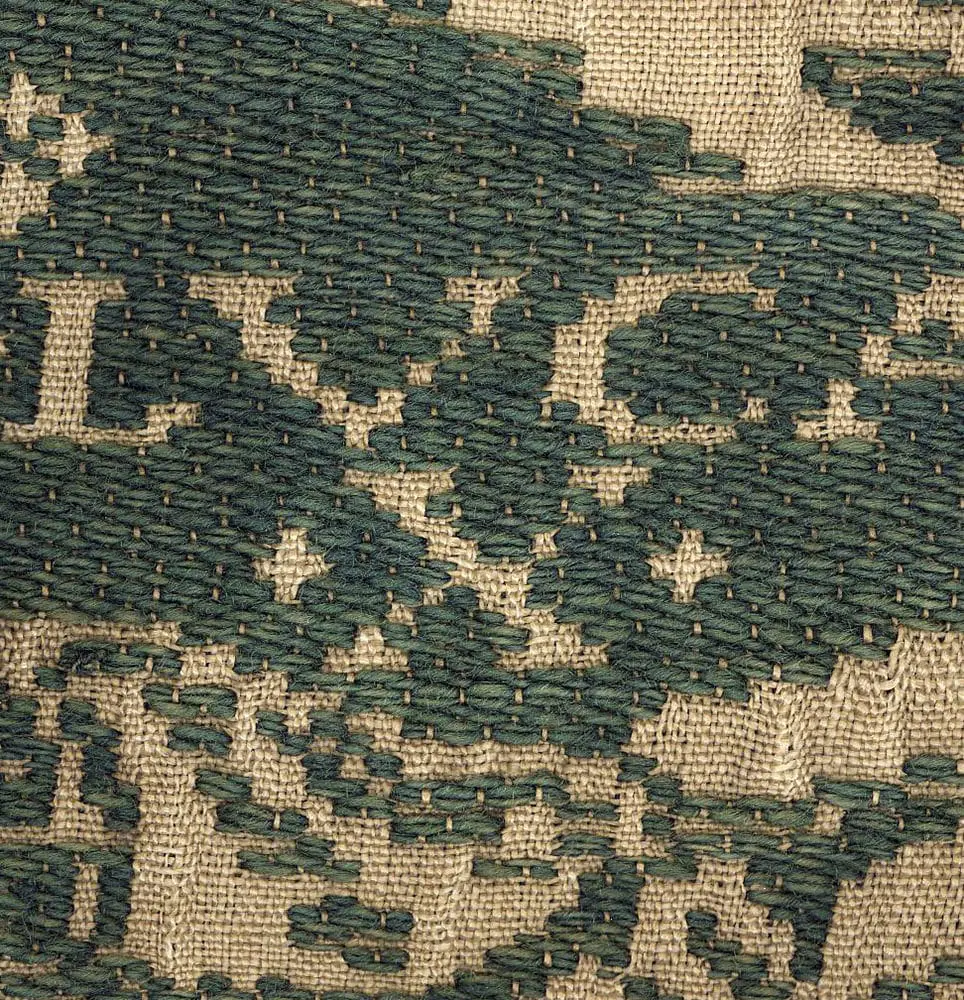
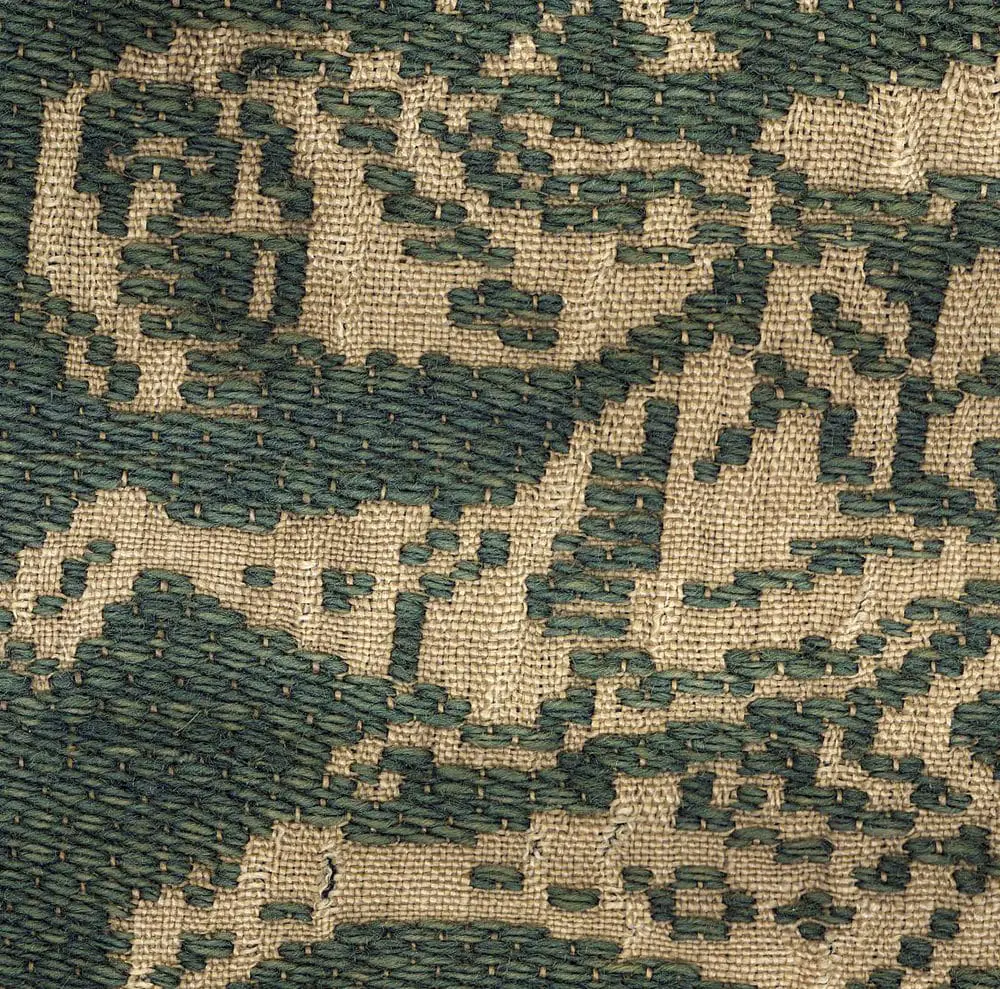
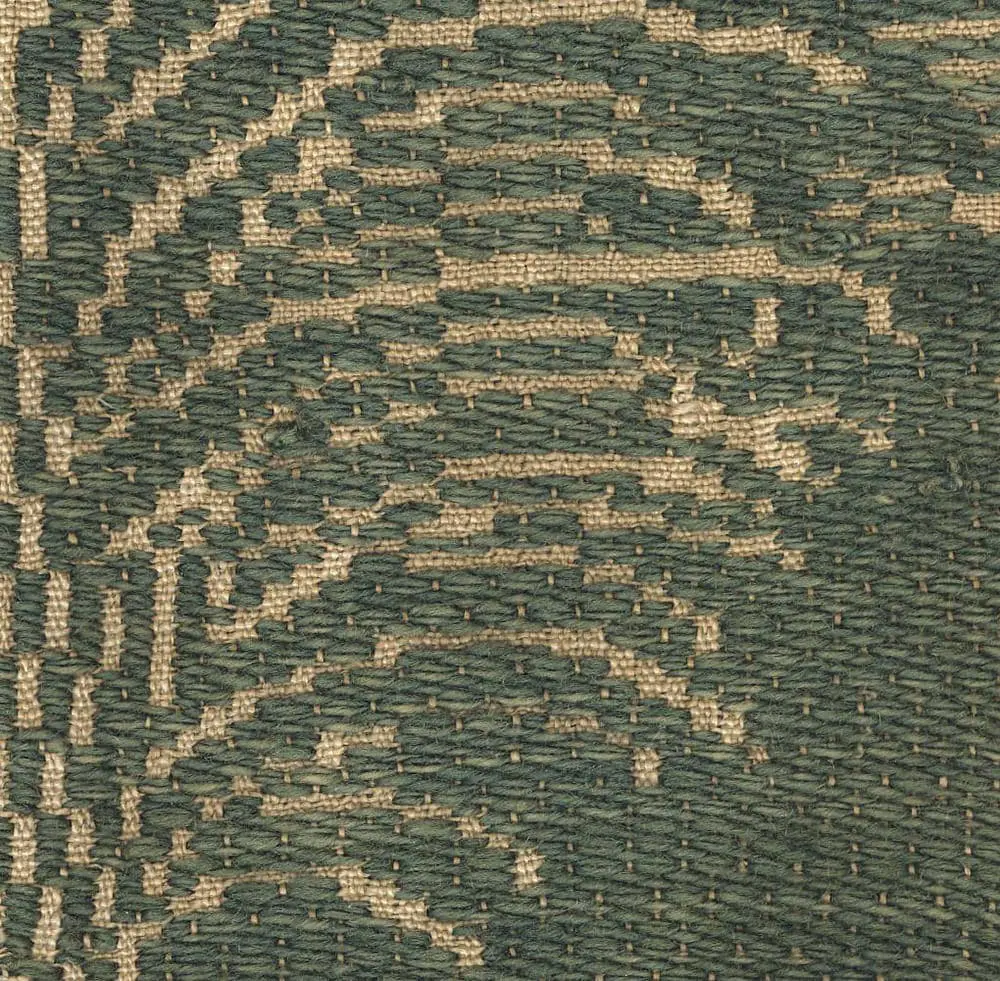
This rare and significant Beiderwand woven panel, dated 1697, is a masterful example of late 17th-century Northern European textile art from Schleswig-Holstein, Denmark. The piece is executed in a striking palette of green wool and ivory linen, featuring a complex religious narrative depicting "The Good Samaritan". Technically, the "Beiderwand" refers to a sophisticated compound weave structure that artfully combines warp-faced and weft-faced plain weaves to create the characteristic vertically running ribs typical of this tradition.
This specific weave was a signature technique of skilled weavers of Dutch, Huguenot, Danish, and German descent who populated the region. Measuring 63 inches by 35 inches (160 cm x 89 cm), the panel serves as both a devotional object and a technical marvel of the pre-industrial era. While it remains in good condition, the presence of several surface holes, a small slice near the lower corner, and minor staining provides a poignant sense of history and "wabi-sabi" character, marking its centuries of survival.

Payment Options: We primarily accept PayPal for all transactions. Credit and debit cards are not accepted. If you prefer to pay by personal check instead of PayPal, please note this preference in the "Additional comments" field when placing your order.Ordering Process
To receive your PayPal invoice, simply fill out the form.
Shipping Details: We ship all orders to the address associated with your PayPal payment. Please ensure your PayPal shipping address is current and accurate.A phone number is required during checkout, as our shipping carrier may need to contact you regarding delivery questions.Shipping RatesUnited States and Canada: $20International destinations (air mail): $40
