Copyright © 2026 Yorke Antique Textiles
.avif)

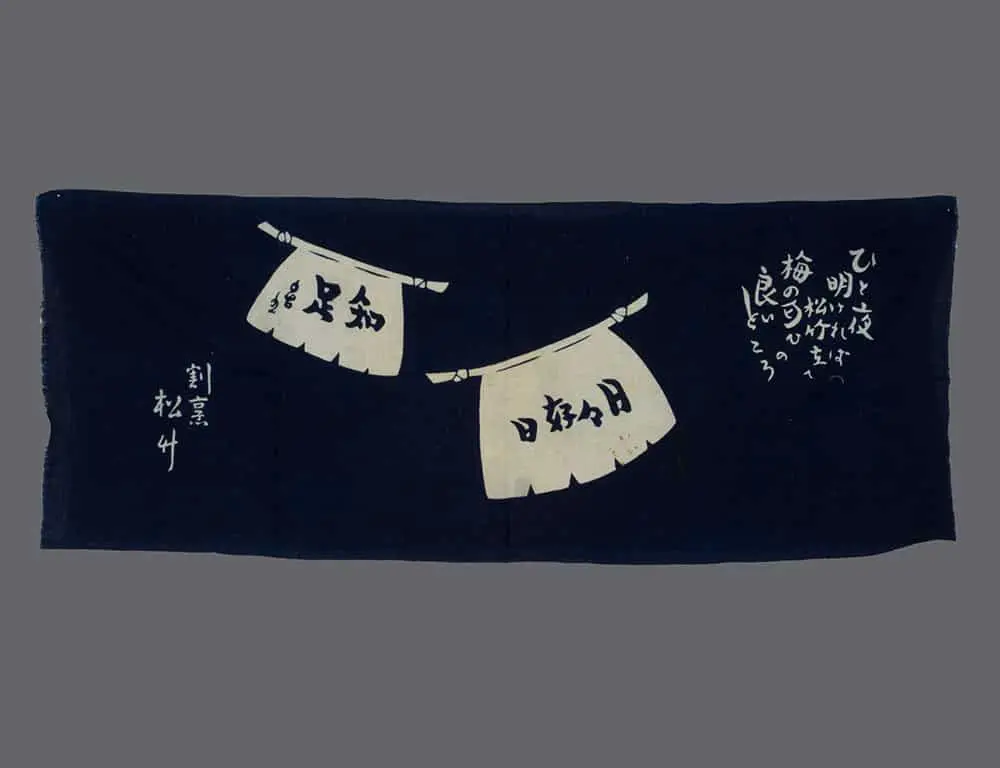


This small cotton tenugui (multipurpose handcloth) from Japan dates to the mid-Showa period (1940–1960). Measuring 34 inches by 13 inches (86 cm x 33 cm), the textile is a classic example of functional Japanese folk craft. The cloth features a deep indigo ground with crisp white motifs achieved through a resist-dyeing process.
The graphic composition includes two prominent banners (miniature noren) suspended from bamboo poles, each inscribed with bold kanji characters. To the right, a denser block of poetic calligraphic text flows vertically, while a store or artist's signature is visible on the left. These cloths were traditionally used for everything from head coverings and washcloths to decorative gift wrapping. This piece remains in very good condition, with only a minor area of staining noted.

Payment Options: We primarily accept PayPal for all transactions. Credit and debit cards are not accepted. If you prefer to pay by personal check instead of PayPal, please note this preference in the "Additional comments" field when placing your order.Ordering Process
To receive your PayPal invoice, simply fill out the form.
Shipping Details: We ship all orders to the address associated with your PayPal payment. Please ensure your PayPal shipping address is current and accurate.A phone number is required during checkout, as our shipping carrier may need to contact you regarding delivery questions.Shipping RatesUnited States and Canada: $20International destinations (air mail): $40
