Copyright © 2026 Yorke Antique Textiles
.avif)

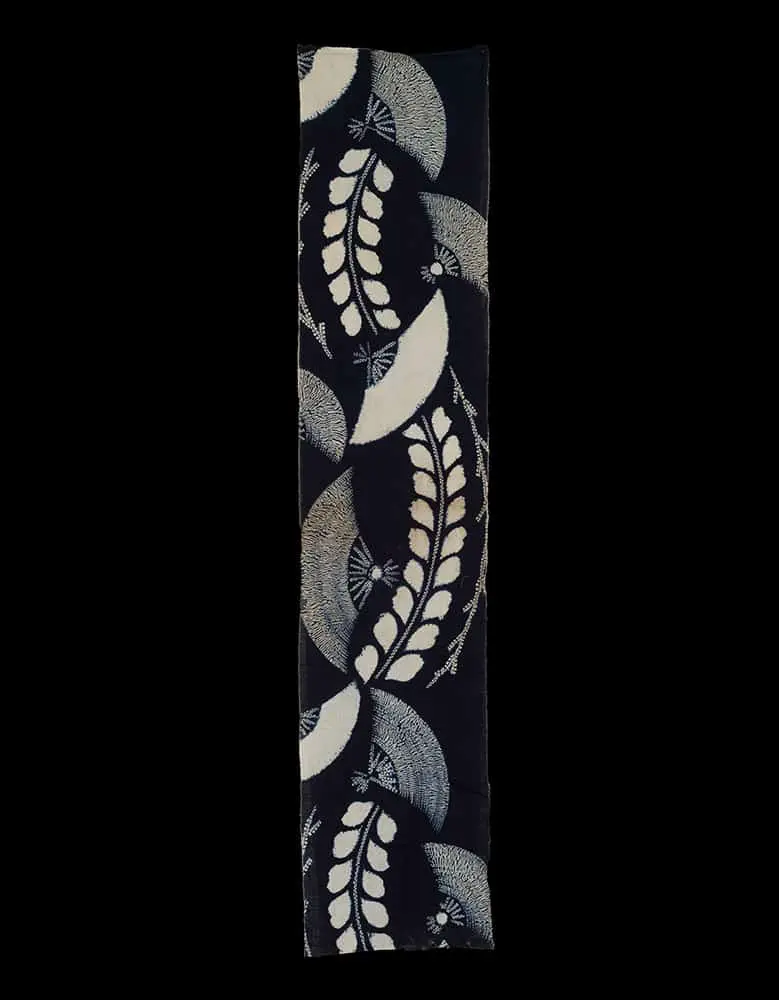
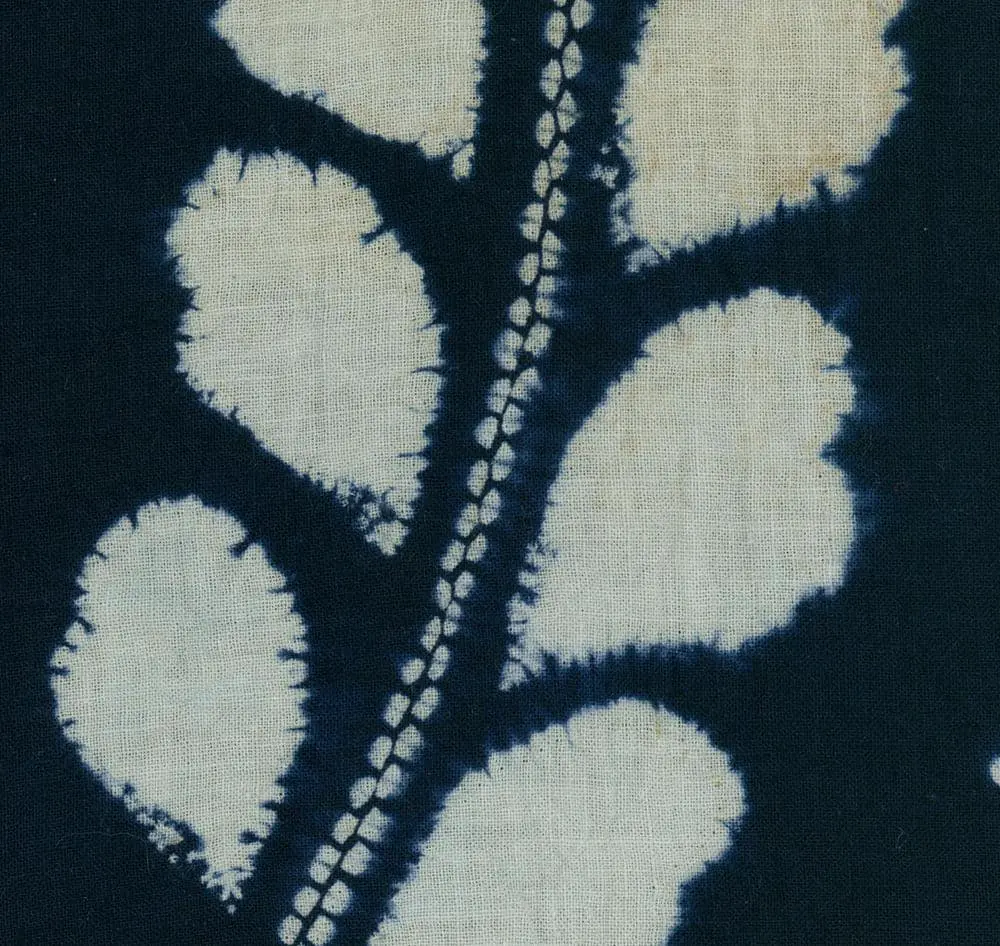
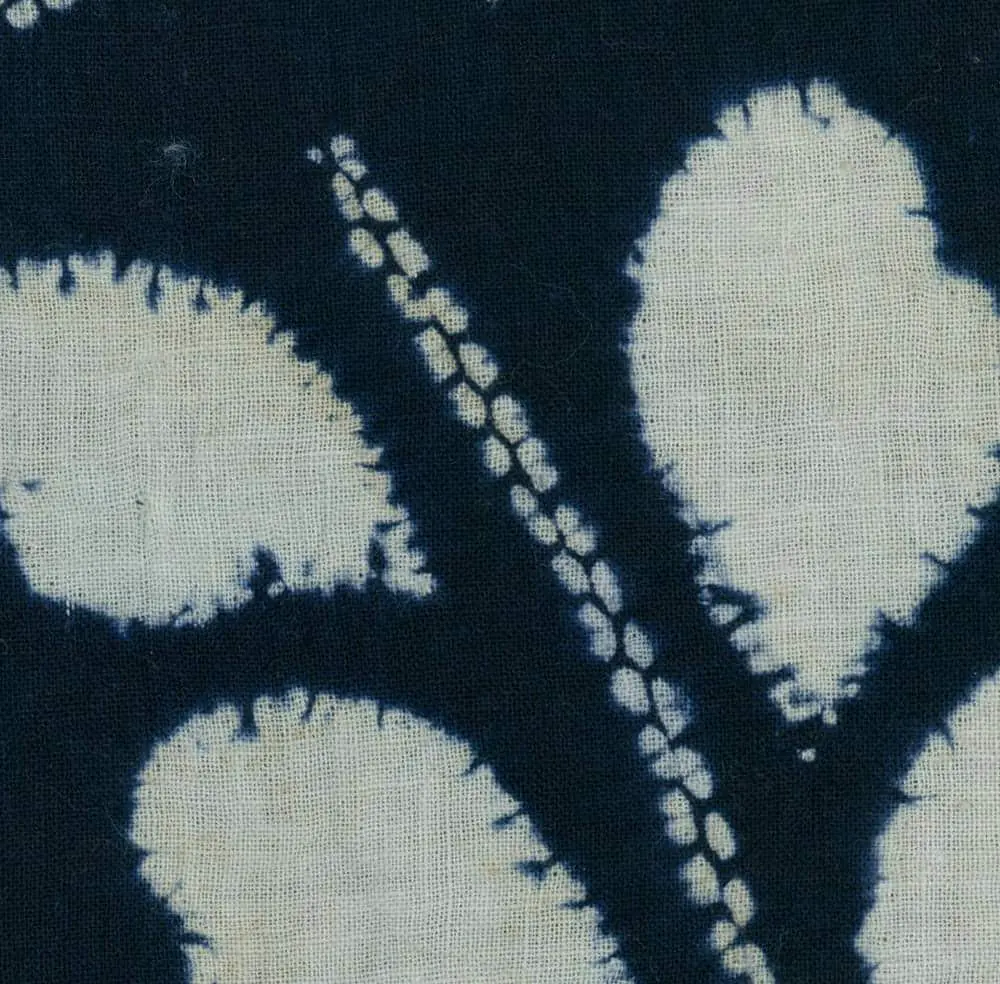
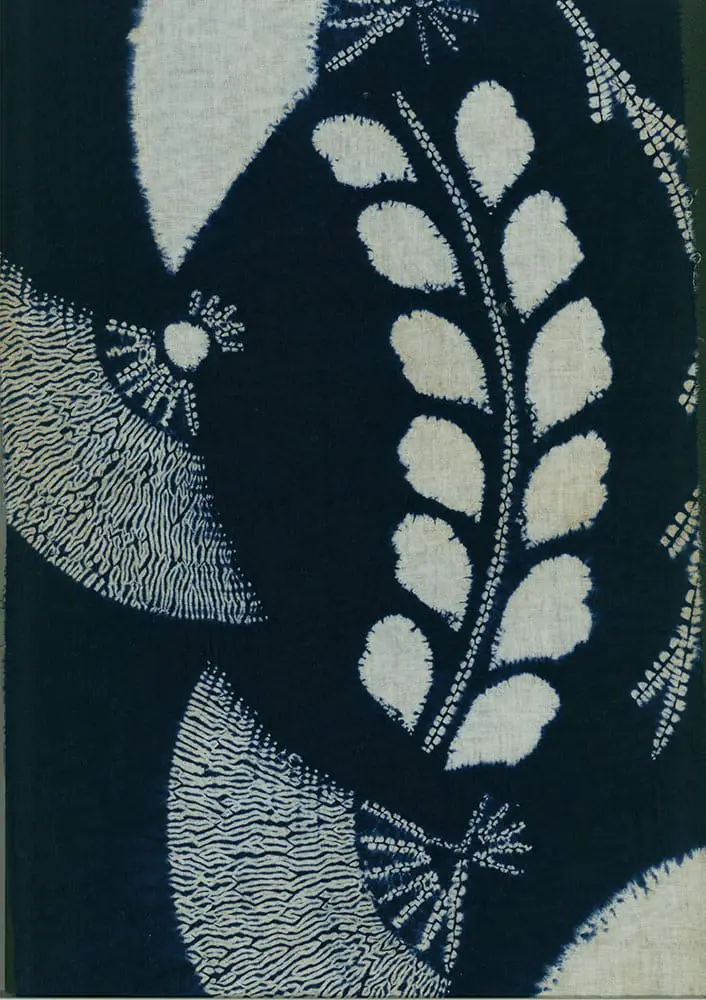
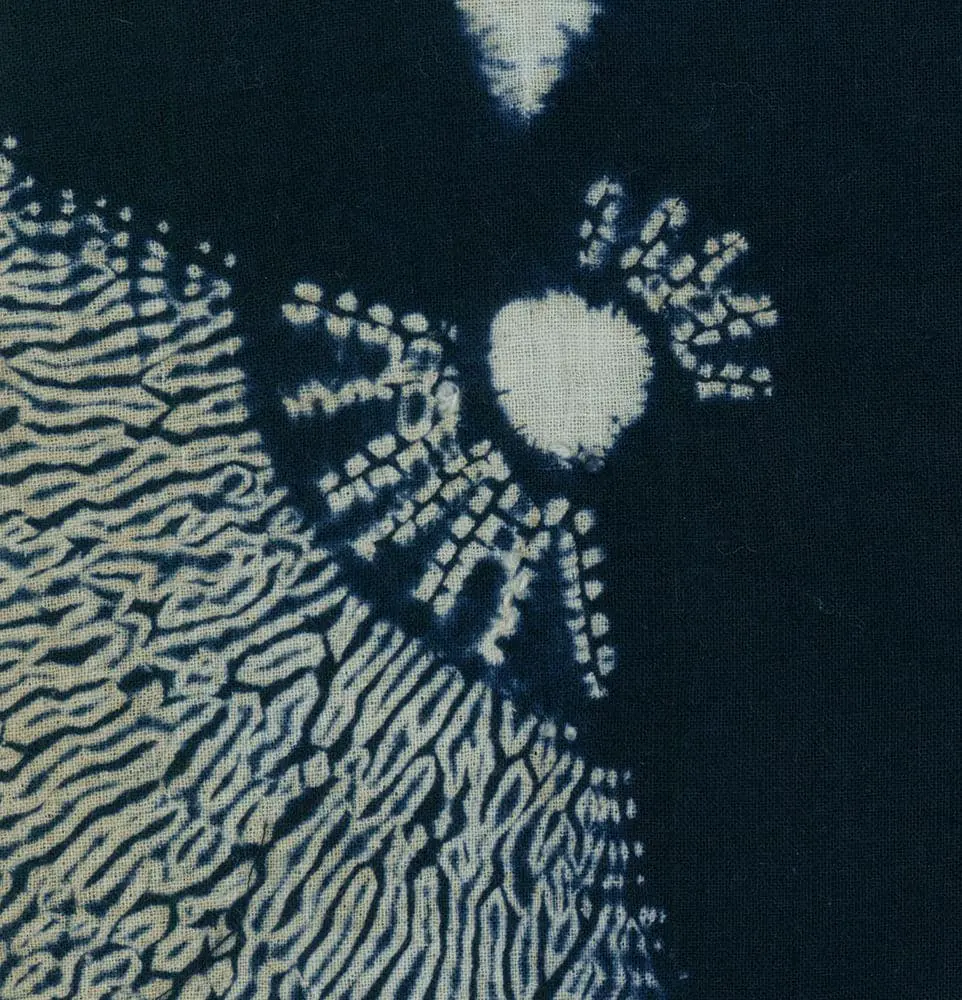
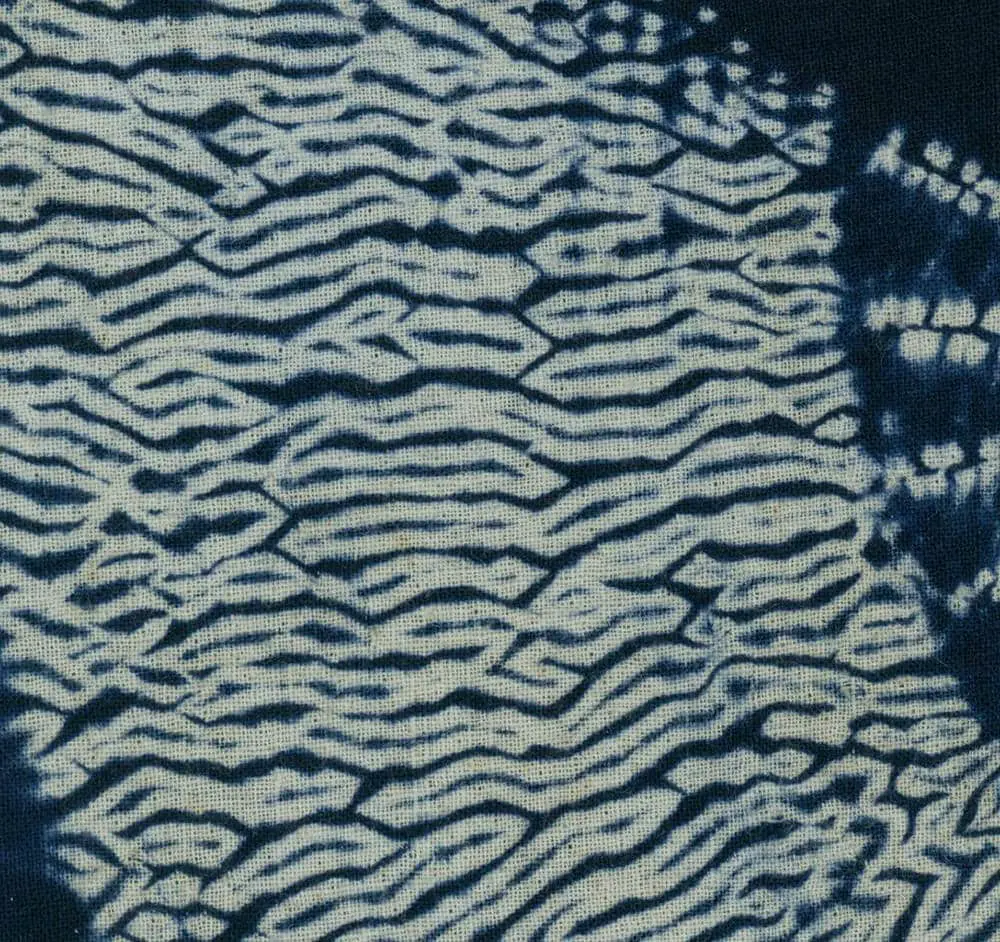
This historic textile originates from the Taisho period (1912–1926) and is a scholarly example of the sophisticated folk-art traditions that flourished in pre-war Japan. Measuring 11 inches by 56 inches (28 cm x 142 cm), the piece is a complete panel from a disassembled cotton garment, preserved in very good condition. While the fabric maintains excellent structural integrity, it features one large but unobtrusive stain that serves as a testament to its authentic age and past life.
The visual narrative is set against a deep navy blue ground, typical of traditional indigo-dyed cottons. It features a rhythmic, staggered arrangement of sensu (folding fan) and fuji (wisteria) motifs executed in crisp white shibori (resist-dyeing). The fans are rendered with intricate dot-work that mimics the ribs and texture of paper, while the wisteria racemes are stylized as elegant, drooping silhouettes. This combination of motifs represents a classical pairing of symbols—the fan signifying expanding fortune and the wisteria denoting nobility and longevity—rendered through the labor-intensive maki-age shibori technique common in early 20th-century rural textiles.

Payment Options: We primarily accept PayPal for all transactions. Credit and debit cards are not accepted. If you prefer to pay by personal check instead of PayPal, please note this preference in the "Additional comments" field when placing your order.Ordering Process
To receive your PayPal invoice, simply fill out the form.
Shipping Details: We ship all orders to the address associated with your PayPal payment. Please ensure your PayPal shipping address is current and accurate.A phone number is required during checkout, as our shipping carrier may need to contact you regarding delivery questions.Shipping RatesUnited States and Canada: $20International destinations (air mail): $40
