Copyright © 2026 Yorke Antique Textiles
.avif)

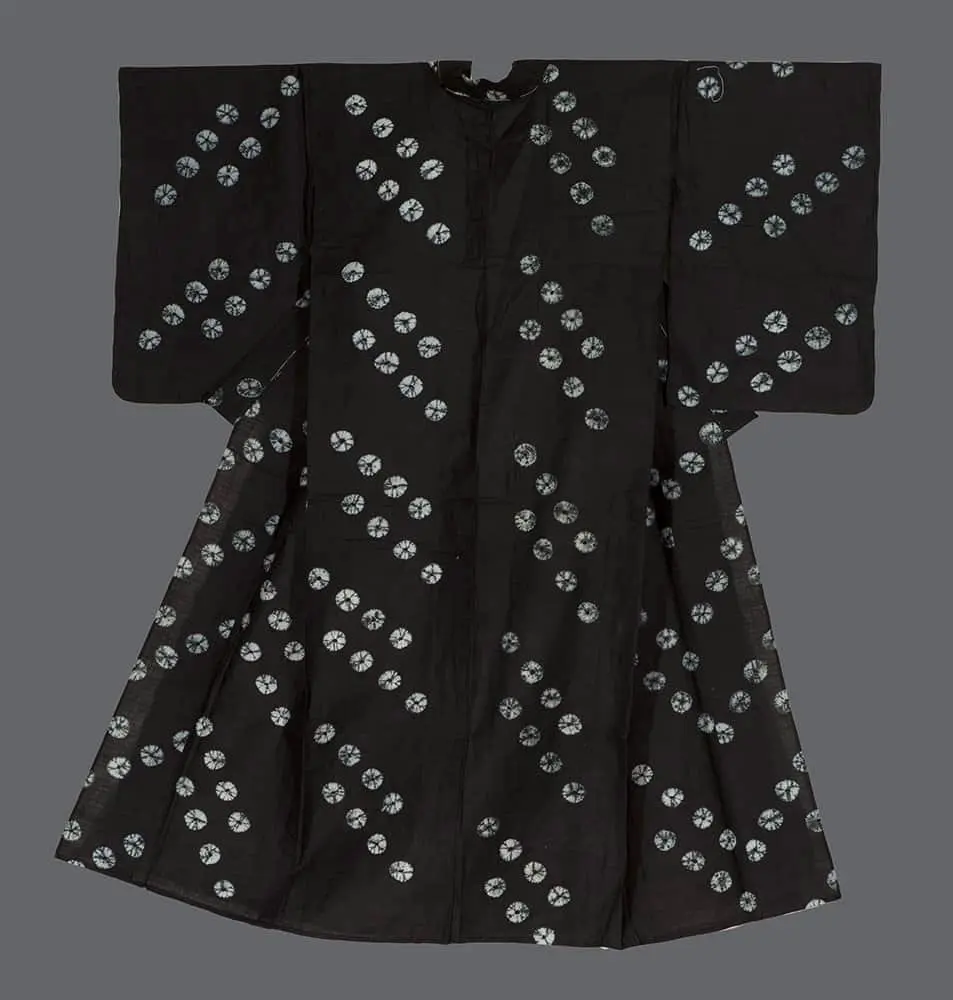

This kimono, woven from ramie or cotton, exemplifies the beauty of Japanese folk textile traditions through its straightforward yet visually compelling design. The light, canvas-like texture of the fabric suggests practical everyday wear, with ramie's natural breathability making it particularly suitable for warm weather or working conditions.
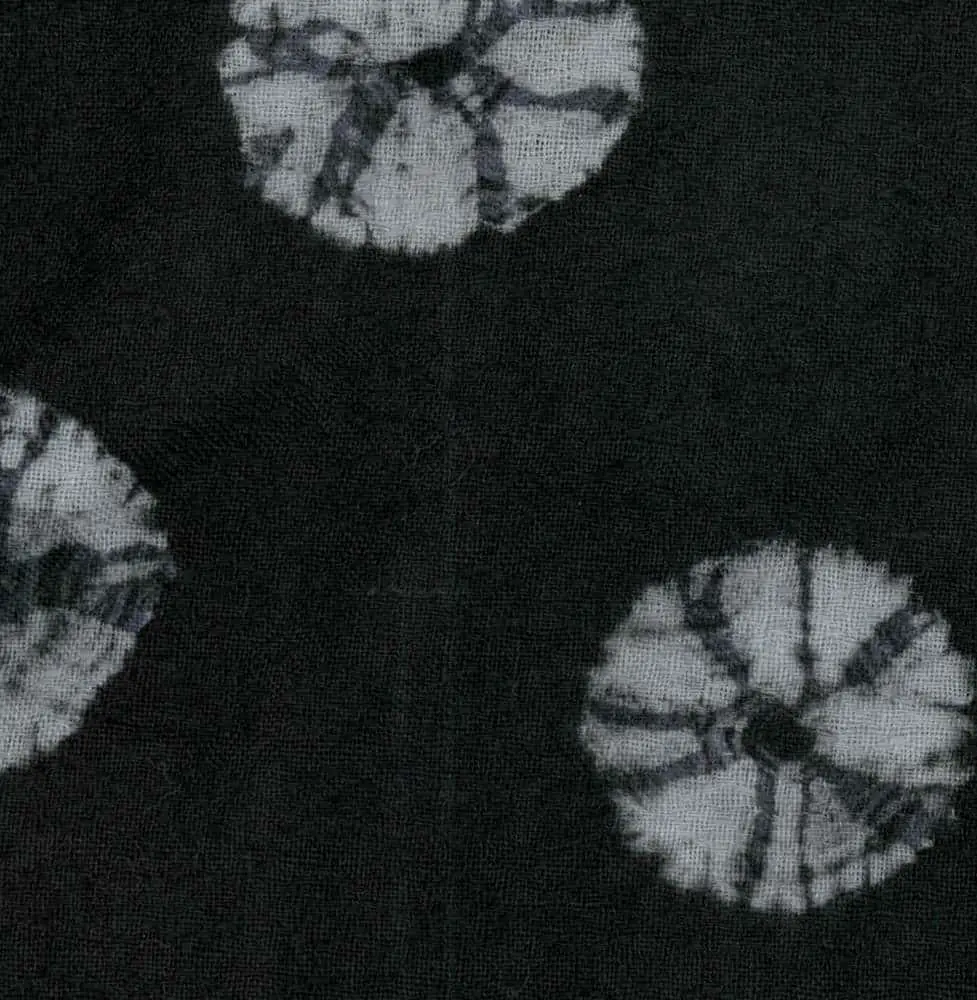
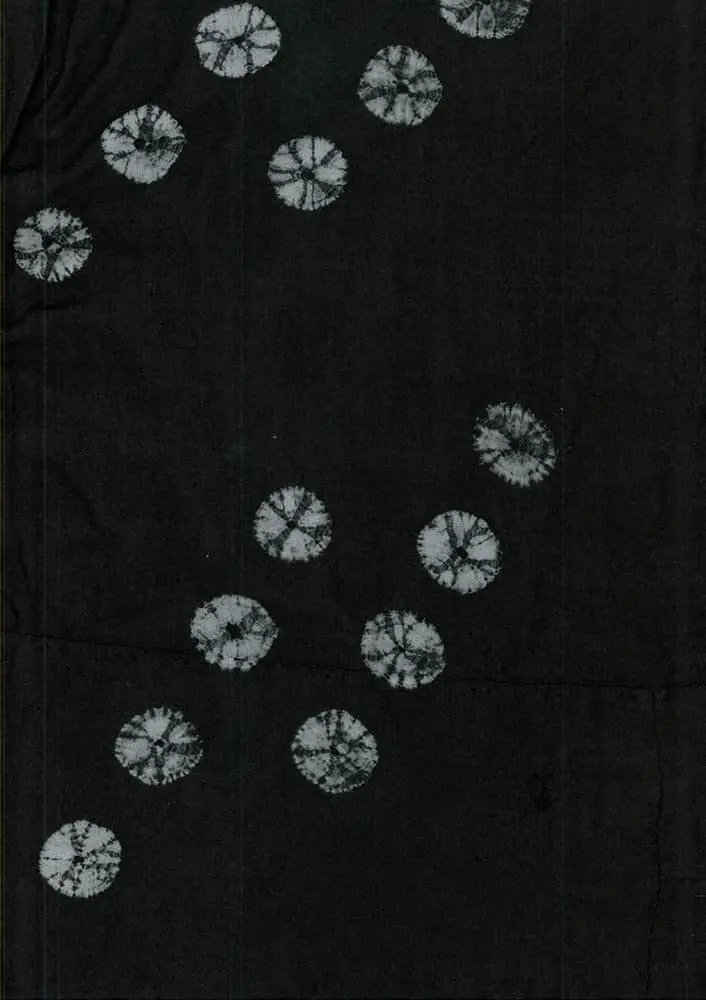
Against the deep indigo-black ground, small white roundels created through shibori (tie-dye resist) technique scatter across the surface in flowing diagonal arrangements. Each circle displays the characteristic irregularity of hand-bound shibori—slight variations in size, subtle radiating marks from the binding points, and organic edges that distinguish handcraft from mechanical reproduction. This technique, known as kanoko shibori when creating small dot patterns, involves pinching and tightly binding individual sections of cloth before dyeing, preventing the dye from penetrating the bound areas.
The arrangement of dots into diagonal streaming patterns creates visual movement and rhythm, transforming simple repeated elements into a dynamic composition. Some clusters group more densely while others space more openly, suggesting falling petals, scattered snow, or abstract celebration.
Such shibori-decorated garments represented accessible artistry—the technique required skill and considerable labor but used humble materials, making decorated clothing available beyond the wealthy classes who could afford painted silk. The stark graphic contrast of white against dark ground demonstrates how restraint and simplicity can achieve striking visual impact, embodying aesthetic principles central to Japanese design traditions.
Though it carries a repaired tear on the sleeve, it remains an elegant piece. It measures 50 inches (127 cm) from sleeve-end to sleeve-end and stands at a height of 56 inches (142 cm).

Payment Options: We primarily accept PayPal for all transactions. Credit and debit cards are not accepted. If you prefer to pay by personal check instead of PayPal, please note this preference in the "Additional comments" field when placing your order.Ordering Process
To receive your PayPal invoice, simply fill out the form.
Shipping Details: We ship all orders to the address associated with your PayPal payment. Please ensure your PayPal shipping address is current and accurate.A phone number is required during checkout, as our shipping carrier may need to contact you regarding delivery questions.Shipping RatesUnited States and Canada: $20International destinations (air mail): $40
