Copyright © 2026 Yorke Antique Textiles
.avif)

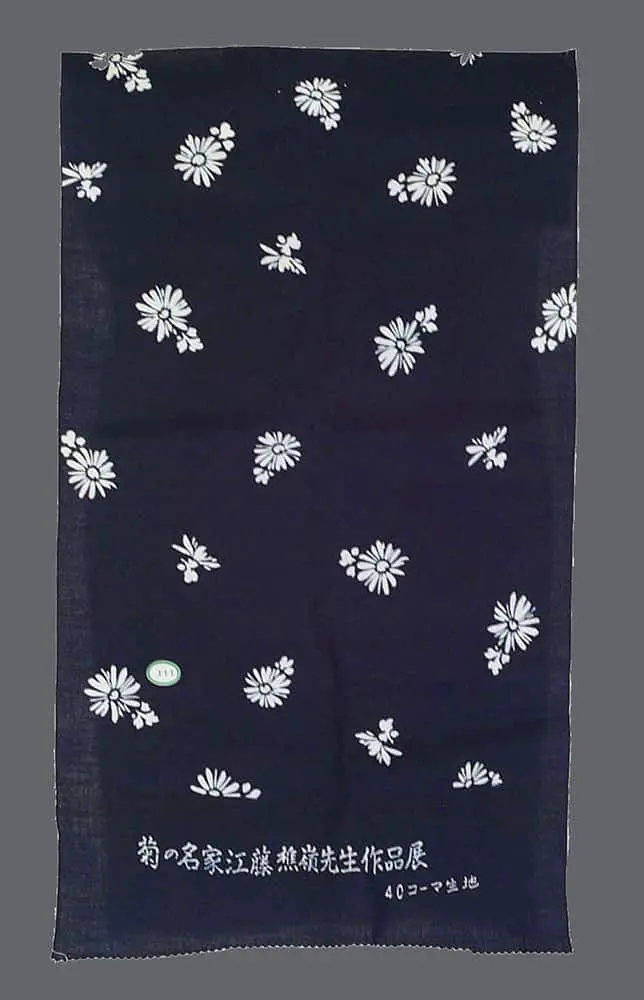
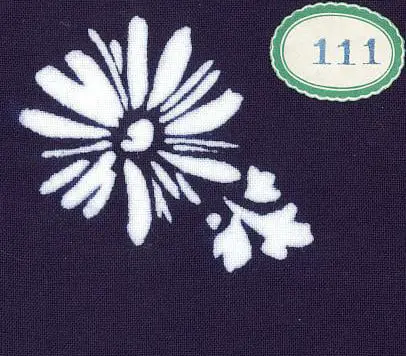
This elegant textile originates from Japan, dating to the Showa period (1950–1975), and serves as a refined example of mid-century Japanese cotton printing. Measuring 14 inches by 24 inches (36 cm x 61 cm), the panel was extracted from a vintage Yukata (summer kimono) sample book. Crafted from a thin, crisp cotton, the piece features several small pinholes at the top edge used for its original archival threading, as well as a small, circular paper label numbered "111". Despite its history as a professional reference sample, the fabric remains in excellent condition with clear, sharp contrast between the dyes.
The visual narrative is a masterclass in traditional Japanese scattered composition (chirashi), set against a saturated deep indigo blue field. The design showcases a rhythmic distribution of small Chrysanthemums (kiku) rendered in a crisp, clean white, floating across the dark substrate with varied orientations. Each blossom is depicted with fine, radiating petals, creating a sense of natural movement as if the flowers were falling or drifting. The lower portion of the panel features Japanese characters in white, identifying the piece as part of a "Master's Work Exhibition" and noting the high-quality "40-count" combed cotton (koma) fabric. This high-contrast palette evokes the cool, refreshing aesthetic required for traditional summer evening wear.

Payment Options: We primarily accept PayPal for all transactions. Credit and debit cards are not accepted. If you prefer to pay by personal check instead of PayPal, please note this preference in the "Additional comments" field when placing your order.Ordering Process
To receive your PayPal invoice, simply fill out the form.
Shipping Details: We ship all orders to the address associated with your PayPal payment. Please ensure your PayPal shipping address is current and accurate.A phone number is required during checkout, as our shipping carrier may need to contact you regarding delivery questions.Shipping RatesUnited States and Canada: $20International destinations (air mail): $40
