Copyright © 2026 Yorke Antique Textiles
.avif)

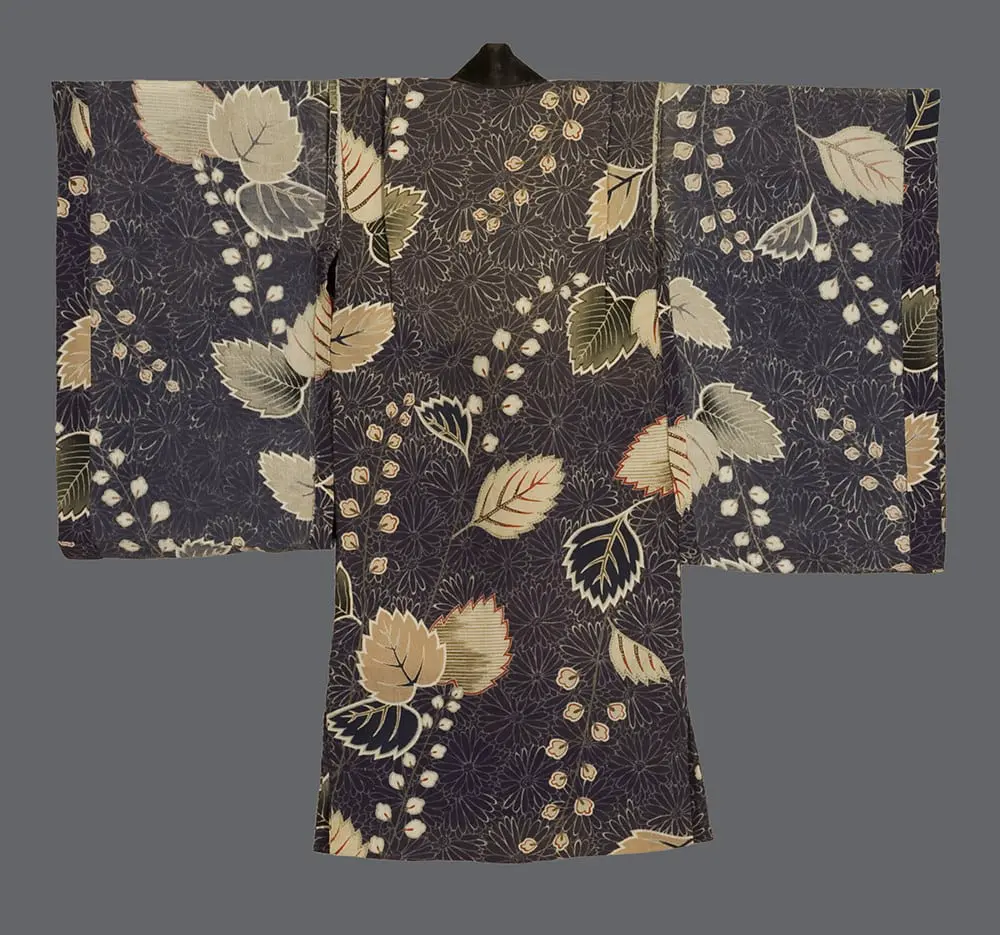


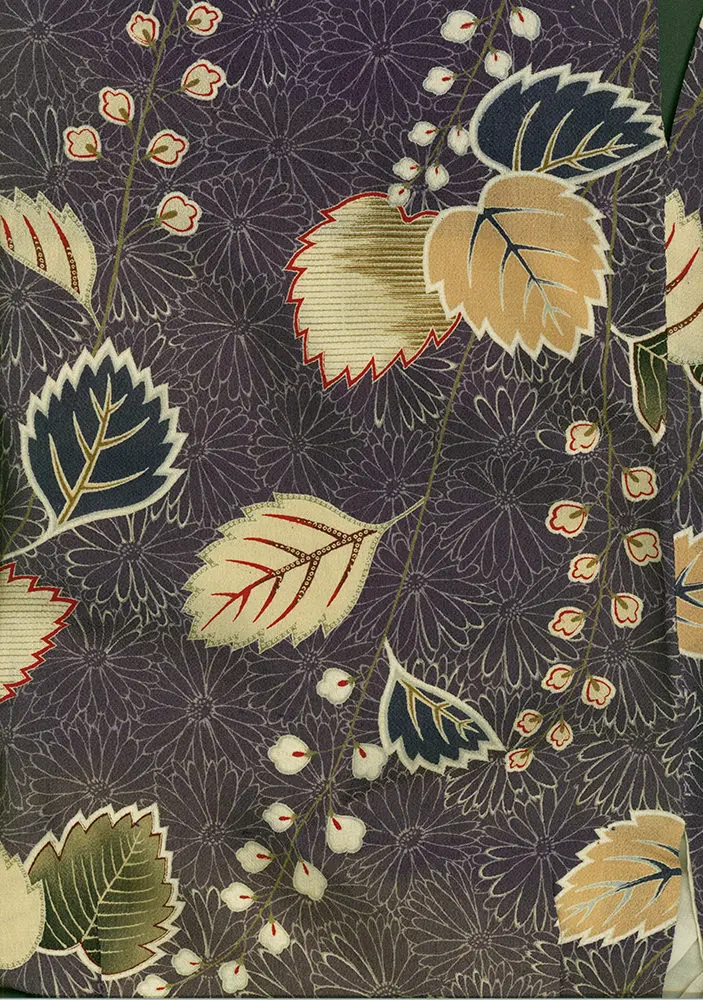

This small child's chirimen silk kimono demonstrates the treasured Japanese practice of repurposing quality textiles—this garment was carefully tailored from a larger adult kimono, allowing precious silk to serve a new generation. The chirimen weave, with its characteristic creped, pebbled texture created through highly twisted weft threads, provides subtle surface richness and excellent drape.
Against a deep navy-indigo ground, the design layers multiple botanical elements in sophisticated interplay. Large serrated leaves—likely kiri (paulownia)—float across the surface in cream, tan, olive, and soft gray tones, some accented with delicate red-orange outlines. These substantial forms contrast with an allover background pattern of stylized kiku (chrysanthemums) rendered in fine outline, their spiky petals creating dense textural rhythm without competing with the foreground leaves.
Trailing branches bearing small white flower buds or berries—possibly hagi (bush clover) or another autumn flowering plant—weave gracefully throughout, adding vertical movement and delicate detail. This layering of bold foreground elements over subtle background patterning creates visual depth characteristic of refined Japanese textile design.
The practice of remaking adult garments into children's clothing reflected both practical economy and the cultural value placed on fine textiles. Careful cutting would position the most attractive portions of the original design advantageously on the smaller garment, preserving the aesthetic integrity while giving the fabric continued life and purpose.
It measures 22 inches (56 cm) from sleeve-end to sleeve-end and stands at 27 inches (69 cm) in height.

Payment Options: We primarily accept PayPal for all transactions. Credit and debit cards are not accepted. If you prefer to pay by personal check instead of PayPal, please note this preference in the "Additional comments" field when placing your order.Ordering Process
To receive your PayPal invoice, simply fill out the form.
Shipping Details: We ship all orders to the address associated with your PayPal payment. Please ensure your PayPal shipping address is current and accurate.A phone number is required during checkout, as our shipping carrier may need to contact you regarding delivery questions.Shipping RatesUnited States and Canada: $20International destinations (air mail): $40
