Copyright © 2026 Yorke Antique Textiles
.avif)



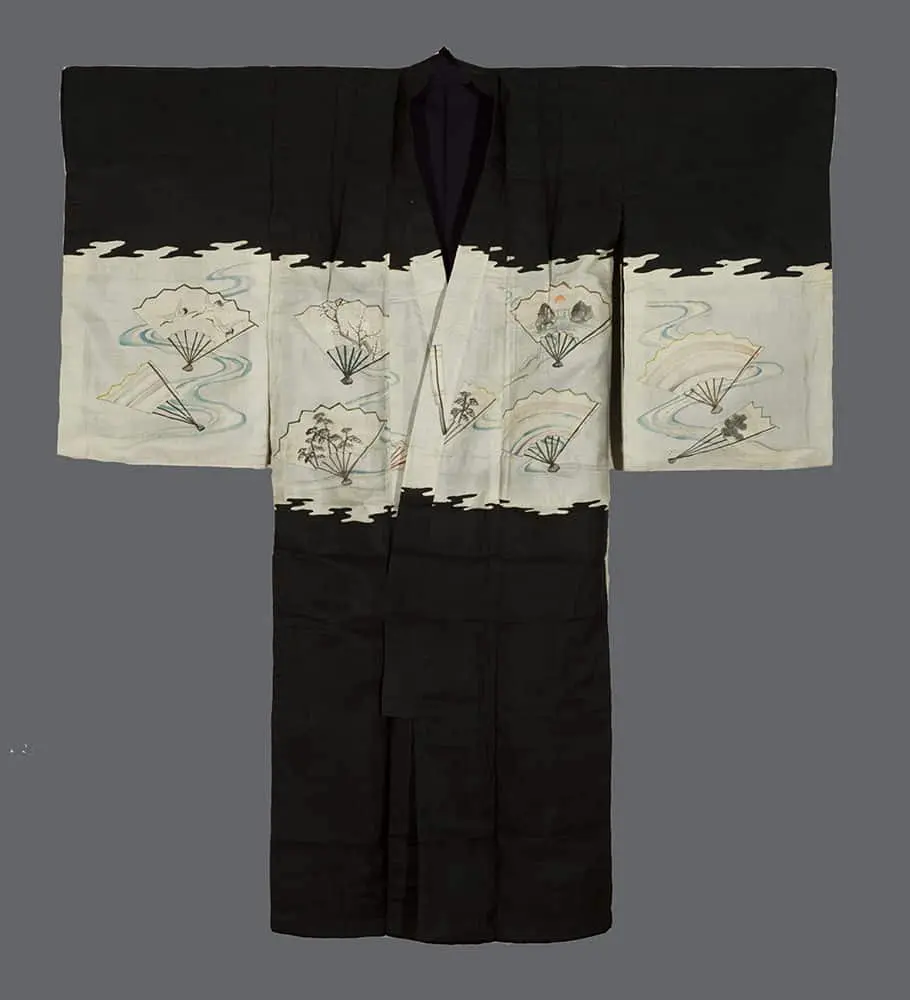


This silk miyamairi kimono for a child's first Shinto shrine visit displays a sophisticated composition that showcases multiple artistic techniques in harmonious combination. The garment divides dramatically into zones: solid black silk at top and bottom, with a cream-white horizontal band across the chest and sleeves. The boundaries between these areas feature stylized kasumi (mist) edges with their characteristic scalloped, cloud-like forms, creating the effect of pictorial imagery emerging from darkness.
Within the pale central band, scattered sensu (folding fans) float alongside gently meandering ryusui (flowing water) streams rendered in soft blue-green tones. Each fan displays different landscape vignettes executed in delicate sumi-e (ink painting) style—miniature scenes featuring mountains, trees, and natural elements that recall classical Japanese painting traditions. The refined linework and subtle washes demonstrate skilled brushwork, while yūzen-dyeing techniques provide color areas and the overall compositional structure. Embroidered couching adds dimensional highlights to select details.
Fans symbolize expanding fortune and the unfolding of life's possibilities—particularly meaningful imagery for a newborn's ceremonial presentation to the guardian deity. The combination of multiple fans, each containing auspicious landscape imagery, multiplies these good wishes while showcasing artistic virtuosity.
Measuring 37 inches (94 cm) from sleeve-end to sleeve-end and standing at 41 inches (104 cm) in height.

Payment Options: We primarily accept PayPal for all transactions. Credit and debit cards are not accepted. If you prefer to pay by personal check instead of PayPal, please note this preference in the "Additional comments" field when placing your order.Ordering Process
To receive your PayPal invoice, simply fill out the form.
Shipping Details: We ship all orders to the address associated with your PayPal payment. Please ensure your PayPal shipping address is current and accurate.A phone number is required during checkout, as our shipping carrier may need to contact you regarding delivery questions.Shipping RatesUnited States and Canada: $20International destinations (air mail): $40
