Copyright © 2026 Yorke Antique Textiles
.avif)

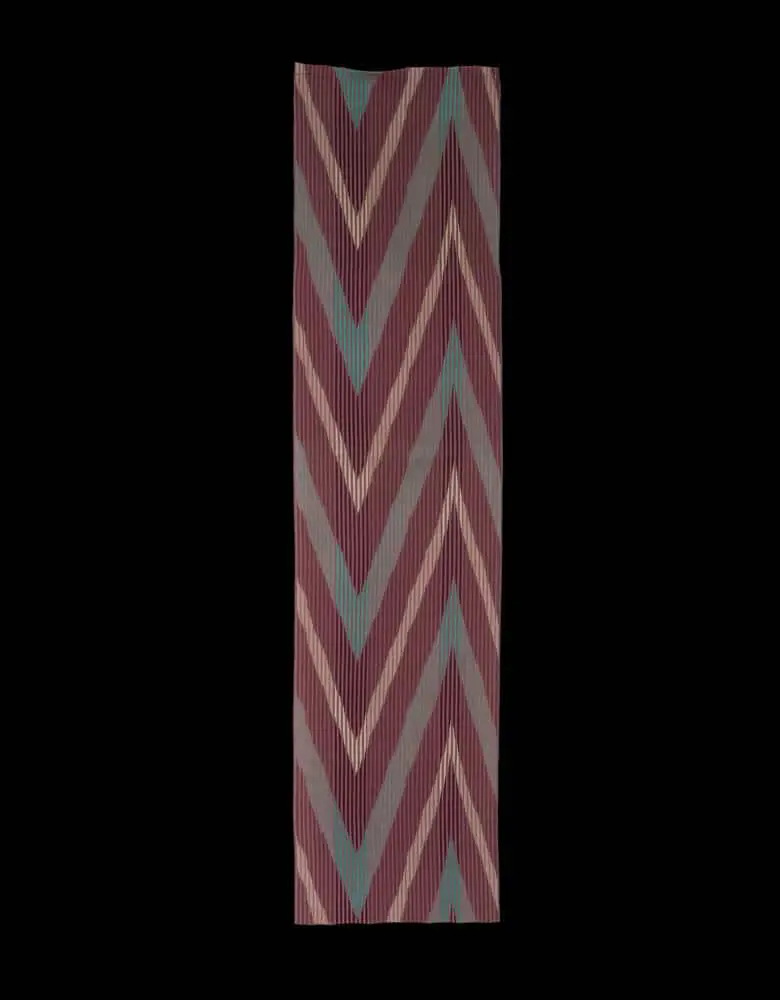
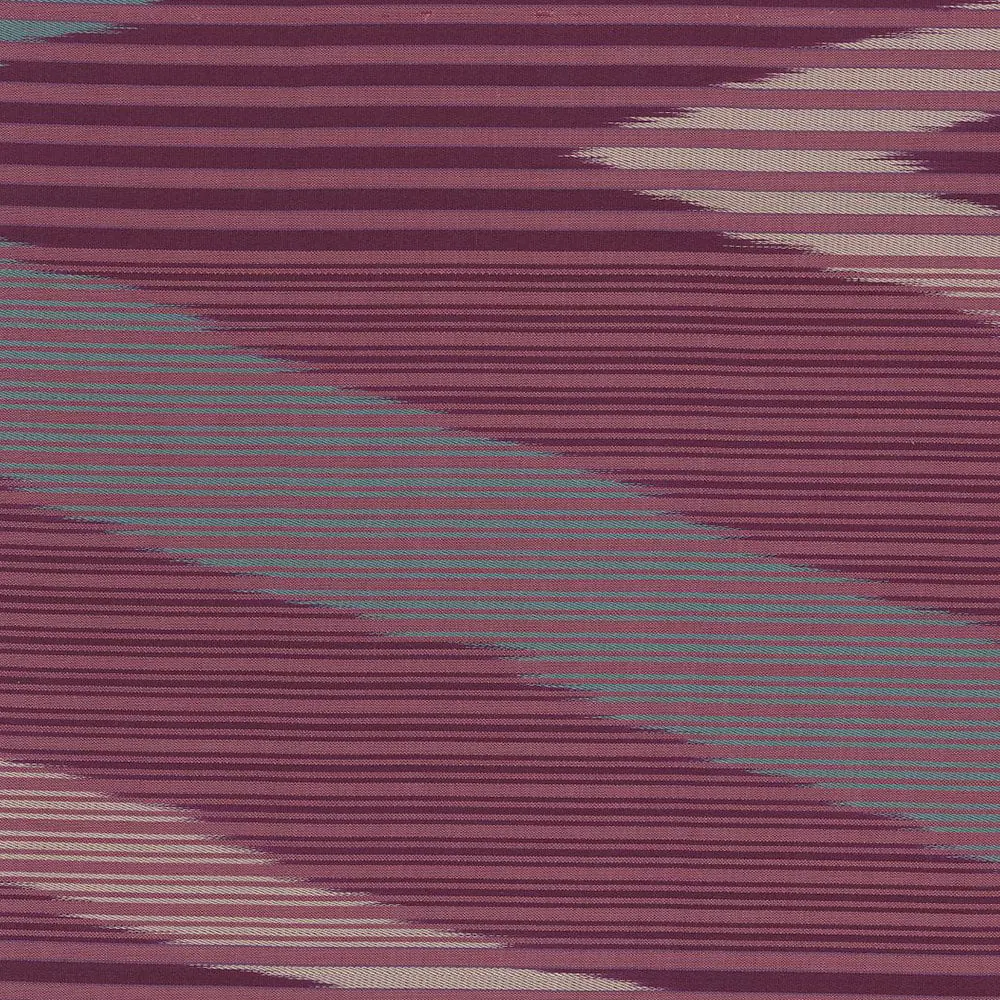
This striking silk panel originates from Japan and dates to the late Showa period (1960–1980). Measuring 13.5 inches by 54 inches (34 cm x 137 cm), the textile was originally part of a larger kimono and remains in very good condition. The piece is crafted from meisen silk, a durable and historically significant fabric characterized by its vibrant, pre-dyed threads that create a slightly blurred, ikat-like effect known as kasuri.
The visual narrative is defined by a bold, large-scale chevron or "mountain" pattern that spans the entire length of the panel. The design features a sophisticated palette of deep burgundy, smoky grey, and cream, punctuated by thin vertical pinstripes in a vibrant teal blue. This rhythmic, geometric composition reflects a mid-to-late century modernization of traditional Japanese patterns, where the classic zig-zag motif is reinterpreted through a more graphic, almost architectural lens. The interplay of the vertical pinstripes against the diagonal chevrons creates a sense of depth and structured movement, a hallmark of high-quality meisen production during this era.

Payment Options: We primarily accept PayPal for all transactions. Credit and debit cards are not accepted. If you prefer to pay by personal check instead of PayPal, please note this preference in the "Additional comments" field when placing your order.Ordering Process
To receive your PayPal invoice, simply fill out the form.
Shipping Details: We ship all orders to the address associated with your PayPal payment. Please ensure your PayPal shipping address is current and accurate.A phone number is required during checkout, as our shipping carrier may need to contact you regarding delivery questions.Shipping RatesUnited States and Canada: $20International destinations (air mail): $40
